The appeal is immediate: open a new machine and start coding without spending the first afternoon installing runtimes, shells, editors, containers, and model tools. For teams that repeatedly provision expensive engineers, that setup time has a visible cost.
A Windows Project Zenith developer PC is also pitched as a local-AI workstation. Microsoft says the first systems will pair a developer-focused Windows experience with at least 64 GB of unified memory and more than 250 GB/s of memory bandwidth.
What Microsoft actually announced
The Project Zenith announcement describes a ready-to-code Windows configuration for developer-class devices. AMD Ryzen AI Halo is named as the first hardware platform, with more original-equipment and silicon partners planned.
Microsoft says these systems will ship with curated languages, runtimes, source control, and productivity tools. It also says the hardware class can run models with more than 30 billion parameters locally and without metered cloud tokens.
The wording matters. Project Zenith is an experience and hardware class, not one fully specified retail machine in this announcement, and “can run” does not establish latency, power use, context capacity, quantization, accuracy, or sustained throughput for a particular workload.
The four claims to separate
- Setup: how quickly a clean machine reaches a reproducible toolchain.
- Capacity: which model and context fit in unified memory.
- Speed: whether interactive and batch throughput beat the current alternative.
- Recovery: whether the environment can be rebuilt after drift or failure.
Ready to code only matters if it stays reproducible
A preinstalled toolchain saves time on day one, but a development fleet lives through month twelve. Ask whether the curated setup is expressed as versioned configuration, whether teams can add private packages, and whether a damaged machine can be rebuilt to the same state.
Microsoft’s Windows developer update page shows a fast-moving platform of Windows App SDK, WinUI, command-line, container, and AI tooling. A useful Zenith environment needs an update policy that distinguishes stable, preview, and experimental channels.
Enterprise buyers should also ask who owns the base image, security patches, driver validation, and developer exceptions. A curated experience that cannot accommodate a required compiler or device driver merely moves setup friction into a support ticket.
Benchmark the Windows Project Zenith developer PC queue, not the model badge
Start by recording one ordinary day of work on the current machine. Capture repository checkout, dependency restore, clean build, targeted tests, container startup, editor indexing, and any local inference step that blocks a person.
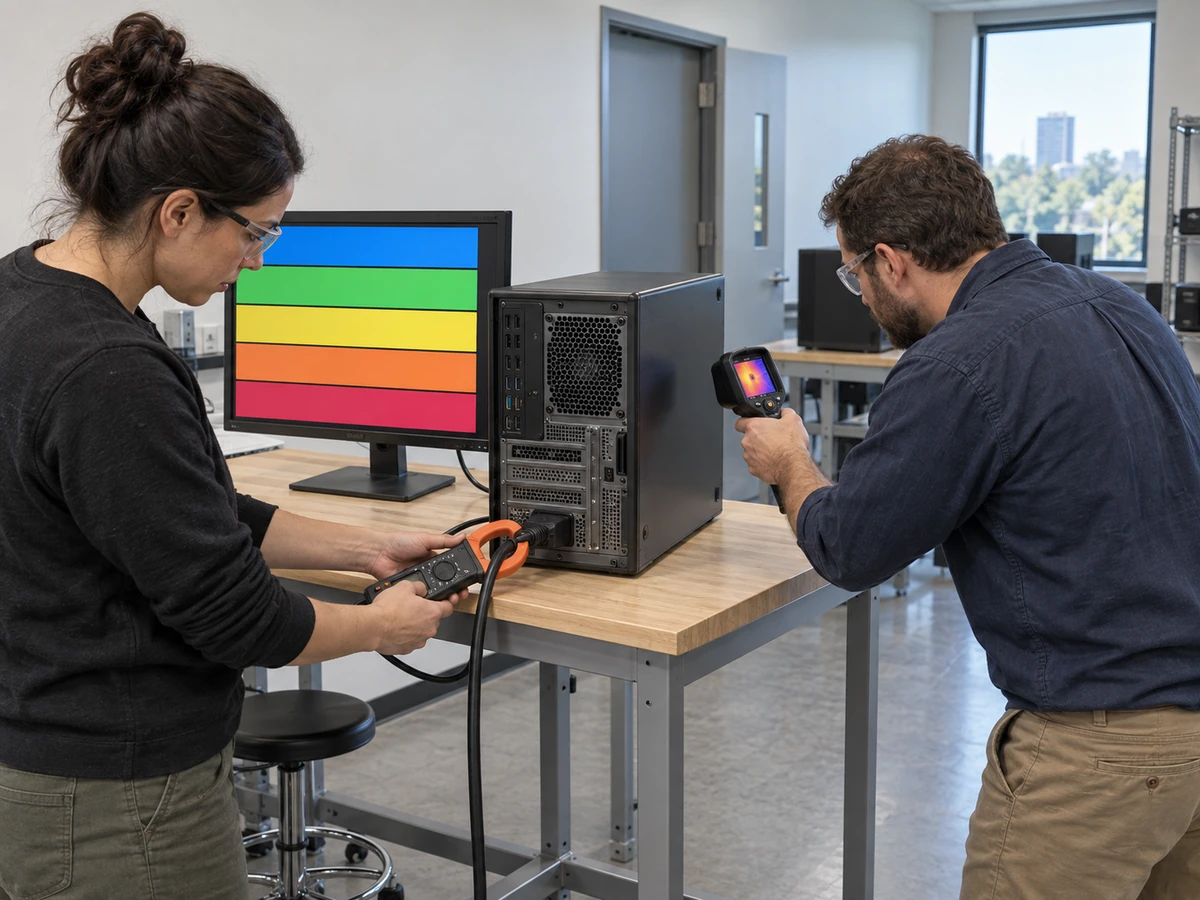
For a local model, log the exact weights, quantization, context length, prompt size, output length, runtime, and power mode. Measure load time, time to first token, sustained tokens per second, peak memory, and whether the system throttles during a repeated run.
Then evaluate the output. A faster local model that misses the repository conventions or produces unusable code does not remove cloud spend; it adds review cost and often triggers a second run elsewhere.
Run the same workflow after a restart and after another memory-heavy tool opens. Unified memory is shared, so a model that fits in isolation may compete with the editor, browser, containers, graphics, and build process.
Include the quiet costs in the comparison: model download time, local storage, backup exclusions, security scanning, developer support, and the electricity used during sustained inference. Local execution avoids a per-token invoice but it does not make compute, maintenance, or review unmetered.
Privacy claims also need a network trace. Verify whether prompts, telemetry, crash data, model updates, and license checks leave the machine, then compare that observed behavior with the policy the team expects to offer customers.
Who has a credible reason to wait
Project Zenith is interesting for teams with confidential or latency-sensitive local inference, repeated workstation provisioning, large native builds, or a development product that itself targets Windows AI hardware. The combination may reduce both setup time and metered inference.
A buyer whose work is mostly remote development, cloud CI, or small local models may get more from a conventional machine, a better network, and a versioned setup script. The hardware headline is less useful when the bottleneck lives in a shared service.
Procurement should wait for exact system prices, memory configurations, thermals, service terms, driver support, and independent workload measurements. The September announcement establishes direction, not a universal return on investment.
Build a reversible pilot
Choose two developers and two representative repositories. Provision one Zenith-class system with the managed setup and one comparison machine with the same tool versions, then measure productive time rather than synthetic peaks.
Include a failure drill: corrupt the environment or rotate a key, and time the path back to a trusted state. That recovery number often matters more than the first boot demo.
The Neyrotex Windows local-AI overview maps the broader platform choices. The Windows App SDK versioning guide helps keep the runtime, framework, and package clocks separate.
Use the Neyrotex Desktop section to track the shipping tools, while treating Project Zenith as a measured procurement hypothesis until real systems reach buyers.