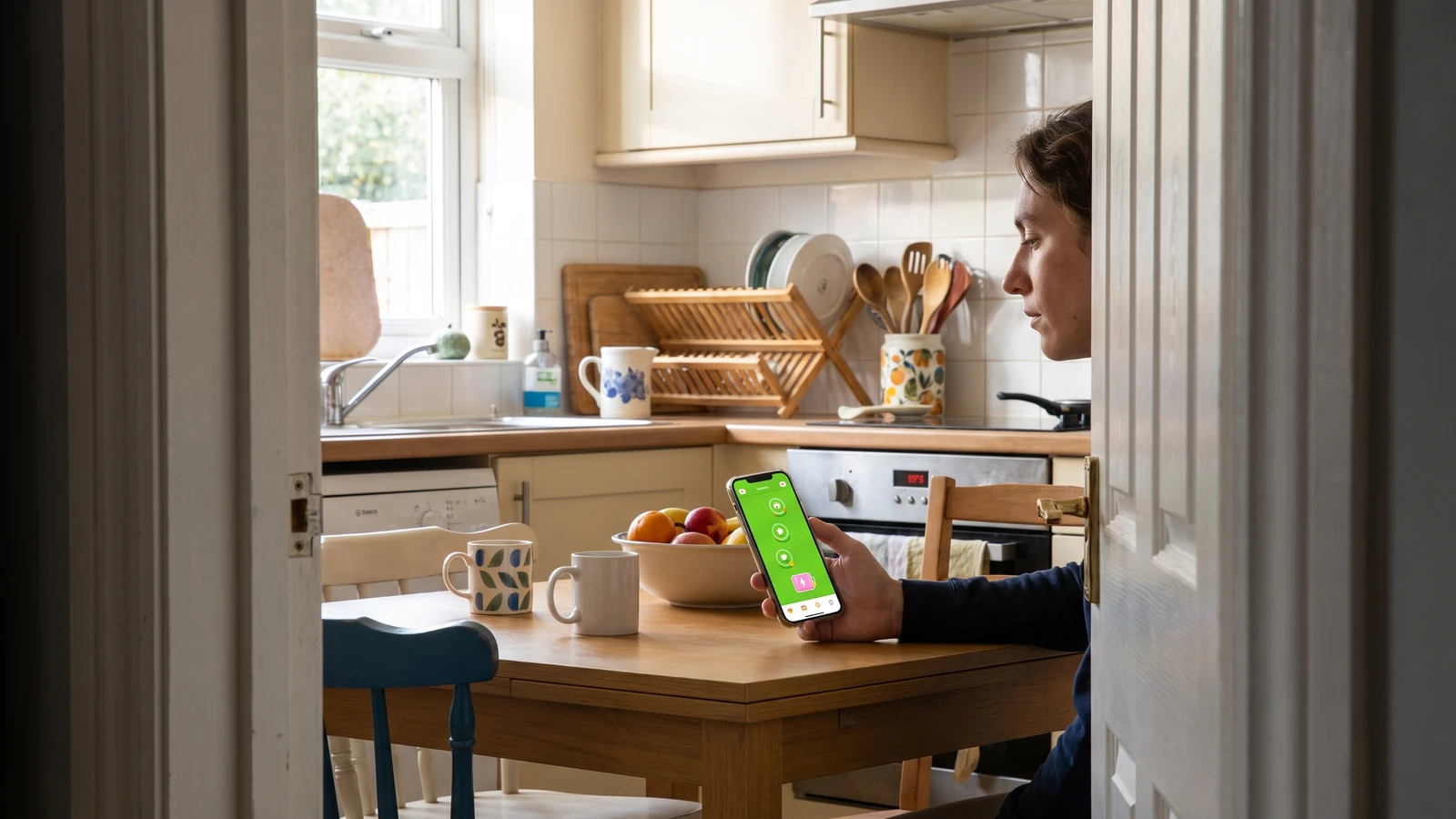
“More learners can make progress on Duolingo.” That is Duolingo’s stated case for Energy, but the public explanation does not include the experiment design, sample size, or a breakdown by course and platform. A learner looking at the battery from a kitchen table still has to decide what that claim means for today’s session.
The company may be right that Energy helps some beginners recover from mistakes. It can also be true that a learner who answers correctly still sees the battery fall and reaches a stopping point they did not choose.
Duolingo Energy system rules confirmed by the company
Duolingo says a free learner starts with a full battery, spends a little Energy during each lesson, and earns some back after several correct answers in a row. Correcting mistakes at the end of a lesson does not use Energy, and the battery fully recharges in about a day.
When charge runs low, the official options are to watch a rewarded ad, spend gems on a refill, or wait. Bonuses may also appear after perfect lessons, adding a friend, or opening reward chests.
What the primary source establishes
- Confirmed: lessons consume Energy; correct streaks and selected rewards can replenish it.
- Confirmed: Duolingo says beginners were twice as likely to run out of Hearts under the previous system.
- Company claim: internal data indicates that more learners complete lessons with Energy.
- Not disclosed on the public page: cohort definitions, platform split, effect size, retention window, or adverse outcomes.
The free-session loop
- Start fullOpen a lesson with available Energy.
- Spend chargeProgress through questions while the battery decreases.
- Earn some backBuild a correct-answer streak or collect a qualifying reward.
- Choose at low chargeWatch an ad, spend gems, wait for recharge, or consider Super.
Why this small battery matters to Duolingo
Energy sits at the intersection of learning design and subscription economics. In its second-quarter 2026 shareholder letter, Duolingo reported 58.7 million daily active users, 12.7 million paid subscribers, and $298.5 million in quarterly revenue.
The same filing says the company tests hundreds of product changes through its internal experimentation system, which it calls the Green Machine. Duolingo frames monetization work as a search for growth that does not add excessive friction for free users.
That makes Energy more than a cosmetic replacement for Hearts. The system can influence how long a free session lasts, when an ad becomes attractive, and when unlimited Energy in Super begins to feel valuable.
The filing also notes that prior-year comparisons included the initial Energy rollout. That does not prove Energy caused a particular subscription result, but it confirms that management treats the feature as material to monetization and growth.
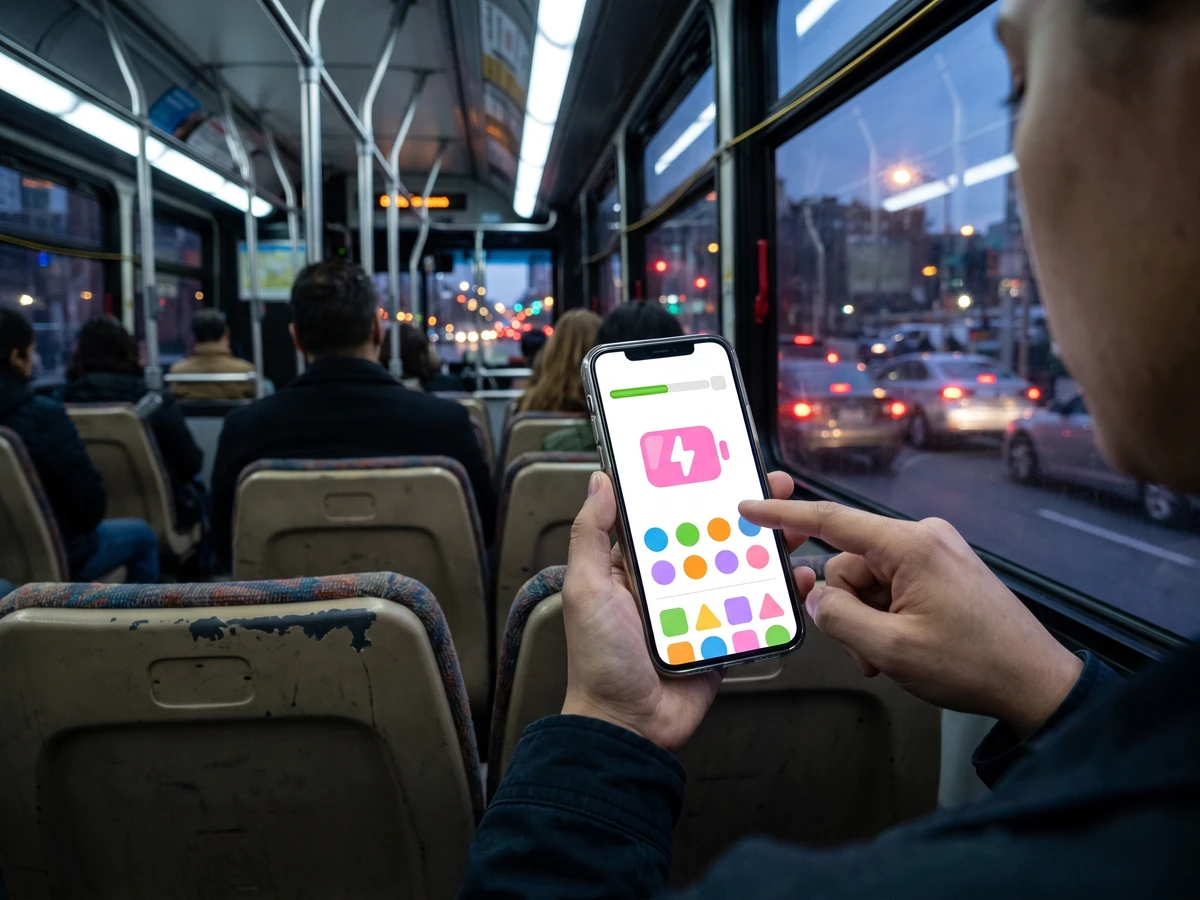
Picture a commuter holding a smartphone during a short trip: the pink Energy battery reaches low charge before the language lesson is finished. That scene captures the interruption a real account-level test needs to measure.
Where the official story and user reports diverge
Duolingo describes Energy as a more balanced system that rewards good answers. A highly discussed September 2026 Reddit post instead describes the battery draining despite correct answers and presents that experience as a reason to leave.
That post is evidence of dissatisfaction, not evidence of typical behavior. Reddit does not reveal the user’s full account configuration, course, experiment group, platform version, or exact lesson sequence.
Another community report claims that some Legendary questions consumed multiple Energy units. Treat that as a test hypothesis rather than a product rule until it can be reproduced on a named build and account state.
Evidence ledger
| Question | Best available evidence | Confidence |
|---|---|---|
| Does every lesson use Energy? | Duolingo says each lesson uses some. | High |
| Can correct answers restore it? | Duolingo says consecutive correct answers can earn Energy. | High |
| Does Energy improve completion? | Duolingo reports a positive internal result without public methodology. | Medium |
| Do some users find correct-answer drain punitive? | Recent Reddit and app-store complaints describe that reaction. | High for the existence of complaints; unknown prevalence |
| Is the behavior identical on iOS, Android, and web? | No complete public parity table was found. | Unknown |
App-store wording adds another reason to test your own account
The current US App Store listing describes Super Duolingo as providing unlimited Energy. The Google Play listing still contains wording about unlimited Hearts in parts of its description.
Store copy can lag a staged rollout, so the mismatch does not prove that Android and iOS behave differently. It does mean a buyer should trust the entitlement shown inside the purchase screen on their own account, not a generic description quoted elsewhere.
Google Play’s developer-provided data-safety section also says the app may share app activity and device identifiers, and may collect personal and financial information among other categories. That disclosure is separate from Energy, but it belongs in any decision about using a learning app every day.
How to test the battery before paying
A defensible Energy test needs a fixed task, a screen recording or written log, and the exact app version. Run it before starting a Super trial so the free-state behavior remains visible.
- Capture the baseline. Note platform, app version, course, unit, starting Energy, and whether the account is in a trial.
- Run a clean lesson. Record starting and ending Energy, question count, correct streaks, bonuses, elapsed time, and any ad prompt.
- Run a mistake-heavy lesson. Use a comparable lesson and record the same fields. Do not deliberately damage a course you care about; a practice path is enough.
- Run a longer block. Continue until the planned study time ends or Energy interrupts it. Record which event happened first.
- Check the recovery path. Note recharge time, ad availability, gem price, and whether rewards appear consistently.
The test result should be a range, not a single number. Duolingo actively experiments with product behavior, so another account may receive a different configuration.
Who should keep the free plan, and who should reconsider
Keep the free plan if one or two short lessons satisfy your daily goal and the refill choices do not break concentration. Energy can provide a stopping cue without blocking the habit you actually want.
Consider Super if your own log shows repeated interruptions during focused sessions and the subscription price is worth removing them. Confirm the exact entitlement and local price inside the app first, because store text and experiments can change.
Consider another learning method if the battery changes what you practice, pushes you toward easy answers, or replaces conversation time with resource management. Neyrotex’s guide to learning apps and mobile education explains why engagement mechanics should support a learning job rather than become the job.
For product teams, the broader lesson belongs in our Mobile Development coverage: a limit feels fair when the user can predict it, recover from it, and see a connection between the constraint and the value delivered. Our Android 17 mobile development analysis also shows why staged platform behavior must be tested on a named build instead of inferred from generic store copy.