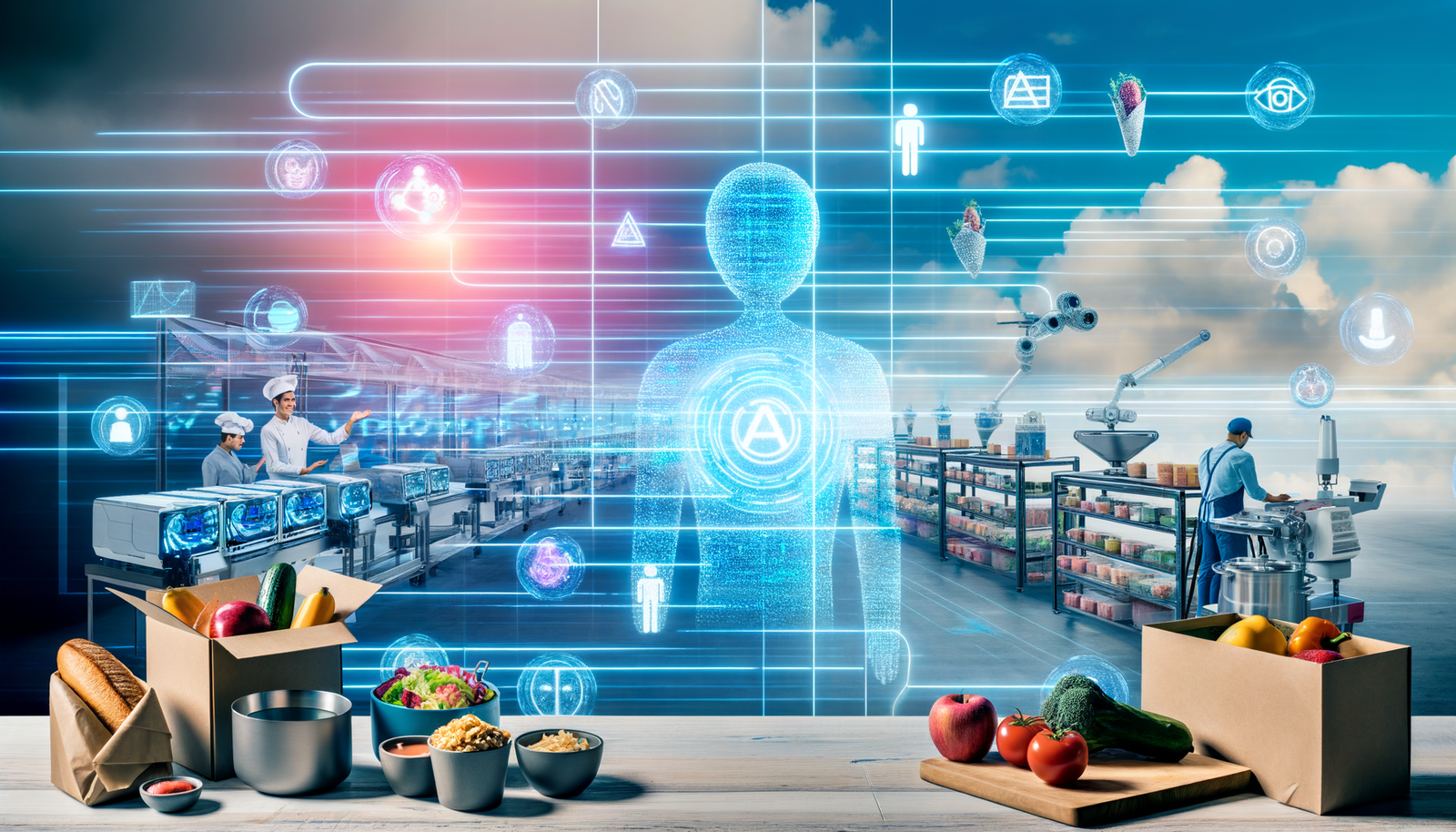
In today’s fast-paced food industry, innovation is key to maintaining efficiency and competitiveness. Companies like Cargill and General Mills are at the forefront of this transformation, harnessing the power of artificial intelligence to revolutionize food production. Through AI-backed demand forecasting, supply chain tracking, and even prototype generation, businesses aim to streamline operations while ensuring that human workers remain an integral part of the process. Coca-Cola’s holiday commercials, created with AI assistance, underscore this commitment to enhancing productivity without sacrificing the human touch. Join us as we explore these groundbreaking advancements reshaping the future of food.
AI: The New Ingredient in Food Production
In recent years, the food and beverage industry has seen a seismic shift with the rise of artificial intelligence (AI). Not just a buzzword, AI is becoming a crucial component that ties together not only how products are created and distributed but also how consumers engage with brands. When we think about daily meals and their complex supply chains, it’s clear that AI is the unsung hero making it all possible. It’s automating repetitive tasks, analyzing vast amounts of data, and delivering insights that lead to smarter decision-making, ultimately revolutionizing food production in ways we never thought imaginable.
Whether it’s predicting which flavors will dominate the market or designing the next best-selling snack, companies like Cargill and General Mills are flipping the script, using AI to enhance every aspect of food production. Intriguingly, while humans and machines work side by side, it’s important to note that the human touch is not being diminished. Instead, AI is acting as a force multiplier, amplifying human capabilities and allowing workers to focus on the creative aspects of food development.
The Role of Demand Forecasting
One of the most exciting applications of AI in the food industry lies in demand forecasting. The ability to predict consumer behavior and preferences is invaluable for companies operating in a landscape characterized by rapid change and uncertainty. Gone are the days when businesses relied solely on gut feelings or historical data to gauge future demand. Advanced algorithms are now capable of analyzing everything from social media trends to local events that might influence food choices.
– Data Diversity: By pulling data from various sources, AI can provide insights that are far more accurate and reliable.
– Seasonal Trends: Understanding seasonal fluctuations helps companies prepare and adjust their inventory accordingly.
– Consumer Sentiment Analysis: AI can analyze product reviews and social media interactions to gauge how products are perceived.
At General Mills, AI is being deployed in innovative ways to predict potential spikes in demand for specific brands like Cheerios or Haagen-Dazs. By understanding what drives consumer decisions, the company is better prepared to meet demand while minimizing waste. This proactive approach is a game-changer—ensuring that popular products are available when consumers want them most.
Supply Chain Optimization: The Backbone of Efficiency
The global food supply chain is a complex beast to tame. With many moving parts—from farming and production to distribution and retail—navigating these waters can be a daunting challenge. However, AI allows companies to streamline operations more effectively than ever. Cargill, a leader in agricultural supply chain management, has implemented AI tools to optimize its operations and enhance overall efficiency.
- Real-Time Tracking: AI technologies improve visibility within the supply chain, allowing for real-time tracking of product movement.
- Waste Reduction: By predicting where bottlenecks are likely to occur, companies can proactively address issues before they escalate.
- Predictive Maintenance: AI-driven analytics can predict when machinery is due for maintenance, reducing downtime and associated costs.
But it doesn’t stop there. The integration of AI is opening doors to new sustainability initiatives. By optimizing the supply chain, companies like Cargill are not only saving on costs but are also reducing their environmental footprint—an increasingly essential consideration in the age of climate change.
Prototype Generation and Product Development
Imagine being able to quickly generate multiple prototypes for a new snack flavor without significant time and resource investment. That’s where AI shines. By analyzing market trends and consumer preferences, AI can generate prototypes that are more likely to resonate with consumers.
AI-driven technologies such as machine learning are now revolutionizing the product development lifecycle. This innovation allows food companies to:
- Rapid Testing: AI algorithms can evaluate consumer reactions to different prototype flavors within days, not months.
- Flavor Optimization: By analyzing previous successes and failures, AI enables companies to curate flavors that are statistically more likely to succeed.
- Cost-Effectiveness: Streamlined processes lower the cost of innovation, allowing companies to explore new ideas without fear of financial loss.
General Mills is already experimenting with AI-driven product development, which is not only improving the speed of innovation but also empowering teams to take risks in flavor combinations they might not have considered before.
The Human Element in AI-Driven Food Production
While the impact of AI on the food and beverage industry is profound, it’s essential to remember the role humans continue to play. Far from being replaced, human workers are becoming more integral to the process. AI can provide insights, but it’s the people behind the technology who interpret the data and make crucial decisions.
By relieving teams of the more mundane tasks, AI enables culinary experts and product developers to focus their creativity on what they do best—crafting delicious food products. For instance, Coca-Cola’s recent holiday commercials were not entirely the work of algorithms, but rather guided by human creativity augmented through AI insights. This balance signals a bright future where creativity and technology complement each other rather than compete.
The Future of Food
It’s an exciting time to be in the food industry. As Cargill, General Mills, and other innovators continue to harness the potential of AI, we can look forward to a future filled with endless possibilities. Flavor innovation, enhanced efficiency, and sustainability are just a few of the advantages that AI is bringing to the table.
However, the conversation should also include ethics, transparency, and how these tools will shape future food experiences. As brands prep for a more interconnected world, consumers are increasingly putting pressure on companies to disclose their methods, favoring transparency over ‘black-box’ solutions.
Conclusion
AI’s influence on the food and beverage industry is a testament to innovation that is not only good for business but is also aligned with consumer values. Companies like Cargill and General Mills are paving the way for a revolution in food production, utilizing AI to enhance productivity and improve the human touch.
The rise of machine learning, analytics, and data-driven decisions will only continue to grow, transforming how we interact with our food. By embracing these advancements, we are not just making food faster or cheaper; we are crafting a comprehensive experience that values both innovation and human creativity.
So, as we move forward together, let’s celebrate these advancements and look to a promising future in the world of food. To learn more about collaborations that leverage the power of advanced technologies like AI, check out Neyrotex.com.