For decades, oncology has operated on a reactive paradigm. Malignancies were identified only after physical tumors grew large enough to be detected on conventional computed tomography scans or caused noticeable physiological symptoms. By the time a patient felt pain or discovered a mass, the disease had frequently progressed to advanced, difficult-to-treat stages.
In 2026–2028, the medical technology landscape is experiencing a profound transformation. The convergence of multimodal AI foundation models, next-generation liquid biopsy sequencing, and predictive molecular pathology is shifting cancer care toward proactive, early-stage interception.
Recent clinical presentations at major oncology symposiums—including ASCO Breakthrough 2026 and the AACR Annual Meeting—demonstrate that modern neural networks can identify subtle epigenetic methylation patterns and microscopic circulating tumor DNA fragments in blood samples long before traditional radiology can visualize an anatomical lesion.
The Multi-Omic Shift: Modern cancer screening is no longer limited to standalone visual imaging. AI systems now cross-analyze genomic sequencing, blood-based cell-free DNA methylation, and high-resolution histology simultaneously to detect early-stage cellular abnormalities.
- False-Positive Reduction: Integrated AI diagnostic algorithms reduce unnecessary invasive biopsies by up to 42% compared to conventional standalone radiologic screenings.
- Personalized Drug Matching: AI models analyzing lab-grown tumor organoids can predict specific patient chemotherapy and immunotherapy responses in days rather than months.
- Equitable Screening Access: Non-invasive blood liquid biopsies paired with automated AI cloud interpretation allow community health clinics to deliver specialist-grade early screening at a fraction of historic hospital costs.
Multi-cancer early detection sensitivity achieved across stage I and II malignancies when combining AI methylation analysis with blood liquid biopsies.
The Problem: Why Traditional Cancer Screening Falls Short
Traditional cancer screening methods have historically suffered from two major limitations: late-stage detection windows and high rates of diagnostic ambiguity.
When doctors evaluate standard mammograms, low-dose lung CT scans, or colonoscopies, they rely on human visual interpretation of macroscopic structural changes. This diagnostic workflow creates severe real-world challenges:
- Diagnostic Fatigue and Workload: Overburdened hospital radiologists review hundreds of imaging studies daily. Microscopic tissue density variations or faint ground-glass lung nodules can be easily missed during routine visual triage.
- The Burden of False Positives: Ambiguous imaging signals often trigger invasive surgical biopsies, patient anxiety, and unnecessary medical procedures, straining healthcare resources.
- Organ-Specific Blind Spots: Highly aggressive cancers—such as pancreatic ductal adenocarcinoma, ovarian cancer, and glioblastoma—currently lack effective population-wide routine screening tests, meaning they are overwhelmingly diagnosed at late, metastatic stages.
- Detects cellular DNA methylation signals from a simple blood draw.
- Screens for over 50 distinct cancer types in a single screening panel.
- Combines imaging, genetics, and pathology data for complete diagnostic context.
- Enables early stage I surgical resection with dramatically higher survival rates.
- Requires separate invasive procedures for each individual organ.
- Detects tumors only after significant anatomical growth has occurred.
- Produces high rates of false-positive alarms leading to unnecessary biopsies.
- Fails to screen for asymptomatic, highly aggressive internal malignancies.
How AI Foundation Models Intercept Cancer Early
Unlike narrow machine-learning algorithms of the past decade that were trained solely on single-modality X-rays, modern medical foundation models are trained on vast multimodal datasets spanning millions of electronic health records, genomic sequences, pathology slides, and real-world clinical outcomes.
When applied to clinical diagnostics, these models operate across four interconnected stages of analysis:
Liquid Biomarker Sampling
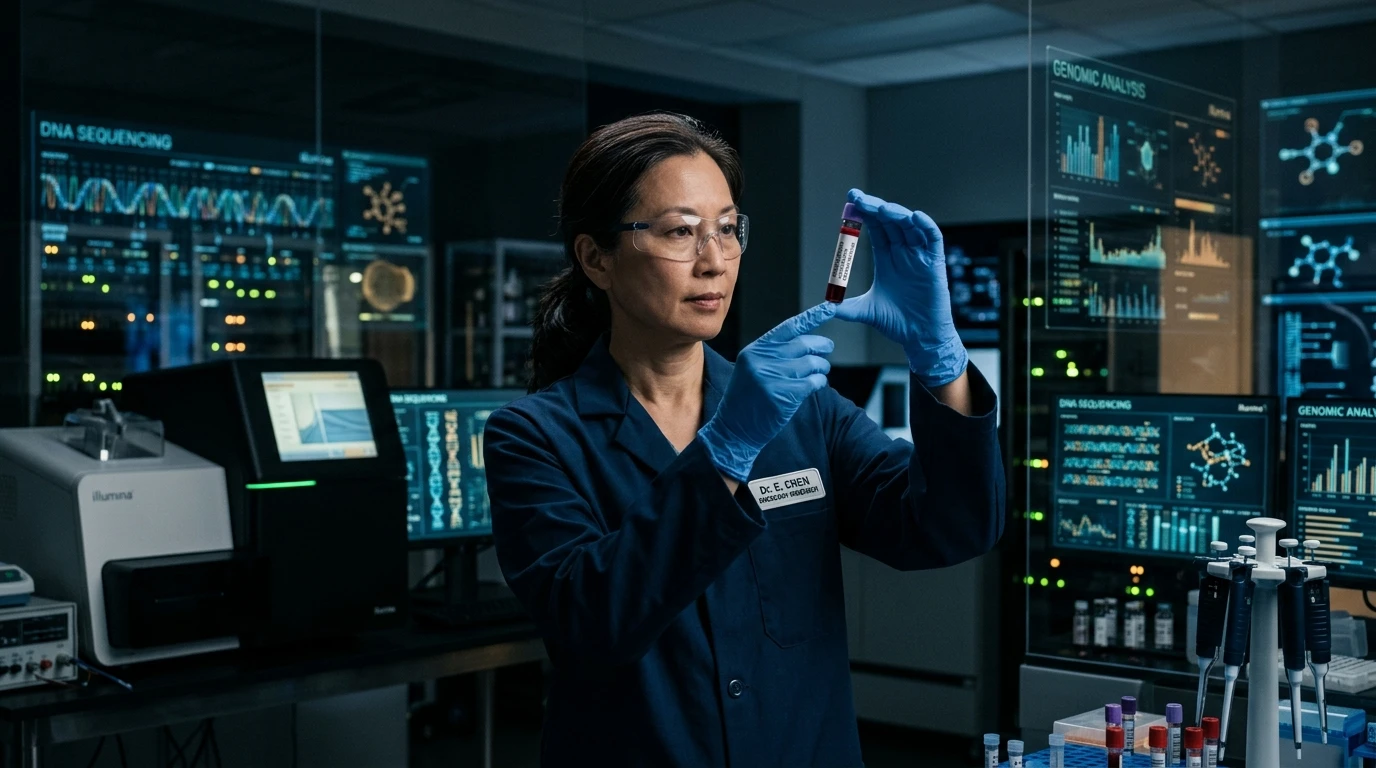
A routine blood sample is drawn to isolate circulating cell-free DNA (cfDNA) and extracellular vesicles released by early-stage malignant cells.
Deep Neural Sequencing
High-throughput genomic sequencing feeds billions of base-pair methylation signals into trained AI foundation models to identify abnormal genetic fingerprints.
Tissue of Origin Mapping
The AI system pinpoint-locates the exact anatomical tissue of origin where the abnormal cancer cells originate with over 90% localization accuracy.
Targeted Therapy Synthesis
The algorithm matches the patient’s specific molecular mutation profile against global clinical trial registries to recommend optimal personalized therapies.
“The future of oncology is not simply treating cancer when it becomes a visible crisis. The future is intercepting the molecular precursor signals years before a tumor ever takes physical root in the body.”
— World Oncology Congress & AACR Precision Medicine Panel 2026
AI in Drug Discovery and 3D Tumor Organoid Modeling
Beyond early detection, AI technology is fundamentally accelerating how oncologists test therapies. In cutting-edge research facilities, scientists now cultivate 3D patient-derived tumor organoids—microscopic living replicas of a patient’s actual tumor grown in laboratory cultures.
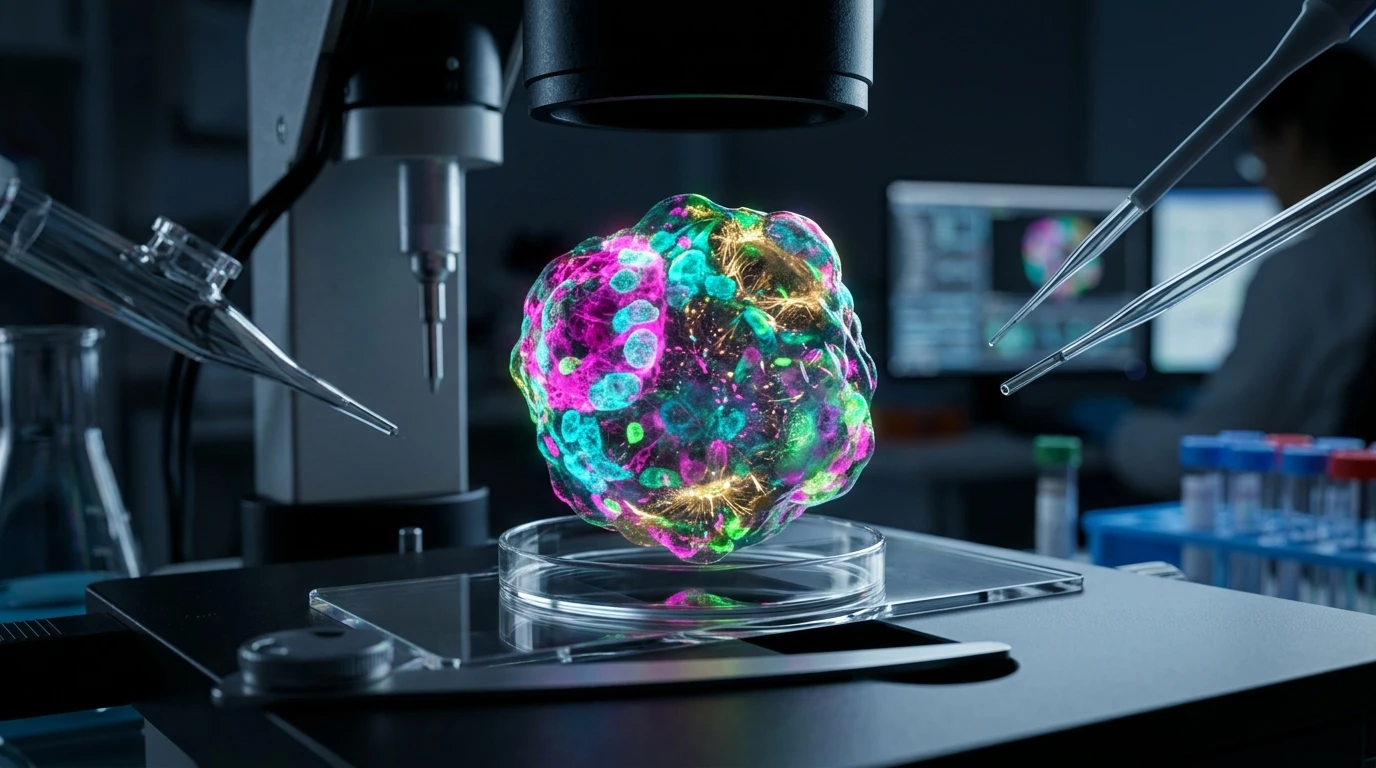
Robotic automated imaging systems combined with computer vision track how hundreds of therapeutic drug combinations interact with these organoids in real time. Machine learning algorithms analyze cellular death rates, drug resistance mechanisms, and toxicities across thousands of potential compounds simultaneously.
Instead of subjecting cancer patients to months of grueling, trial-and-error chemotherapy regimens, oncologists can simulate treatment efficacy digitally and select the precise therapy that demonstrates the highest eradication rate for that individual patient’s unique genetic subtype.
Recommended Breakthrough Platform
As healthcare organizations modernize their diagnostic infrastructure, enterprise platforms that unify multi-omic cancer screening with seamless laboratory workflows are leading global adoption.
GRAIL Galleri
Why we recommend it: A pioneering multi-cancer early detection blood test that utilizes advanced AI methylation sequencing to screen for more than 50 types of cancer before visible symptoms emerge, with high tissue-of-origin localization accuracy.
Looking Ahead: The 2027–2028 Oncological Horizon
Over the next three to five years, the integration of on-device AI diagnostics, continuous wearable health monitoring, and accessible blood-based multi-omic panels will make routine annual cancer screening as simple and affordable as a standard cholesterol check.
As regulatory agencies worldwide streamline the clinical validation pathways for AI-guided medical software, the burden of cancer will transition from an unpredictable life-threatening emergency to a manageable, preventable, and early-curable condition for millions of individuals worldwide.