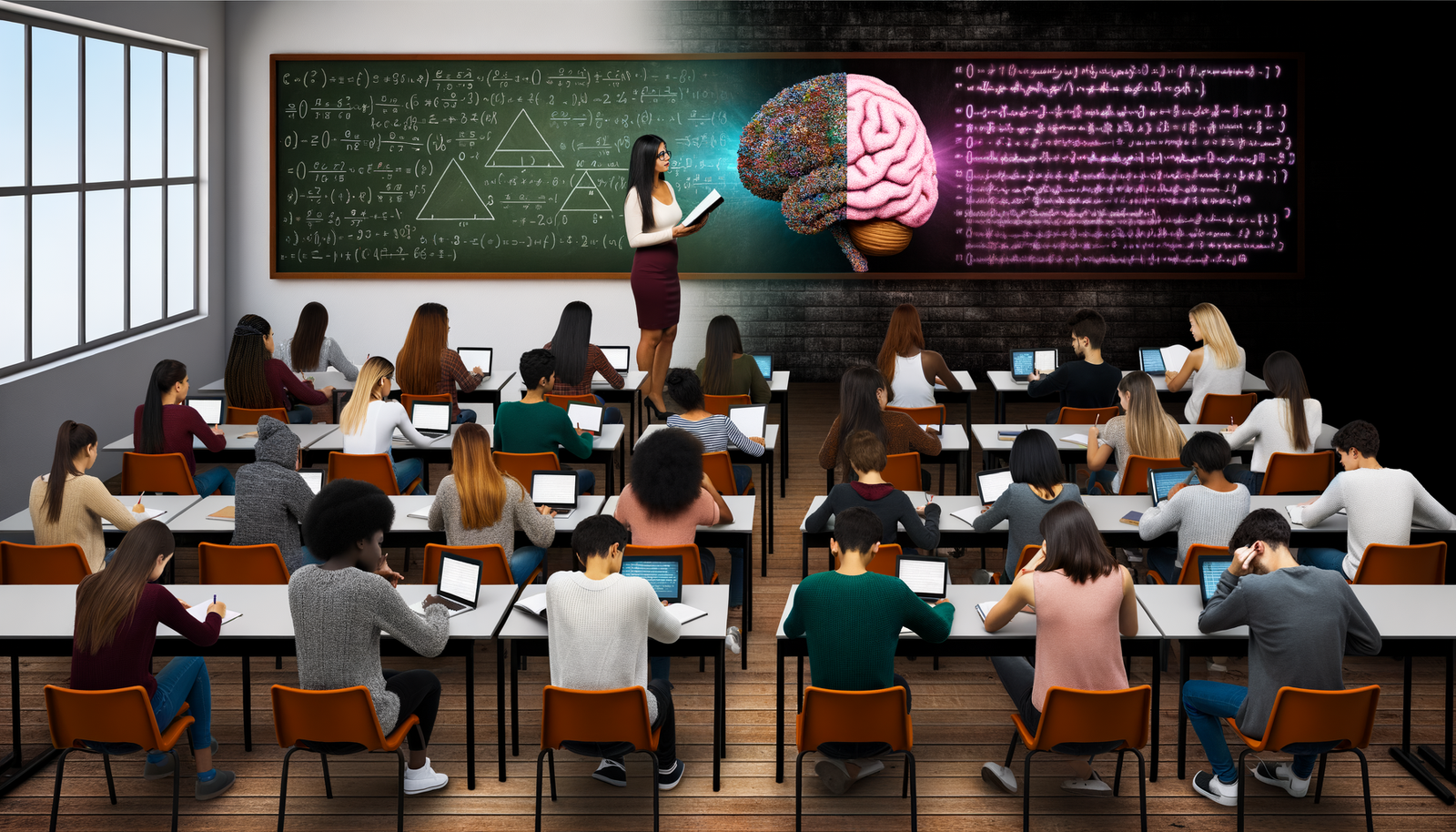
As the integration of artificial intelligence in education grows, a troubling narrative is emerging. A recent discussion highlights an alarming trend: AI Crisis: Professors Warn It’s Diminishing Student Thinking. Over a dozen educators have expressed their concerns about the waning critical thinking skills among students, attributing this decline to the ease with which AI tools can generate answers and complete assignments. In response, these professors are taking action to counteract the negative impacts of technology, striving to foster a learning environment that values creativity and cognitive engagement over mere convenience.
Understanding the AI Crisis in Education
The rise of artificial intelligence in the educational landscape has created an intriguing dichotomy: offering unprecedented access to information while simultaneously undermining the core intellectual skills that traditional education aims to develop. With tools like ChatGPT and other AI technologies readily available at students’ fingertips, many educators have observed a worrisome trend emerging—the erosion of essential critical thinking abilities. As professors delve deeper into this issue, the question arises: are these AI technologies a boon for knowledge or a detriment to cognitive growth?
Critical Thinking: The Cornerstone of Education
Critical thinking is the bedrock of a comprehensive education. It encompasses the ability to analyze, evaluate, and synthesize information—skills crucial for sound decision-making, problem-solving, and effective communication. However, educators are increasingly concerned that the prevalent use of AI tools is minimizing these skills in students.
- Instant Gratification: Students can easily obtain answers without exerting much effort, leading to a reliance on AI rather than active engagement with the material.
- Dependency on Technology: As students rely more on AI for assignments, their ability to think independently begins to dwindle.
- Superficial Understanding: Quick answers provided by AI may not encourage deeper learning or critical analysis of the subject matter.
Faculty Concerns: Voices of Experience
Across campuses, faculty members are echoing similar sentiments about the impact of AI on student engagement. With personal anecdotes and observations, these educators shed light on the broader implications of this issue. Here are a few voices from the front lines:
- Professor Sarah Johnson, a philosophy instructor, stated that when presented with complex problem-solving tasks, students often default to AI-generated solutions, missing out on the opportunity to grapple with difficult concepts.
- Dr. James Carter, an English professor, reported a noticeable decline in students’ writing skills, citing instances where AI tools have been used to produce essays with little to no input from the students themselves.
- Professor Lisa Chang, who teaches psychology, observed that students’ ability to engage in meaningful discussions has diminished, as they often rely on AI to provide them with thoughts and opinions instead of formulating their own.
AI’s Role: The Double-Edged Sword
While AI tools can enhance the learning experience by simplifying complex topics and facilitating educational access, this technology also presents an opportunity for students to bypass traditional modes of critical engagement. A paradox arises where students have access to valuable resources, yet they may choose to rely on instant solutions instead of honing their analytical capabilities.
Additionally, these AI systems are not infallible; misinformation can proliferate when students accept AI-generated content without adequate scrutiny. The failure to identify and challenge inaccuracies may erode not only critical thinking skills but also the capacity to recognize flawed reasoning from established authorial voices. This reliance on AI as a ‘quick-fix’ negatively impacts a student’s intellectual growth.
Combatting the Erosion of Critical Thinking
Recognizing the AI crisis universities are facing, educators are taking thoughtful measures to reestablish a robust emphasis on critical thinking within the classroom. Innovative strategies are being implemented, aimed at fostering intellectual curiosity while harnessing the advantages of technology.
- Incorporating AI Critically: Professors are introducing assignments where students use AI tools while simultaneously approaching the material with skepticism, encouraging them to identify biases and inaccuracies.
- Project-Based Learning: Educators are emphasizing projects that encourage students to explore ideas independently rather than responding to straightforward prompts with AI assistance.
- Group Discussions: Facilitating open dialogues in class creates opportunities for students to express their opinions, reflect critically on their viewpoints, and engage constructively while reducing reliance on AI.
Redefining Success in the AI Era
In this era of rapidly evolving technology, defining success has transformed significantly. Traditional forms of assessment may no longer capture the true capabilities of students inundated by AI resources. Educators must therefore adapt their evaluation methods to reflect a nuanced understanding of what it means to learn effectively.
Success will increasingly hinge on students’ ability to leverage technology while remaining dynamically engaged in the learning process. Navigating the AI landscape will require students to think critically about their interactions with technology and learn to synthesize information purposefully. Emphasizing learning outcomes that prioritize engagement and critical analysis reignites the importance of academic rigor in higher education.
A Call to Action
The consensus among educators highlights an urgent need for action. By embracing the potential of AI while maintaining a steadfast commitment to fostering independent thought, institutions can create a more balanced approach to education. This approach involves encouraging students to leverage AI as a supplementary aid rather than a crutch that holds them back from genuine intellectual development.
As these professors continue to advocate for cognitive engagement, they challenge education leaders and policymakers to align curriculum frameworks with this shifting paradigm. The goal should be to leverage technology responsibly, safeguarding the essential virtues of critical engagement and creativity that define quality education.
Conclusion: The Future of Learning
In the context of an AI crisis that threatens to diminish student thinking, educators are rising to the challenge with resilience and innovation. As they emphasize the restoration of critical thinking skills, it is an opportunity for future generations to embrace technology as a tool that enhances understanding rather than compromises it. With thoughtful strategies implemented to empower students, the educational landscape can become a space where creativity, intellectual curiosity, and engagement thrive.
Ultimately, the impact of AI tools on education hinges on the choices students and educators make across classrooms. Only through conscientious engagement with technology and rigorous academic standards can we cultivate a generation that not only excels in knowledge but possesses the critical thinking skills necessary for navigating an increasingly complex world.
To explore more about the intersection of AI and education, visit Neyrotex.com.