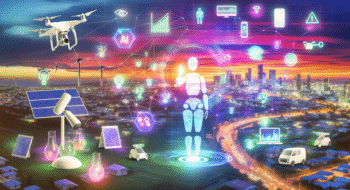
In an era defined by rapid technological advancements, the conversation shifts to a pivotal question: what is the true impact of artificial intelligence on humanity’s future? Michael A. Smith explores this pressing issue in his insightful piece that delves into the intricate interplay between AI and our evolving society. As we stand at the crossroads of innovation and ethics, “Unveiling the Future: AI’s Impact on Humanity’s Destiny” invites us to consider the potential benefits and challenges that lie ahead. How will AI shape our hopes, fears, and the very fabric of our existence? Join us in this exploration of what truly awaits.
AI and the Dawn of a New Era
Artificial intelligence is no longer the realm of science fiction; it has woven itself into the very fabric of modern life. From voice assistants like Siri and Alexa to complex algorithms powering our favorite streaming services, AI’s ubiquitous presence raises the question: just how deep are its roots growing in the soil of our society? In the coming years, we’ll likely see AI continue to expand beyond mere automation, becoming a crucial player in diverse sectors, including healthcare, education, and even environmental conservation.
The Benefits of AI: A Hopeful Outlook
The enhancements brought by AI could result in impressive advances that may change our understandings of efficiency and productivity. It is essential to dive into these benefits, as they give us a glimpse of how AI’s impact on humanity’s future can be both positive and transformative:
- Healthcare Revolution: AI has the potential to revolutionize diagnostics, patient care, and drug discovery. Machine learning algorithms can analyze patient data with unprecedented precision, assisting healthcare professionals in making swift, informed decisions.
- Education Tailored to Varying Needs: The advent of AI is ushering in personalized learning experiences, providing tailored curricula and tutoring based on an individual’s pace and grasp of subjects, thus fostering greater student engagement and performance.
- Environmental Sustainability: AI can enhance our abilities to predict climate change patterns and optimize resource management. Smart systems can improve energy efficiency, monitor pollution levels, and support sustainable practices in agriculture.
- Economic Growth: With the capacity to innovate existing products and services, AI is poised to fuel economic growth, creating new job opportunities in industries previously inconceivable.
AI’s Double-Edged Sword: Challenges Ahead
While the benefits are abundant, we also must acknowledge the significant challenges and risks associated with AI. Failing to heed these warnings can compromise not only the development of AI itself but also society’s engagement with this groundbreaking technology:
- Job Displacement: With automation increasingly taking over repetitive tasks, millions may find themselves out of work, leading to economic disparity. It’s crucial to rally around initiatives that focus on retraining and skill development to mitigate these impacts.
- Bias and Fairness: AI systems, trained on historical datasets, often unintentionally perpetuate bias. For example, facial recognition technology has faced criticism for disproportionately misidentifying individuals of color. Addressing such biases is vital in creating equitable systems.
- Privacy Concerns: The ability of AI to analyze copious amounts of personal data raises pertinent questions about privacy. Striking a balance between innovation and individual rights is essential to maintain public trust.
- Ethical Dilemmas: The potential for AI to make decisions autonomously could lead to unforeseen ethical dilemmas. As these technologies evolve, society must engage in thoughtful discourse about the moral implications of AI decision-making.
The Role of Humans in Shaping AI’s Future
As we teeter on the edge of an AI-driven future, the human element remains crucial in guiding its development. It’s not enough to marvel at the technological wonders; we must actively engage in conversations about the direction we want AI to take:
- Interdisciplinary Collaboration: The future of AI cannot be shaped by technologists alone. Professionals across various disciplines—ethicists, sociologists, and educators—must collaborate to ensure that AI serves humanity as a whole.
- Regulatory Frameworks: Governments and organizations must establish robust regulatory frameworks that will guide the ethical development of AI. By fostering transparency, accountability, and inclusivity, we can pave the way for a balanced approach to AI integration into society.
- Public Engagement: Engaging the public in discussions about AI’s future can prevent fear and skepticism. Awareness, understanding, and an open dialogue are essential in building a society that leverages AI while protecting individual rights and freedoms.
A Vision for the Future
Imagine a world where AI seamlessly enhances our human capabilities rather than replaces them. As we envision the impact of artificial intelligence, it’s crucial to recognize that the foundation for a promising future lies in the choices we make today. The responsibility falls on us—developers, policymakers, and, fundamentally, every individual—to collaborate toward a shared objective.
AI’s impact on humanity’s destiny will ultimately be shaped by our collective actions, ethics, and values. Striving for a future where technology serves as a tool for good requires perseverance, imagination, and compassion. The conversations we engage in today will resonate for generations to come.
The Countdown to Transformation
As we look to the future, it’s evident that the transformative powers of artificial intelligence are poised to redefine societal norms in unprecedented ways. The impact of AI on humanity’s destiny isn’t a distant concept—it’s happening now. With every self-driving car and voice-activated smart device, we are already on the path to a new reality.
As we embark on this incredible journey together, it’s essential to take a moment to pause and reflect: what type of future do we truly want? Optimism and opportunity are inherent in technology, but so is responsibility. By recognizing our role in shaping AI’s development and implementation, we ensure that it evolves into a force for good and progress.
The next chapter of human history will be written with an indelible mark left by artificial intelligence, fostering progress and challenges alike. This powerful narrative is unfolding in real-time, and everyone has a role to play. Will you be a catalyst for positive change in AI’s impact on humanity? The choice is yours.
As we navigate the intricate pathways ahead, we remain hopeful that humanity can embrace the challenges while amplifying the benefits of AI. This journey entails continuous learning, adaptation, and an unwavering commitment to safeguard ethical principles as we harness technology’s potential for the greater good. The future is bright—unveil it with us.
To learn more about AI and its potential effects on our lives, you can visit Neyrotex.com.