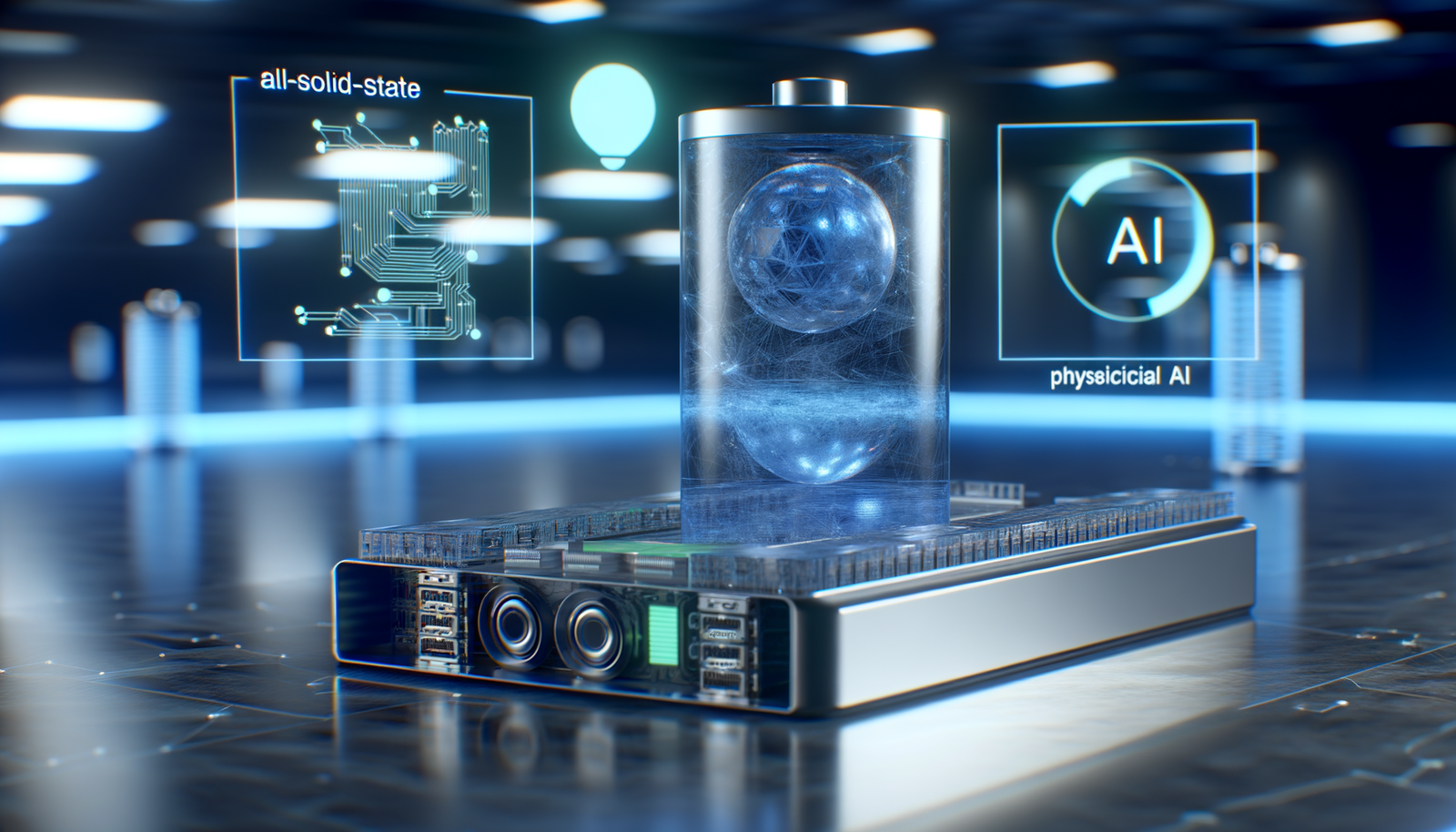
Samsung SDI is set to revolutionize tech with its game-changing all-solid-state battery, showcased in a sample pouch designed for physical artificial intelligence (AI) applications. This innovative battery technology promises enhanced energy density, safety, and longevity compared to traditional lithium-ion cells. As the world increasingly turns to AI and smart devices, the significance of efficient power sources becomes paramount. Samsung SDI’s advancements could pave the way for next-generation technology, transforming how we interact with our digital environment. Stay tuned as we explore the implications of this breakthrough in battery technology.
What is an All-Solid-State Battery?
At the core of this exciting development lies the all-solid-state battery (ASSB). Unlike conventional batteries that use liquid electrolytes, solid-state batteries use solid electrolytes. This means that they can offer several distinct advantages over their liquid counterparts—namely, significantly improved energy density and enhanced safety. But what exactly does that mean for technology, and why should we care?
The energy density of a battery essentially defines how much energy it can store relative to its weight. Higher energy density allows devices to run longer and perform better without needing frequent charges. Samsung SDI’s all-solid-state battery claims to push the boundaries by significantly increasing energy storage, which can lead to revolutionary applications in physical AI and beyond.
Why Solid-State Equals Safety
In the realm of batteries, safety concerns have always been a significant issue. Lithium-ion batteries, while efficient, have been notorious for their flammability and susceptibility to failure. Samsung SDI’s solid-state design mitigates these risks dramatically. The absence of flammable liquids means that there’s a much lower risk of combustion, and it’s more resistant to puncture or damage.
The Longevity Factor
Another colossal advantage of all-solid-state batteries is their longevity. Data indicates that solid-state batteries may endure up to several thousand cycles before degradation, compared to traditional lithium-ion batteries, which often lose capacity well before their expected lifespan. This durability could mean that devices powered by these advanced batteries will require less frequent replacements, benefiting both consumers and the environment alike.
The Impacts on AI and Smart Devices
As we move deeper into the age of artificial intelligence, the technological demands of smart devices will only intensify. We need powerful, reliable batteries that can keep up with increasingly complex processing tasks and the need for constant connectivity. Samsung SDI’s all-solid-state battery comes at an opportune moment, promising to satisfy these needs and unlock new capabilities in physical AI.
Consider applications such as autonomous vehicles, drones, and advanced robotics. Each of these relies on sophisticated AI systems that require substantial power over extended periods. The enhanced energy density and safety of these new batteries could lead to real breakthroughs that might seem almost science fiction today. Imagine electric cars that can run for thousands of miles on a single charge or drones that can operate longer and more safely than ever before. Samsung’s innovations could spearhead unprecedented advancements in these fields.
Market Implications and Competition
With its innovative all-solid-state battery, Samsung SDI is positioning itself as a leader in the rapidly evolving battery technology market. However, it’s worth noting that the competition in this sector is fierce. Other tech giants—such as Toyota and Panasonic—are also investing heavily in solid-state technology, each racing to unlock the secret to effective mass production and affordability. The outcome of this technological arms race can shape industries and cultures for decades to come.
Production Scalability: The Next Step
Developing an innovative battery is one thing; scaling up production is another beast entirely. Samsung SDI is aware of this crucial step, as the journey from laboratory prototypes to market-ready products poses both challenges and opportunities. While the company has ambitious plans for ramping up production, there’s an intricate dance involved in ensuring quality, efficiency, and cost-effectiveness.
- Investing in Infrastructure: Economic investment in state-of-the-art manufacturing facilities will enable the mass production of ASSBs.
- Supply Chain Management: Securing the materials necessary for production is essential for delivering solid-state batteries at scale.
- Research and Development: Ongoing R&D is vital for continuous improvement and innovation in battery technology.
The Larger Energy Landscape
This exciting development doesn’t exist in a vacuum. The shift towards solid-state batteries is fueled by a broader push for sustainable energy solutions. As environmental concerns rise globally, so does the pressure to deploy energy-efficient technology that can support renewable energy initiatives. Battery technology will play an essential role in energy storage and management systems, allowing for more effective use of solar and wind resources.
The Consumer Perspective
For the everyday consumer, the implications of Samsung SDI’s all-solid-state battery technology are enormous. Imagine a world where you can charge your device once and not have to reach for that charger again for days, if not weeks. As we become ever more reliant on our devices, an expansive battery life translates directly to improved user experiences and satisfaction.
Furthermore, as the average lifespan of batteries increases, consumers can also expect less waste, contributing to greener environmental practices. This aligns with the unapologetically digital lifestyle many of us lead—one that values durability, efficiency, and convenience.
The Road Ahead
Looking ahead, Samsung SDI’s all-solid-state battery could usher in a new era of technological innovation. As battery performance continues to evolve, one thing is crystal clear: the barriers between our physical and digital worlds are beginning to blur. Autonomous systems, smart homes, and cutting-edge devices that we once only dreamed about are now within reach, thanks in large part to advancements in power storage technology.
The potential applications of solid-state batteries extend well beyond consumer electronics; they could redefine energy storage systems in renewable energy, assist in energy management for smart homes, and power electrifying methods in robotics. As Samsung SDI forges ahead with these developments, the global tech landscape will undoubtedly benefit.
Conclusion: A Game-Changer on the Horizon
Samsung SDI’s unveiling of its all-solid-state battery marks a significant milestone in energy technology that promises not only to enhance current applications but also to fuel future innovations. As AI systems become more intertwined with our everyday lives, the demand for reliable and efficient power sources will only grow.
In a world increasingly driven by technology, we can’t afford to underestimate the importance of what’s powering our devices. In this context, Samsung SDI’s all-solid-state battery stands out as a beacon of change—a wonderful glimpse into how battery technology can meaningfully influence the future of tech, and perhaps even society itself.
As we keep an eye on this rapidly evolving field, let’s remain curious and hopeful about the myriad possibilities that await. For further insights into upcoming technologies, feel free to explore Neyrotex.com.