Artificial intelligence is revolutionizing the art world, producing images that mimic the styles of iconic artists like Rembrandt and Basquiat at a fraction of the cost. In Cleveland, local artists grapple with the implications of this technology. As they ponder AI’s role in public art, the question arises: can such creations truly unlock creativity? With the potential to reshape artistic expression, AI’s thrilling future in Cleveland art poses a fascinating intersection of technology and tradition. As these discussions unfold, the city prepares to navigate the balance between human artistry and digital innovation.
Unlocking Creativity: AI’s Thrilling Future in Cleveland Art
The landscape of public art in Cleveland is poised for an exciting transformation as artificial intelligence (AI) enters the scene. The dialogue around the implications of AI in art is sprawling—some see immense potential, while others voice caution. A city known for its dynamic culture and eclectic art scene now finds itself at the forefront of a technological evolution that could redefine creativity itself.
The New Age of Artistic Expression
Traditionally, art has been an arena reserved for the human experience—an exploration of emotion, identity, and narrative. However, AI is challenging this paradigm, producing imaginative art that raises questions about authorship and authenticity. Tools like generative adversarial networks (GANs) are capable of analyzing existing artworks, understanding styles, and generating new pieces that echo the techniques of great artists.
Cleveland Artists Speak Out
In Cleveland, local artists are not merely bystanders in this unfolding drama; they are active participants. They’ve begun to explore how AI could enhance their own creative processes while grappling with the implications of machines with artistic capabilities. Some Cleveland artists are excited about the potential to use AI as a collaborator, while others fear that the proliferation of AI-generated art could overshadow or devalue traditional craftsmanship.
Embracing AI as a Tool
For many artists in Cleveland, AI represents a new medium to explore. The chance to collaborate with a machine in creating art is not just about the final product, but the process itself. Local muralists and designers are beginning to harness AI algorithms to visualize designs or predict color palettes that might resonate more deeply with their audience. By doing this, AI becomes less of a replacement for human creativity and more of a complementary tool that enriches the artistic dialogue.
Concerns Over Authenticity
However, with this newfound technology comes a barrage of uncertainty. Critics of AI in art worry that the very essence of what it means to create is at stake. One prominent Cleveland artist articulated this concern: “When art is produced by an algorithm, does it lose its soul? Can an AI predict the anguish that drove Van Gogh to paint ‘Starry Night’?” Such reflections resonate widely, emphasizing the human experience that so often fuels artistic expression.
Navigating the Ethical Landscape
As Cleveland grapples with the presence of AI in the art scene, important ethical questions arise. Who owns the rights to an artwork created by an AI? If an algorithm uses the style of a specific artist, does it infringe on intellectual property? These are not merely academic questions. Their answers could shape future legislation and the livelihoods of countless artists in Cleveland and beyond.
Redefining Public Art
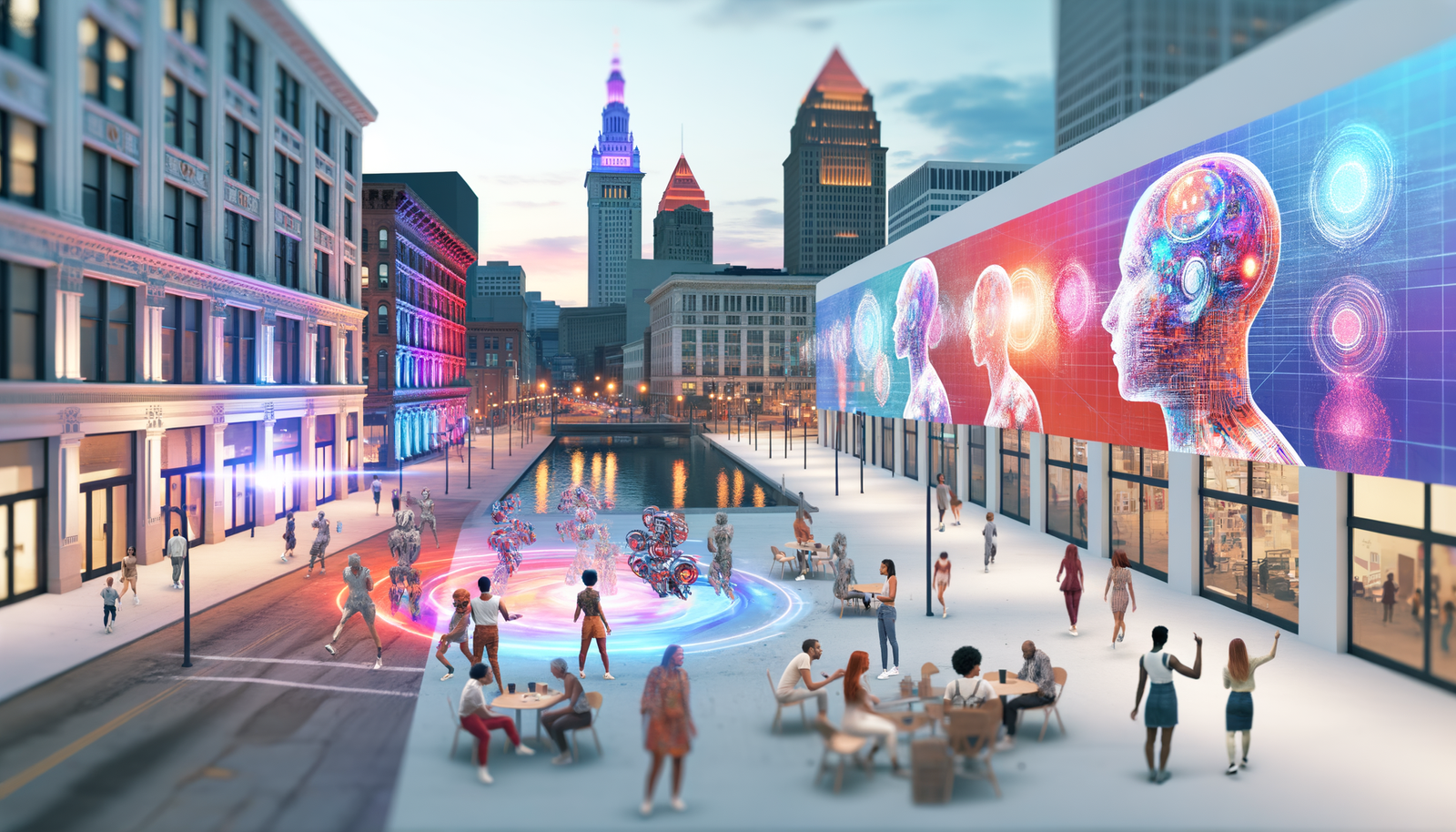
Public art, unlike gallery pieces, is deeply interwoven with community identity and shared experience. As cities like Cleveland embrace AI-generated works in public spaces, they face the challenge of curating pieces that spark genuine connection. A successful public art piece should reflect not only the aesthetics but also the cultural narratives and histories of the community it represents. This raises questions: How do we incorporate AI-generated art into public spaces without losing the storytelling aspect that characterizes great public art?
Community Engagement via AI
Despite the concerns, some proponents believe that AI can engage communities in novel ways. Interactive installations that incorporate AI could allow community members to participate in the artistic process—think installations where the public can influence the outcomes of the artwork led by algorithms. This collaborative approach could build new community narratives and encourage dialogue around the function of art in modern society.
Case Studies and Collaboration
The potential for collaboration between AI and human artists has already begun to show its prowess in various creative projects. For example, there have been workshops and initiatives organized by local nonprofits and art organizations aimed at integrating AI tools into public art projects. One collaboration might involve employing an AI to generate designs, which artists then refine, ensuring the final result merges creative intuition with advanced technology.
Successful Exhibitions
AI has already made an impression through exhibitions popping up across Cleveland, showcasing art created with the assistance of artificial intelligence. In these spaces, visitors are invited to interact with dynamic pieces that evolve in real-time, sometimes influenced by audience reactions. Such interactivity creates a deeper engagement and an evolving dialogue about how art can reflect contemporary experience.
Looking to the Future
The question remains: Are we standing on the brink of a renaissance in the art world, or are we witnessing a crisis of creativity? Opinions vary, but one thing is clear—Cleveland’s art scene is in the throes of transformation prompted by the dual forces of technology and tradition. As artists, curators, and audiences continue to engage with AI in novel ways, there remains a hope that the murals, sculptures, and performances that emerge will bridge the divide between silicon and sentiment.
Education and Innovation
To navigate this constantly evolving landscape, education will play a vital role. Cleveland’s art institutions are beginning to incorporate technology into their curricula to prepare the next generation of artists for a digital future. Teaching artists about AI tools enhances their skill sets and encourages them to explore a richer palette of creativity—one that blends the brush and the binary in a harmonious partnership.
Conclusion: A Balanced Outlook
As Cleveland stands at this intersection, the potential for AI to unlock creativity is both exhilarating and intimidating. While artists explore the complements that AI can offer and address concerns about authenticity and creative rights, it refuses to be a passing fad. The beat of innovation continues to pulse through the veins of Cleveland, urging artists to embrace technology while remaining steadfast in the values of human expression.
The future is bright—it is about balancing tradition with innovation, making space for AI as an artist’s assistant rather than a replacement. Only time will tell how Cleveland will navigate this thrilling yet uncharted territory. Artists and communities alike have the opportunity to engage in transformative experiences that could propel the public art scene into the following decades. Can AI unlock creativity? Here’s to hoping we can ignite conversations that lead to an inspiring intertwined destiny of art and technology.
To learn more about the intersection of art and technology, visit Neyrotex.com for the latest insights and information.