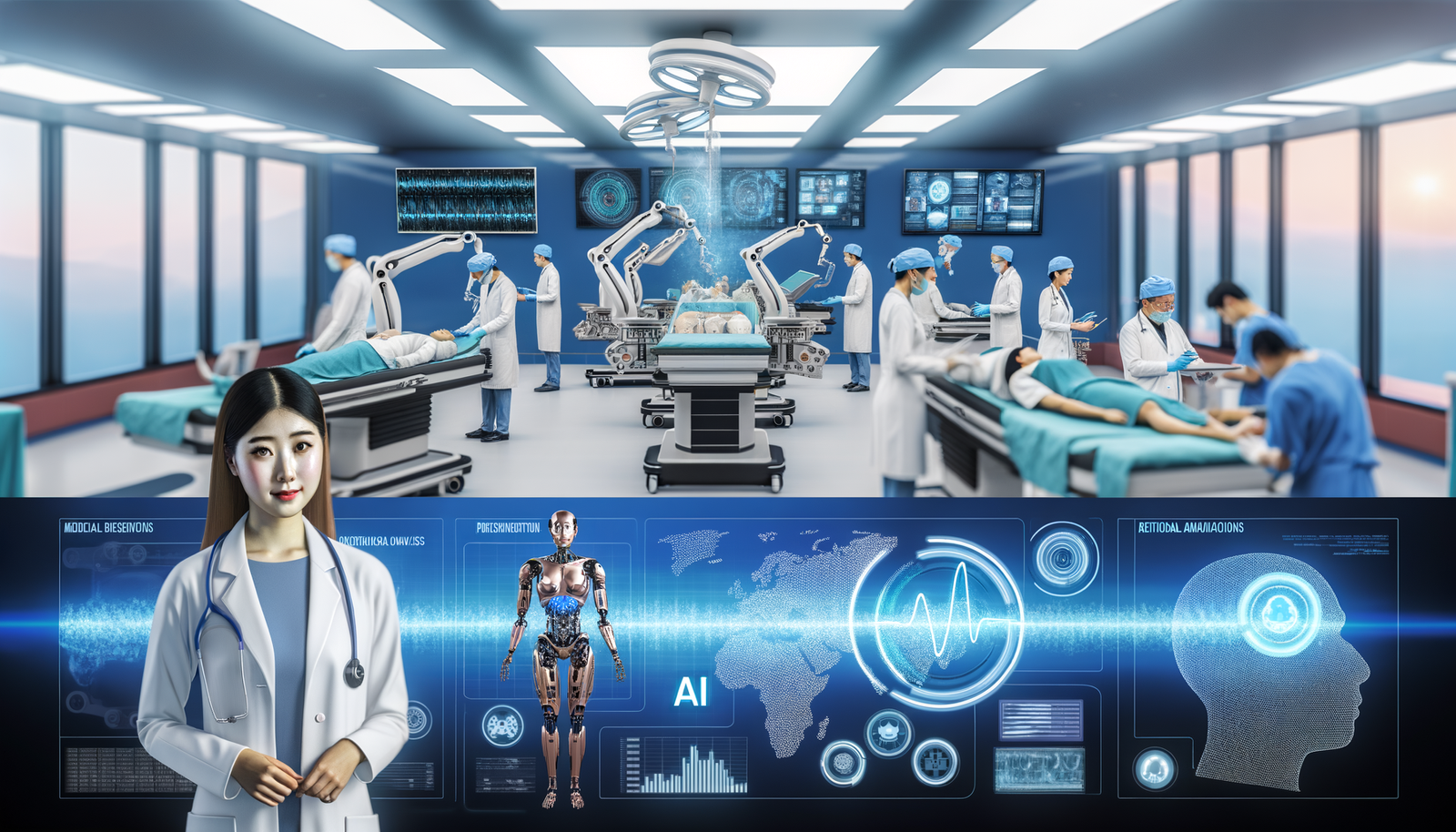
AI in Medicine Set to Surpass $524 Billion by 2031!
In the rapidly evolving landscape of healthcare, artificial intelligence (AI) is poised to revolutionize the industry, with projections indicating that AI in medicine is set to surpass a staggering $524 billion by 2031! A newly released report by QY Research titled “Global Artificial Intelligence (AI) in Medical Market Share and Ranking Overall Sales and Demand Forecast 2025-2031” offers an in-depth analysis of current trends, market dynamics, and future growth opportunities. This comprehensive overview delves into the innovations driving AI’s integration in medicine, highlighting its potential to enhance patient care and transform healthcare delivery worldwide.
Understanding the Growth Trajectory of AI in Medicine
The potential for AI in medicine is vast and multifaceted, impacting various aspects of healthcare. In recent years, we’ve seen significant advancements in areas like diagnostics, patient monitoring, drug discovery, and personalized treatment plans. The notion that AI in medicine can achieve over $524 billion in valuation by 2031 is predicated on numerous factors fueling this growth. But what exactly are these factors? Let’s take a closer look!
Key Drivers Behind AI Growth in Healthcare
- Increased Demand for Efficient Healthcare Solutions: The rising global population and a surge in chronic diseases have created an urgent demand for more efficient healthcare solutions. AI-driven technologies can streamline processes, enhance productivity, and fundamentally change the way healthcare is delivered.
- Adoption of Big Data Analytics: With the exponential growth of health data, AI is becoming essential for effectively analyzing vast amounts of information. This enables healthcare providers to make better clinical decisions and personalize treatments to suit individual patient needs.
- Technological Innovations: Rapidly changing technological landscapes, including advancements in machine learning and natural language processing, are opening new avenues for AI applications in healthcare.
- Regulatory Support: Support from government regulations in various countries is helping create a conducive environment for AI innovation. Initiatives aimed at integrating AI into healthcare systems are being rolled out globally.
Transformative Applications of AI in Medicine
AI isn’t just a futuristic concept—it’s making strides today that are transforming healthcare. Let’s dive deeper into some of the key applications that are leading this revolution.
Diagnostics
One of the most promising areas affected by AI in medicine is diagnostics. For instance, AI algorithms can analyze medical images—like X-rays or MRI scans—with precision comparable to that of seasoned radiologists. These AI solutions can detect anomalies quicker and often with greater accuracy. The early diagnosis of conditions such as cancer or heart disease can significantly impact patient outcomes and survival rates.
Predictive Analytics
AI technologies are also harnessing predictive analytics to foretell health outcomes based on historical data. By analyzing trends and patient data comprehensively, healthcare providers can predict potential health risks, enabling preemptive intervention that could reduce hospitalization rates and emergency visits.
Robotics and Surgery
Robotic surgery, powered by AI, is another area where we see significant advancements. Surgeons can utilize robotic systems equipped with AI algorithms to perform complex procedures with improved accuracy and less invasiveness. This leads to quicker recovery times for patients and often reduces healthcare costs.
Patient Monitoring and Management
AI-powered devices are also enhancing patient monitoring. Wearable technologies equipped with AI capabilities can track vital signs and alert providers of any anomalies in real-time. This level of monitoring allows for timely interventions which prove crucial for chronic patients, transforming their day-to-day management.
The Financial Impact of AI on Medical Budgets
Now, while the transformational benefits of AI in medicine are significant, they also come with financial implications. According to the report, as the market reaching over $524 billion will have a broad economic impact, including:
- Cost Reduction: Automation and AI can drastically cut costs associated with manual processes and reduce diagnostic errors, leading to lower operational costs for healthcare facilities.
- Insurance Savings: Predictive analytics can help insurance companies monitor risk and adjust premiums accordingly, potentially leading to lower costs for patients.
- Reallocation of Resources: By optimizing processes and outcomes, healthcare professionals can reallocate time and resources to focus on patient care rather than administrative burdens.
Challenges Ahead in AI Integration
While the prospects for AI in medicine are incredibly promising, there are challenges that need to be addressed for it to reach its full potential.
Data Privacy and Security
As AI systems often require access to vast amounts of personal health data, ensuring data privacy and security is paramount. Institutions must put robust measures in place to protect sensitive information while gaining the trust of patients.
Regulatory Hurdles
While state regulation can foster innovation, navigating through complex regulatory frameworks can be challenging. Companies must ensure compliance with laws while simultaneously innovating in a fast-paced environment.
Training and Skill Gaps
There is also a growing need for professionals proficient in both medicine and technology. Bridging the gap between IT professionals and healthcare experts is crucial to implement successful AI applications effectively.
A Future Shaped by AI in Medicine
With the forecast indicating that AI in medicine could surpass $524 billion by 2031, we are perched on the edge of a transformation that promises to redefine healthcare as we know it. A more personalized approach, timely interventions, and improved patient outcomes could indeed become the new norm.
Innovations in AI in medicine will not just help in treating illnesses but will also shift the focus from reactive to proactive healthcare. With continuous advancements, education on AI, and collaborative efforts among tech companies, regulators, and healthcare providers, we can expect to witness a profound shift in how we approach health care in the coming years.
Conclusion: Advancing Towards a Healthier Future
The integration of AI into the medical field stands to benefit industries and patients alike. As we move towards a technologically enriched healthcare environment, we must embrace the challenges and opportunities presented. Only by doing so can we hope to achieve a healthcare system that is efficient, affordable, and accessible to everyone.
For those interested in staying updated on the latest developments in AI within the medical field, be sure to explore resources and insights at Neyrotex.com. Your future health is set to be vastly improved by the innovations that AI is ushering into our lives, paving the path for a revolutionary healthcare experience!