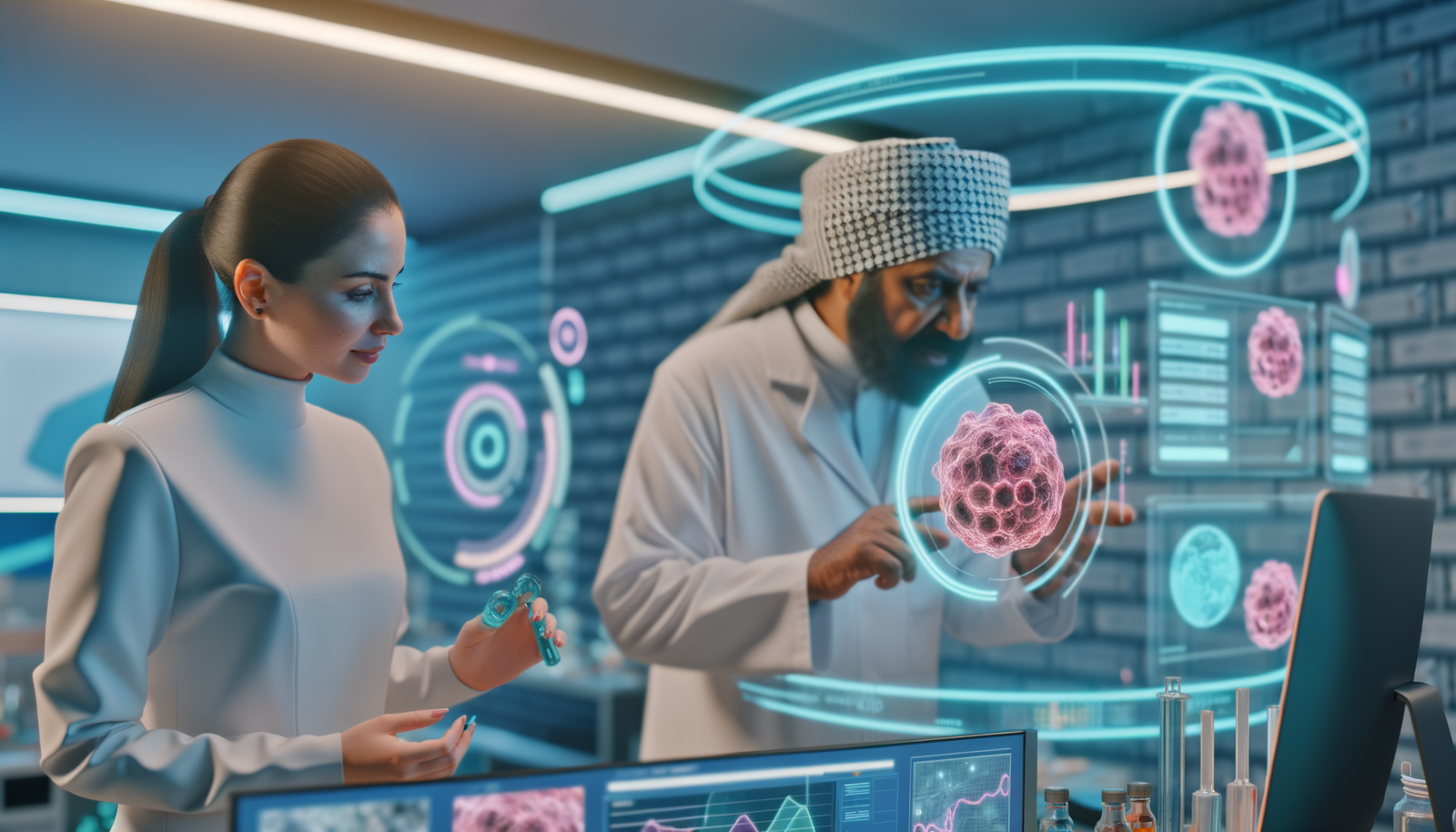
In a world captivated by the rise of artificial intelligence, Google’s Ruth Porat boldly states that we are on the brink of an “AI Revolution”. While many are engaged in playful interactions with chatbots, Porat emphasizes that this is merely a precursor to a monumental transformation in technology and healthcare. Imagine a future where AI not only enhances daily tasks but also holds the potential to cure cancer. As we delve deeper into this unfolding era, the implications are limitless, and the possibilities for groundbreaking advancements in medicine are more promising than ever.
AI Revolution: Google’s Ruth Porat Envisions Curing Cancer!
As we transition into this thrilling new chapter of human history, it’s essential for us to unpack the incredible vision that Ruth Porat, Google’s Chief Financial Officer, is advocating. Porat isn’t just a finance whiz; she’s a forward thinker who recognizes the immense capabilities of artificial intelligence. In her perspective, AI is not merely a tool for efficiency; it’s a lifeline that could lead to groundbreaking advancements in the battle against cancer.
The AI Landscape and its Potential
The AI landscape has evolved remarkably over the past decade, transitioning from niche applications to far-reaching undertakings that can turn the tides in various fields. With techniques like machine learning, neural networks, and deep learning, AI systems are becoming increasingly sophisticated. But what does that mean for cancer treatment? At its core, AI can process data at a scale and speed far beyond human capacity. This capability opens the door to analyzing complex biological datasets, predicting cancer developments, and personalizing treatment plans.
Porat envisions a world where AI assists oncologists by compiling patient histories, genetic information, and potential treatment responses to recommend tailored therapies. This means that patients could receive more effective treatments faster than ever before, a scenario once reserved for the realm of science fiction.
The Promise of Early Detection
One of the most exciting aspects of AI in cancer treatment is its potential for early detection. By analyzing vast amounts of data—including imaging scans, lab results, and even genetic markers—AI algorithms can identify patterns that might elude even the most experienced doctors. The earlier a cancer is detected, the greater the chances of successful treatment.
- Predictive Analytics: AI can analyze thousands of samples and historical data to identify risk factors and predict which patients might develop cancer.
- Screening Tools: Advanced imaging techniques employ AI to highlight anomalies that may indicate early-stage cancer.
- Real-time Monitoring: Wearable technology integrated with AI can monitor biomarkers and alert healthcare providers to any significant changes, potentially indicating the onset of malignancy.
Data-Driven Customization of Treatments
Imagine the incredible potential of harnessing AI to deliver personalized cancer treatments based on a patient’s unique genetic makeup and medical history. Instead of a one-size-fits-all approach, AI can analyze treatment history and responses to recommend the most effective therapies for each individual. This personalized medicine model has the potential to not only improve outcomes but also reduce side effects by eliminating ineffective treatments.
Moreover, AI can facilitate collaboration among researchers and clinicians by providing cloud-based platforms where they can share insights gleaned from data analyses. This kind of interconnectedness might supercharge the pace of clinical trials and thereby hasten the development of new therapies.
Challenges and Ethical Considerations
While the potential for curing cancer with AI is exhilarating, there are significant challenges that must be addressed. Data privacy and security are at the forefront of this discussion. People want to feel confident that their medical data is being protected, especially when it comes to sensitive information handling. As we venture deeper into this AI Revolution, it’s crucial for companies like Google, and regulations to maintain high ethical standards.
Another challenge is the need for comprehensive data. The efficacy of AI algorithms is directly tied to the quality and quantity of the input data. If the data sets are limited or biased, the insights gained could lead to incorrect assumptions or suboptimal treatment recommendations. It’s vital for institutions to work hand in hand, creating diverse and comprehensive data sets encompassing various demographics, geographies, and health conditions.
Real-World Applications
The integration of AI-driven technology is not just a vision; real-world applications are already emerging. Google Health has made significant strides in utilizing AI for medical imaging, particularly in the detection of breast cancer. Early trials demonstrated impressive accuracy rates, outperforming traditional evaluations.
Additionally, collaborations between tech companies and healthcare providers have flourished. For example, partnerships with startups focused on precision oncology leverage AI to analyze genetic data from cancer cells to identify potential treatment pathways. With these developments, Ruth Porat’s vision of AI’s role in cancer therapy is steadily progressing from theory to practice.
The Road Ahead for AI in Cancer Treatment
As we stand at this crucial junction, it is pivotal to foster discussions that promote innovation while ensuring ethical practices in AI development. Governments, tech leaders, and healthcare professionals need to unite in this cause. Ongoing training for healthcare professionals on AI applications and their implications will be essential for successfully utilizing this technology in practice.
This isn’t merely a technological advancement; it’s a radical rethinking of how we approach healthcare. The AI Revolution has the potential to create a remarkable paradigm shift, transforming our relationship with diseases like cancer from one of fear and uncertainty to one of hope and anticipation.
Conclusion
Ruth Porat’s vision of the AI Revolution singing a new era of cancer treatment captivates our imagination and instills hope. While the road ahead may be fraught with challenges, the combined efforts of technology, medicine, and ethical governance will pave the way for a future where cancer is no longer viewed as a formidable foe but rather a challenge we can meet head-on, thanks to the power of AI.
The possibilities lie before us, and as Porat highlights, all of this can happen in our lifetime. So, buckle up, because the journey toward curing cancer—with a little help from artificial intelligence—has only just begun!
For further information on the amazing potential of AI in medicine, visit Neyrotex.com.