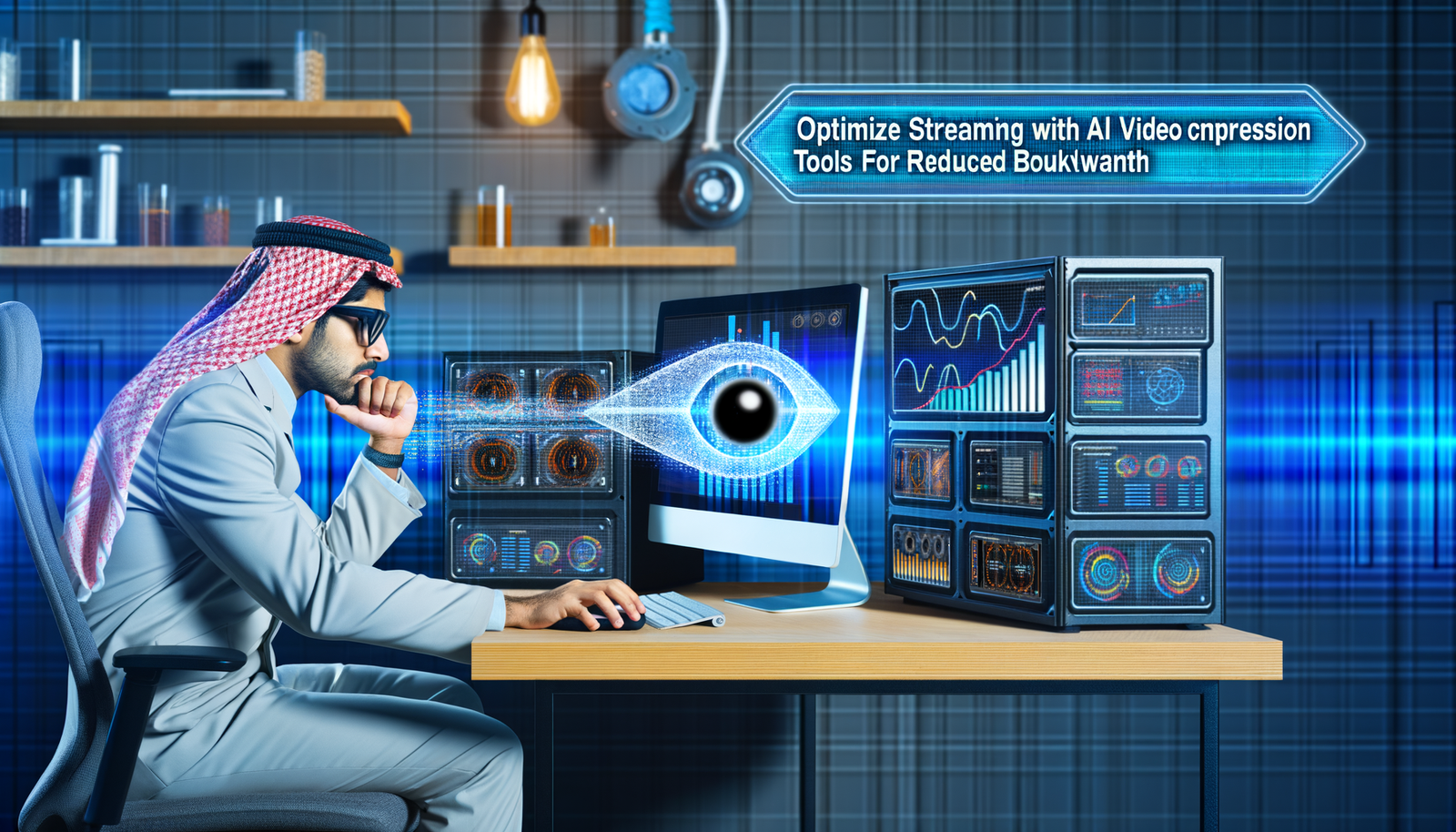
Optimize Streaming with AI Video Compression Tools for Reduced Bandwidth
In the ever-evolving landscape of digital media, optimizing streaming quality has become paramount, particularly as audiences demand seamless experiences. Enter AI video compression tools for streaming, which are revolutionizing how video content is delivered. These innovative solutions minimize file sizes without compromising quality, ensuring smoother playback and reduced buffering. By leveraging AI video compression tools for streaming, content providers can cut costs and adapt to varying internet speeds, ultimately enhancing viewer satisfaction. Experience the future of content distribution as we explore the benefits of maintaining clarity and fidelity while efficiently scaling your streaming capabilities.
The Evolution of Video Compression: From Traditional to AI-Driven
Traditional video compression relied on static algorithms that often sacrificed quality for smaller file sizes. However, AI video compression tools for streaming have flipped this script, introducing dynamic, adaptive techniques that analyze content in real time. For instance, NVIDIA’s RTX Video Super Resolution uses AI to upscale videos, removing compression artifacts and generating additional pixels for sharper images. This approach isn’t just about reducing file sizes—it’s about preserving artistic intent and visual detail, even at lower bitrates.
Why AI-Driven Compression Outperforms Traditional Methods
- Contextual Awareness: AI analyzes frame-by-frame details to prioritize critical elements like faces, text, and motion, ensuring essential visual information isn’t lost during compression.
- Adaptive Bitrate Allocation: Tools like AV1 and H.266/VVC leverage AI to dynamically adjust bitrates based on network conditions, optimizing bandwidth usage without compromising quality.
- Edge Computing Integration: Cloud-based CDNs now incorporate AI at the edge, caching high-quality streams closer to users to reduce latency and improve playback stability.
Key AI Video Compression Technologies
NVIDIA’s UHQ Mode and RTX Video Super Resolution
NVIDIA’s UHQ mode in NVENC enhances HEVC compression efficiency by 34%, delivering higher quality at lower bitrates. This technology is particularly impactful for 4K and 8K streaming, where traditional methods often struggle to maintain clarity. RTX Video Super Resolution takes this further by upscaling videos to 4K resolution, effectively “inventing” pixels to fill gaps caused by compression—a game-changer for platforms prioritizing visual fidelity. Such advancements not only improve current streaming capabilities but also set the stage for future innovations in video quality.
AV1 and H.266/VVC Encoding
AV1 encoding, supported by tools like Handbrake and VLC, achieves 30-50% better compression than H.264. H.266/VVC (Versatile Video Coding) takes this to the next level with AI-optimized bit allocation, maintaining sharpness even on low-bandwidth connections. These codecs are becoming industry standards for streaming services aiming to balance quality and efficiency, ensuring that users can enjoy high-resolution content without excessive data consumption. The impact of these technologies is profound, as they allow for a richer visual experience while managing network resources effectively.
Intelligent Buffering and Dynamic Streaming
AI-powered systems predict network fluctuations and pre-load content accordingly, reducing buffering by up to 70%. This proactive approach ensures viewers experience uninterrupted playback, even during peak traffic hours or in regions with unstable internet. By leveraging machine learning algorithms, these systems can learn from user behavior and adjust streaming parameters in real time, which not only enhances user satisfaction but also optimizes overall bandwidth usage. In this era of on-demand content, anything less than seamless streaming can lead to frustrated viewers and lost opportunities.
Top AI Video Compression Tools and Platforms
Desktop Software for Precision Control
- Handbrake: A free, open-source tool offering AV1 and H.265 support, ideal for batch processing large video libraries.
- VLC Media Player: Integrates RTX Video HDR support in its latest beta, enabling real-time upscaling for enhanced viewing experiences.
- DaVinci Resolve: Professional-grade software soon to support NVIDIA’s RTX Video features, combining color grading prowess with AI-driven compression.
Cloud-Based Solutions for Scalability
- Qencode: Specializes in API-driven video processing, allowing developers to integrate AI compression into custom workflows.
- Vagon Streams: Paired with Unity Render Streaming, this platform offloads GPU-intensive tasks to the cloud, enabling high-end 3D experiences on low-spec devices.
- Cloudinary: Offers dynamic media optimization, automatically adjusting video quality based on device capabilities and network conditions.
AI-Enhanced CDNs for Global Delivery
- Akamai: Reduces cloud egress costs by 50% while maintaining low-latency streaming, ideal for live events and real-time content.
- Fastly: Focuses on AI-driven routing and bandwidth optimization, ensuring high-quality delivery even during traffic spikes.
Real-World Applications and Benefits
Live Streaming and Real-Time Events
For live events like concerts or sports, AI video compression tools for streaming enable ultra-low latency without sacrificing quality. Platforms like Neyrotex leverage AI to dynamically adjust bitrates, ensuring viewers experience every moment in real time. This is particularly critical for interactive content, where delays can disrupt user engagement. By enabling a responsive and adaptive streaming experience, these tools ensure that audiences remain captivated, regardless of their location or device.
Video-On-Demand (VOD) and Global Content Distribution
- Automated Transcription and Translation: AI generates real-time subtitles and dubbed audio, expanding content reach to multilingual audiences.
- Personalized Recommendations: By analyzing viewer habits, platforms can optimize video quality based on individual preferences, balancing bandwidth usage and user experience.
- Cost Reduction: AI compression cuts storage and bandwidth costs, allowing platforms to allocate resources to content creation rather than infrastructure.
Interactive and Immersive Experiences
Unity Render Streaming, combined with Vagon Streams, delivers high-fidelity 3D experiences to mobile devices and VR headsets. This enables applications like virtual real estate tours or remote training simulations, where photorealism is essential. By offloading rendering to the cloud, developers avoid the need for expensive hardware, democratizing access to cutting-edge visuals. With the integration of AI-driven solutions, these experiences are not only more accessible but also elevate expectations for engagement and interactivity.
Future Trends and Innovations
Edge AI and Federated Learning
Next-gen CDNs are deploying AI models at the edge to process content closer to users. This reduces latency and enables personalized compression—adjusting video quality based on individual devices and network conditions. Federated Learning will further enhance these systems by allowing models to improve without centralized data collection, allowing for privacy-sensitive adaptations that meet user needs. This advancement will ensure that as technology grows, user experience remains paramount, fostering trust and engagement.
Generative AI in Video Production
Tools like CapCut are already using AI to automate scripting, voiceovers, and scene construction. Future advancements could include AI-generated video segments that adapt to viewer preferences, reducing the need for manual editing and enabling hyper-personalized content. Such innovations could transform how creators think about content production, allowing them to focus more on storytelling rather than technical hurdles.
Sustainable Streaming Practices
AI video compression tools for streaming aren’t just about efficiency—they’re about sustainability. By minimizing data transfer, platforms reduce their carbon footprint. Innovations like AI-driven energy-aware encoding could further optimize server loads, aligning streaming with global green initiatives. As the entertainment industry confronts the realities of climate change, these tools present an opportunity to lead by example, showcasing that quality and responsibility can indeed coexist.
Conclusion
AI video compression tools for streaming are no longer a luxury—they’re a necessity. As audiences demand higher quality and platforms expand globally, these technologies are redefining what’s possible. Whether you’re a creator optimizing for mobile viewers or a business scaling live events, AI-driven compression offers a path to sustainable, high-fidelity streaming. Stay ahead of the curve by embracing these tools today.
Ready to revolutionize your streaming strategy? Subscribe to our Telegram channel for the latest insights on AI video compression tools for streaming and cutting-edge media innovations.