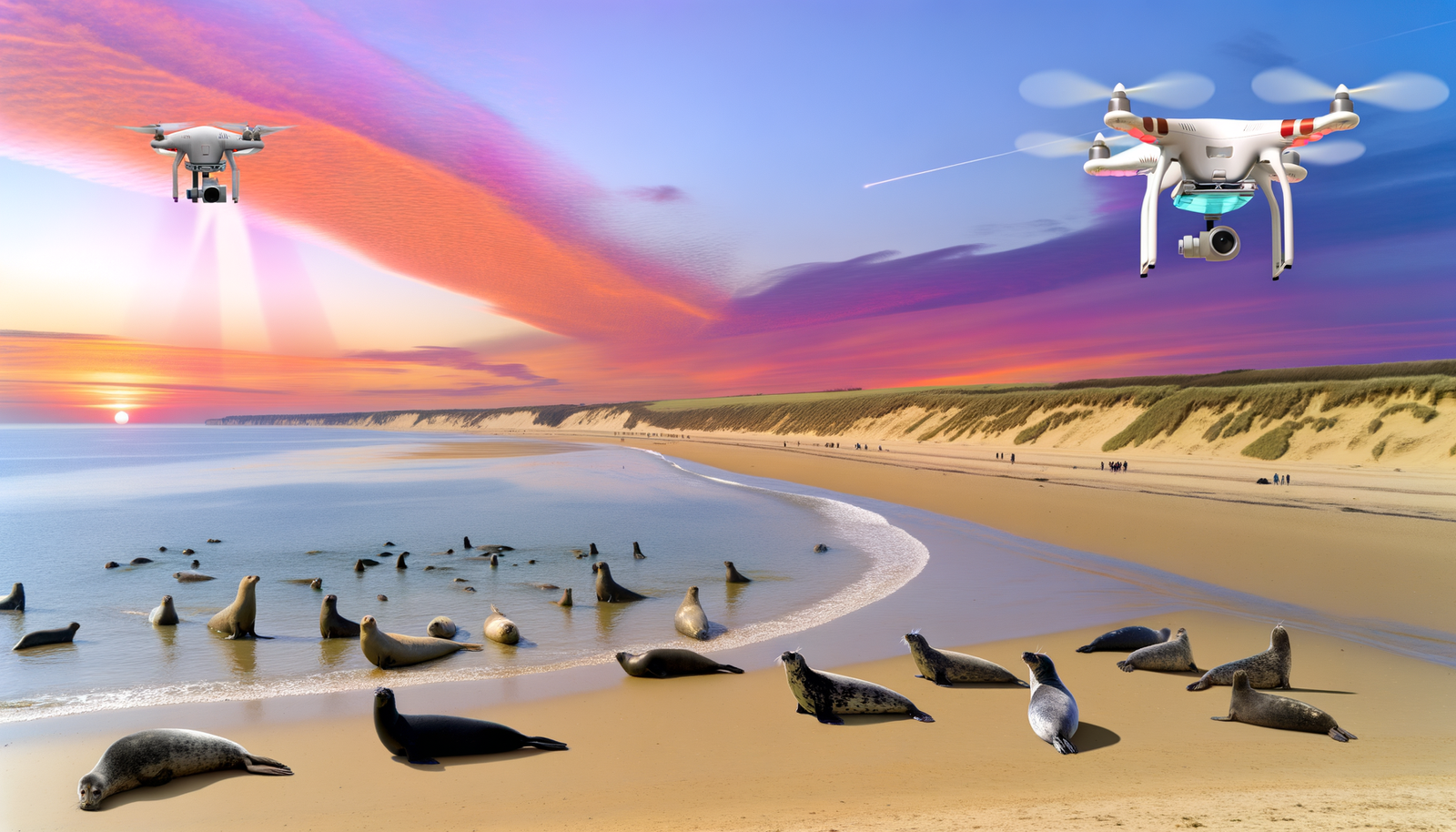
In a groundbreaking initiative in Norfolk, cutting-edge technology is taking center stage as revolutionary drones and AI unite to safeguard local seal populations. This innovative project harnesses the power of artificial intelligence and drone technology to monitor, protect, and study these marine mammals in their natural habitat. By employing aerial surveillance and advanced data analysis, researchers aim to enhance conservation efforts and ensure a thriving ecosystem for seals along the Norfolk coast. This pioneering approach represents a significant leap forward in wildlife protection and the use of technology in environmental sustainability.
Seal Population in Norfolk: A Fragile Ecosystem
Located along the picturesque coastlines of East Anglia, Norfolk is home to one of the UK’s most vibrant seal colonies. The Norfolk coastline serves as a natural haven for both gray and common seals, with famous hotspots like Blakeney Point and Horsey. However, as enchanting as these marine mammals are, they face their share of challenges. Environmental changes, human interference, and unpredictable weather patterns threaten their very existence. Protecting these seals has never been more critical, leading to the urgency behind utilizing revolutionary drones and AI technology.
How Drones & AI Work Together
The integration of drones and artificial intelligence to safeguard Norfolk’s seal populations is nothing short of revolutionary. At its core, this initiative involves using drones equipped with high-resolution cameras and advanced sensors, capable of capturing data with impeccable precision.
- Aerial Surveillance: Drones soar above the coastline, gathering real-time information while minimizing human footprint and disturbance to the seals’ natural behavior.
- Data Analysis: Artificial intelligence processes the captured images and data, enabling researchers to analyze seal movements, behavior patterns, and population dynamics.
- Habitat Monitoring: With drones patrolling natural habitats, researchers can monitor environmental conditions, detecting any changes in the ecosystem that may affect seal populations.
Enhancing Conservation Efforts
The application of these advanced technologies doesn’t just stop at monitoring. It opens a wealth of possibilities for conservation efforts that were once unfeasible or impossible to achieve.
- Improved Population Estimates: Traditional methods relied on human observation, which often led to inaccuracies. With automated drones, researchers can obtain more precise population counts and assess demographic information.
- Behavioral Research: Understanding how seals interact with their environment is essential for crafting effective conservation strategies. Drones can reveal how seals respond to weather variations, predator presence, and human activities.
- Quick Response to Threats: Drones provide real-time data that empowers researchers to respond quickly to potential threats such as poaching, pollution, or unusual mortality events.
The Future Looks Bright for Norfolk Seals
With the successful implementation of revolutionary drones and AI, Norfolk’s seals can look forward to a brighter future. This technology-driven initiative not only nurtures wildlife but also fosters a connection between humans and nature. It helps engender a broader understanding of marine conservation and emphasizes the importance of preserving biodiversity.
Beyond the immediate benefits to seal populations, this project serves as an inspiring model for wildlife conservation efforts globally. By utilizing revolutionary drones and AI, researchers are signaling that it is possible to marry technology with nature in a way that supports sustainable practices and broadens the scope for wildlife protection. As conservationists and tech innovators work hand in hand, the path toward understanding and protecting our precious natural ecosystems is paved for the future.
Community Engagement and Support
The use of revolutionary drones and AI to safeguard Norfolk seals is not just a project for researchers. The community plays an essential role, and their engagement is key to joining the conservation efforts. Local organizations and wildlife enthusiasts are encouraged to participate in awareness campaigns, educational programs, and even volunteer opportunities to enhance the initiative’s outreach. The ripple effect of community support not only aids in conservation efforts but cultivates a deeper commitment to protecting the environment.
Technology’s Role in Wildlife Conservation
This initiative represents a significant shift in how technology is used in wildlife conservation. Unlike traditional methods that often involved labor-intensive and sometimes intrusive practices, leveraging drones and AI minimizes disturbances to wildlife habitats. At the same time, it brings accuracy to data collection that provides crucial insights into wildlife behavior and interaction with their environment.
Let’s also consider the impact of this technology beyond seals. As the technology evolves, its applications could extend to tracking other endangered species, monitoring their habitats, and providing responses to natural disasters that threaten wildlife. With the right investment and dedication, we can visualize a future where technology and nature coexist harmoniously, benefiting both our planet and its inhabitants.
Conclusion: A New Era in Conservation
The revolution brought forth by drones and artificial intelligence showcases the potential of modern technology to transform our approach to wildlife preservation. By safeguarding Norfolk seals, researchers are not only protecting a beloved species but also laying the groundwork for broader conservation efforts that can impact various ecosystems across the globe.
As you engage with our planet’s wonders, remember the strides being taken toward ensuring that animals like seals thrive in their native habitats. By understanding the blend of revolutionary drones and AI, we gain insight into how we can collectively champion the cause of conservation, fostering an eco-friendly future filled with vibrant wildlife.
For more information on how technology influences conservation, you can visit Neyrotex.com.