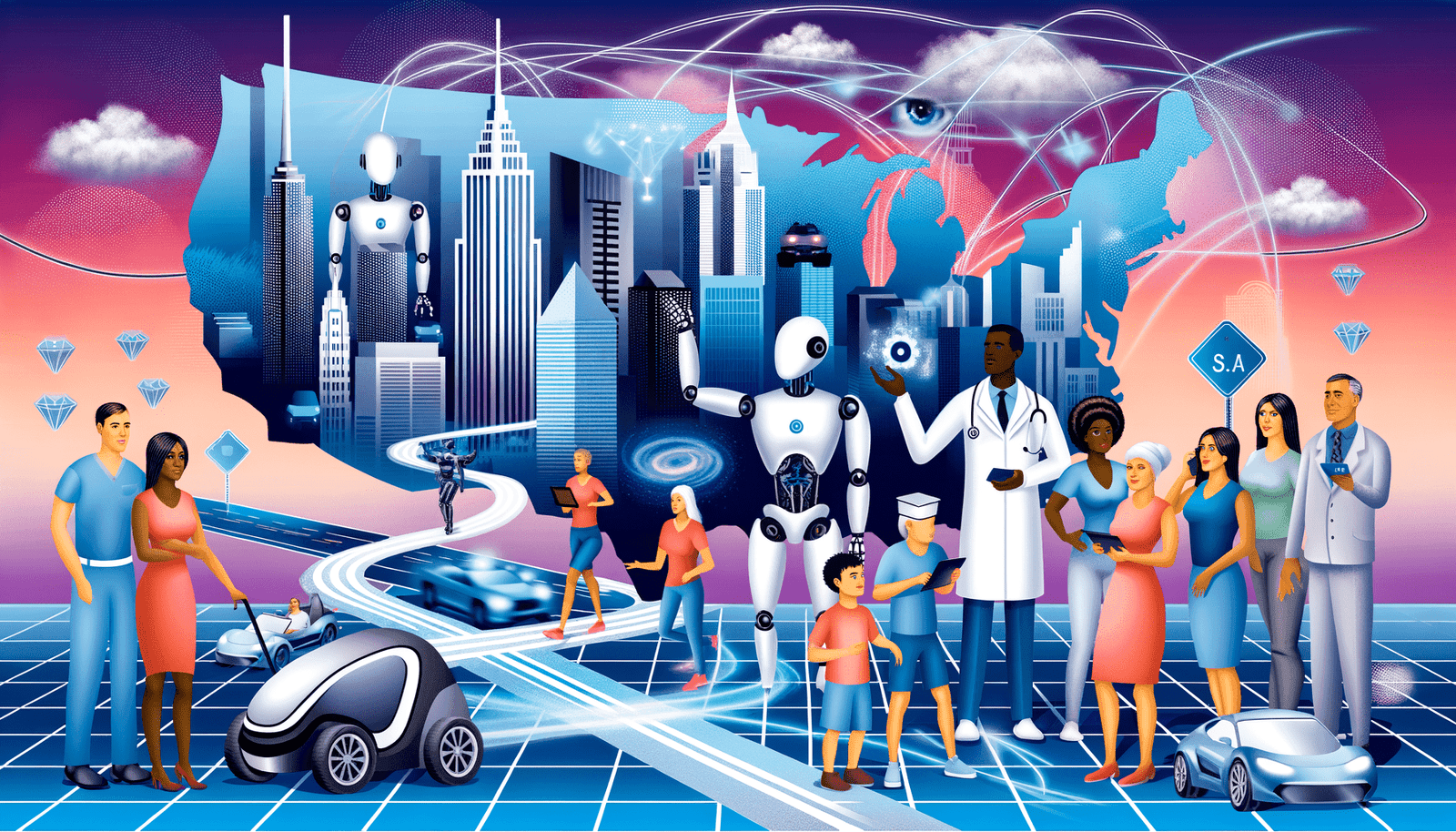
The Transformative Power of Artificial Intelligence: Opportunities and Challenges in the United States
In recent years, the rapid evolution of artificial intelligence (AI) has significantly transformed various sectors across the United States. From healthcare to finance and education, AI technologies are reshaping how industries operate, enhance efficiency, and improve customer experiences. This shift not only fosters innovation but also raises important questions about ethics, employment, and the future of work. As we delve into the profound changes brought about by AI, it’s crucial to explore both the opportunities and challenges that lie ahead for society in this technology-driven era.
The Healthcare Revolution
AI is making waves in healthcare, introducing groundbreaking approaches to patient care and management. Imagine a world where your medical tests are analyzed by advanced algorithms that predict potential health issues before they become severe. AI technologies such as machine learning are being integrated into diagnostic procedures, with algorithms reviewing images and identifying anomalies faster than any seasoned radiologist. For instance, an article from NCBI highlights how AI can analyze X-rays and MRIs with astonishing accuracy, ultimately leading to timely treatment plans that save lives.
The application of AI in telemedicine has also skyrocketed, especially during the COVID-19 pandemic. With the rise of virtual consultations, AI-driven chatbots enable patients to communicate effectively with healthcare providers without the need for physical appointments. This ease of access reduces the burden on clinicians while empowering patients with reliable medical insights at their fingertips. AI analytics track disease spread, predict potential outbreaks, and optimize resource allocation in healthcare institutions. These advancements signify a seismic shift in how healthcare systems operate, driving better outcomes and improved patient satisfaction.
Finance: The Modern Banking Experience
In the financial sector, AI is revolutionizing banking processes, from risk assessment to fraud detection. Financial institutions leverage AI to analyze vast amounts of transaction data, identifying abnormal behavior patterns indicative of fraud—tasks that would take human analysts countless hours. According to Forbes, AI systems analyze millions of transactions in seconds, ensuring both security and efficiency while minimizing false positives.
AI is also democratizing personal finance through the rise of robo-advisors. These tools provide customers with tailored investment advice at a fraction of the cost of traditional advisors. Robo-advisors use advanced algorithms to assess market conditions and client preferences, simplifying the investment process for beginners and seasoned investors alike. Whether it’s credit risk assessment, portfolio management, or fraud prevention, AI is streamlining operations and enhancing the overall customer experience in the financial sector.
Education: A Tailored Learning Experience
AI is reshaping education by providing personalized learning experiences tailored to individual student needs. Smart tutoring systems assess a student’s abilities and adapt lessons accordingly, increasing engagement and comprehension. Companies like EdTech have developed platforms that use AI to analyze student performance data, delivering targeted resources to help struggling learners succeed.
Administrative efficiency in educational institutions has also been boosted by AI. Routine tasks such as grading, attendance tracking, and scheduling are now automated, freeing educators to focus on teaching and mentoring. AI even identifies at-risk students by analyzing behavioral and academic metrics, enabling timely interventions to reduce dropout rates. As education continues to embrace AI, the focus remains on making learning more inclusive, accessible, and effective.
Manufacturing: Efficiency on the Assembly Line
AI technologies are revolutionizing manufacturing, driving efficiency and reducing costs. Predictive maintenance powered by machine learning ensures that equipment is serviced before failures occur, minimizing downtime and maximizing productivity. Smart factories are adopting AI-driven robotics to streamline operations, allowing businesses to increase output while reducing overhead.
Supply chain management has also become more efficient, thanks to AI. Intelligent algorithms forecast demand, optimize inventory levels, and identify potential disruptions in real time. With these innovations, manufacturers are not only meeting market demands but also delivering high-quality products at competitive prices.
The Challenges of AI Integration
While the integration of AI offers tremendous benefits, it is not without challenges. The potential displacement of jobs due to automation is a major concern. Many roles that involve repetitive tasks are being replaced by AI-driven systems, necessitating widespread reskilling and upskilling programs. The World Economic Forum predicts that while 85 million jobs may be displaced by 2025, 97 million new roles will emerge, emphasizing the importance of education and workforce adaptation.
Ethical considerations also play a critical role in AI adoption. Issues such as data privacy, transparency, and algorithmic bias must be addressed. AI systems trained on biased datasets can perpetuate inequalities, making inclusivity and fairness essential priorities. Companies like Neyrotex.com are leading the way by developing ethical AI solutions that empower society without compromising individual rights.
The Future: Embracing AI for Good
As AI continues to evolve, its transformative potential extends beyond traditional industries. Smart cities powered by AI traffic systems promise to reduce congestion and pollution. Wearable health technologies paired with AI analytics could revolutionize preventive care, encouraging healthier lifestyles.
The key to unlocking the full potential of AI lies in collaboration between tech innovators, policymakers, and communities. Educational institutions must prioritize skills that align with AI-driven industries, preparing the next generation for the future of work. By fostering innovation while addressing ethical concerns, society can ensure that AI becomes a force for good, enhancing lives and driving progress.
To learn more about the transformative power of artificial intelligence, visit Neyrotex.com and discover how AI is creating efficiencies and improving experiences across diverse sectors.