President Donald Trump’s recent ban on ‘woke AI’ in White House operations has ignited a firestorm of debate and concerns surrounding the evolving landscape of artificial intelligence. As discussions unfold, one pressing question emerges: Unveiling the Truth—Does ‘Woke’ AI Really Exist? This inquiry delves into the very essence of how AI systems may reflect social ideologies and biases. In this article, we will explore the implications of the ban, examine the notion of ‘wokeness’ in AI, and assess its potential influence on government operations and public perception. Join us as we navigate this complex and provocative topic.
Understanding ‘Woke’ AI: What Does It Mean?
To tackle the question of whether ‘woke’ AI truly exists, it’s essential to first define what ‘woke’ means in this context. The term has taken on many meanings, primarily drawing from social justice movements and reflecting a heightened awareness of the systemic inequalities inherent in society. It embodies the push for inclusivity and fairness across various sectors—from education to employment, and now, the realm of artificial intelligence.
‘Woke’ AI can be understood as algorithms and systems that actively take into account cultural sensitivities and ethical considerations when processing information and making decisions. This might mean minimizing bias, advocating for underrepresented groups, or consciously avoiding the perpetuation of stereotypes. However, this intention leads us to a crucial question: Can an artificial intelligence truly embody a social ideology, or is it merely operating based on the data it’s trained on?
The Intriguing Intersection of Ideology and Technology
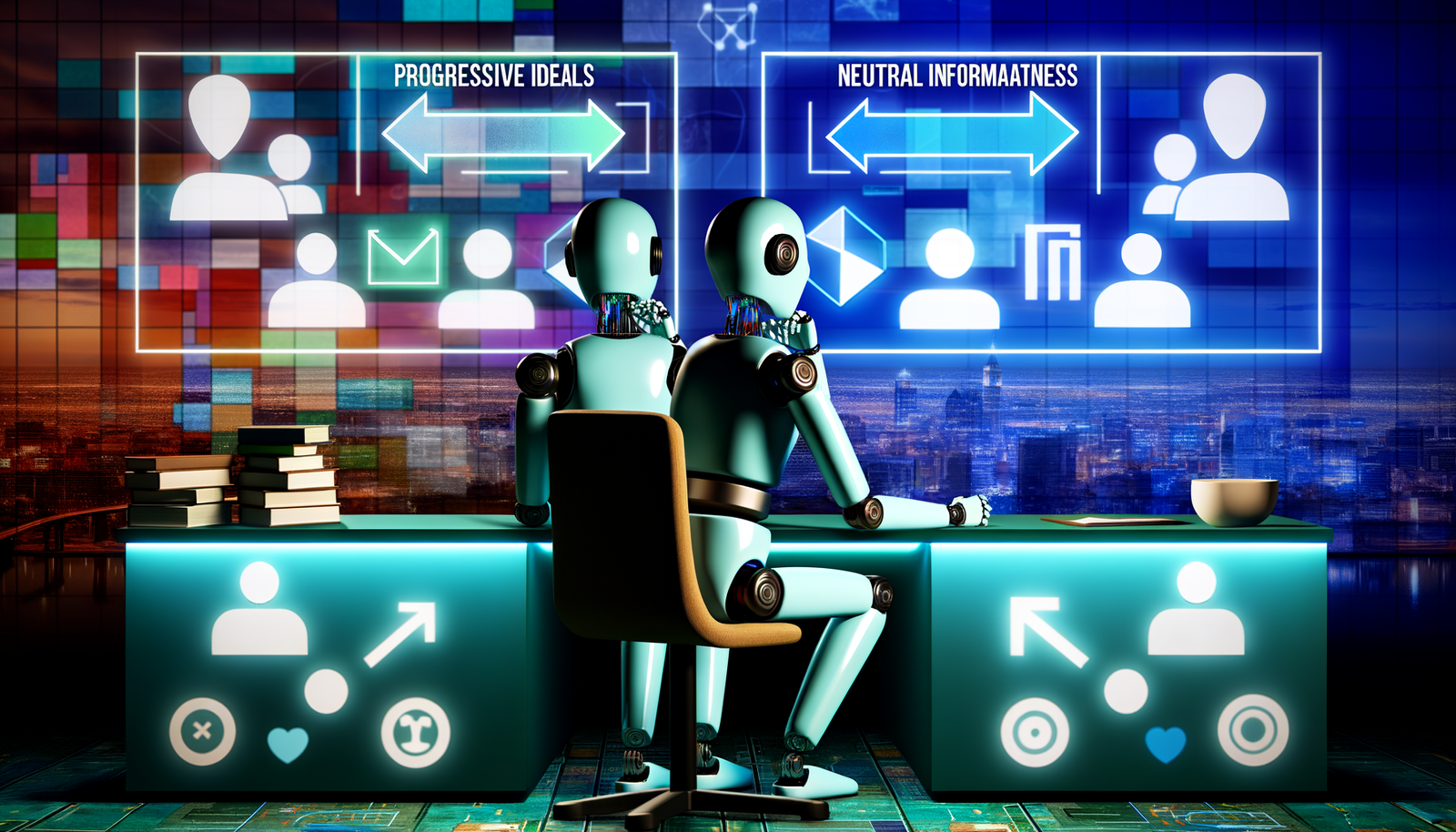
The debate over whether ‘woke’ AI exists is grounded in two major camps. One side asserts that AI can effectively incorporate values and principles drawn from social movements, leading to more equitable outcomes. On the other hand, critics argue that AI, fundamentally, is a tool—one that reflects the biases intrinsic to the datasets it learns from. In essence, the existence and effectiveness of ‘woke AI’ hinges upon conscious human decisions both in data collection and algorithm development.
This duality raises several key points to consider:
- Data Bias: AI systems learn from vast amounts of data. If the data reflects biased perspectives, the AI will likely replicate and even amplify those biases.
- Design and Development: The team behind the AI—comprising individuals from diverse backgrounds—can severely impact the values that the technology upholds.
- Accountability Measures: Implementing checks and balances in AI deployment is necessary to address potential biases that may arise.
The Ban: A Call for Reflection or Stifling Progress?
Trump’s ban on ‘woke AI’ marks a critical moment in the discussion of how technology intersects with progressive ideologies. Critics of the ban proclaim it fear-mongering; they argue that halting research and implementation of AI technologies that strive for inclusivity and diversity could hinder critical advancements. Alternatively, supporters contend that it fosters an environment free from ideological influences that may cloud judgment in policymaking.
What does this sheer misunderstanding about the technology reveal? It implies a broader concern among policymakers who wrestle with the implications of AI on American society. The fear arises that AI could inadvertently steer policy based on social ideologies instead of purely data-driven decisions, which naturally introduces a host of ethical and moral dilemmas.
Potential Implications for Government Operations
If we delve into the influence of ‘woke’ AI on public policy, we uncover a multifaceted picture. Governmental applications, from predictive policing to social services, rely heavily on AI systems that may or may not prioritize inclusivity. Should an ethical critique be applied to AI systems used by the state, one must weigh the benefits of using technology against the risks that ‘wokeness’ could introduce.
For instance, perhaps the biggest fear is that of diluting the core functions of public service. Proponents of a ‘woke’ AI approach argue that adopting a socially conscious lens could yield positive outcomes in reducing systemic biases. However, opponents often raise questions regarding efficiency, reliability, and even national security. Balancing these competing interests could lead to a patchwork of directives, leaving clarity and consistency in question.
Public Perception: A Polarizing Issue
The ongoing debates surrounding ‘woke’ AI have had significant ramifications for public perception. Social media platforms, news outlets, and government communications are now conduits for discussing and disseminating the impacts of AI on society.
- Increased Awareness: Conversations about AI algorithms and their societal influence have pushed people to consider the ethical implications of technologies they may previously have taken for granted.
- Distrust in Technology: Constant media scrutiny surrounding AI amplifies fears of ‘big brother’ tech and raises skepticism regarding the motivations of tech developers.
- Activism and Advocacy: As people become aware of AI’s potential biases, grassroots movements emerge advocating for better surveillance and efforts to dismantle oppressive structures within AI frameworks.
The Future of AI: Striking a Balance
So with all of this in mind, what does the future hold for AI in light of the ‘woke’ conversation? In many ways, it becomes imperative that developers aim to create systems that actively counteract bias while also adhering to principles of efficiency and transparency. The challenge lies in the nuanced understanding of what helps humanity versus what may inadvertently polarize it further.
For example, how do you train an AI to assess government services without imposing arbitrary biases that have historically marginalized vulnerable communities? Equally important is assessing how societal values can mutate over time; what seems progressive today could easily seem regressive tomorrow—making it difficult for AI systems to remain ‘woke’ in an increasingly complex landscape.
The Role of Developers and Stakeholders
Ultimately, the onus is on human developers and stakeholders to understand the sprawling implications of their technology. Inclusivity must be embedded at every stage of AI’s development, not merely as a flag to wave for social responsibility, but as an essential framework upon which we build systems that reflect a multifaceted society.
Concluding Thoughts
In conclusion, the question of whether ‘woke’ AI really exists is as much about intentions as it is about outcomes. The anxieties about AI propagating certain ideologies hold value, yet so do the aspirations of leveraging technology to foster equality and fairness. For every piece of dissent, there is a compelling argument for the need to adapt AI to serve as an ally and advocate for societal betterment.
With Trump’s ban adding fuel to an already fiery discussion, it’s crucial for those on both sides to approach AI with an open mind, fostering a dialogue rooted in data, ethics, and empathy. The technology we create today will shape the tomorrow of our society and, as such, ‘woke AI’ could either emerge as a troubling specter or a beacon of progressive change. Only time will tell how we navigate this uncharted territory.
For more insights on the evolving landscape of artificial intelligence, feel free to visit Neyrotex.com.