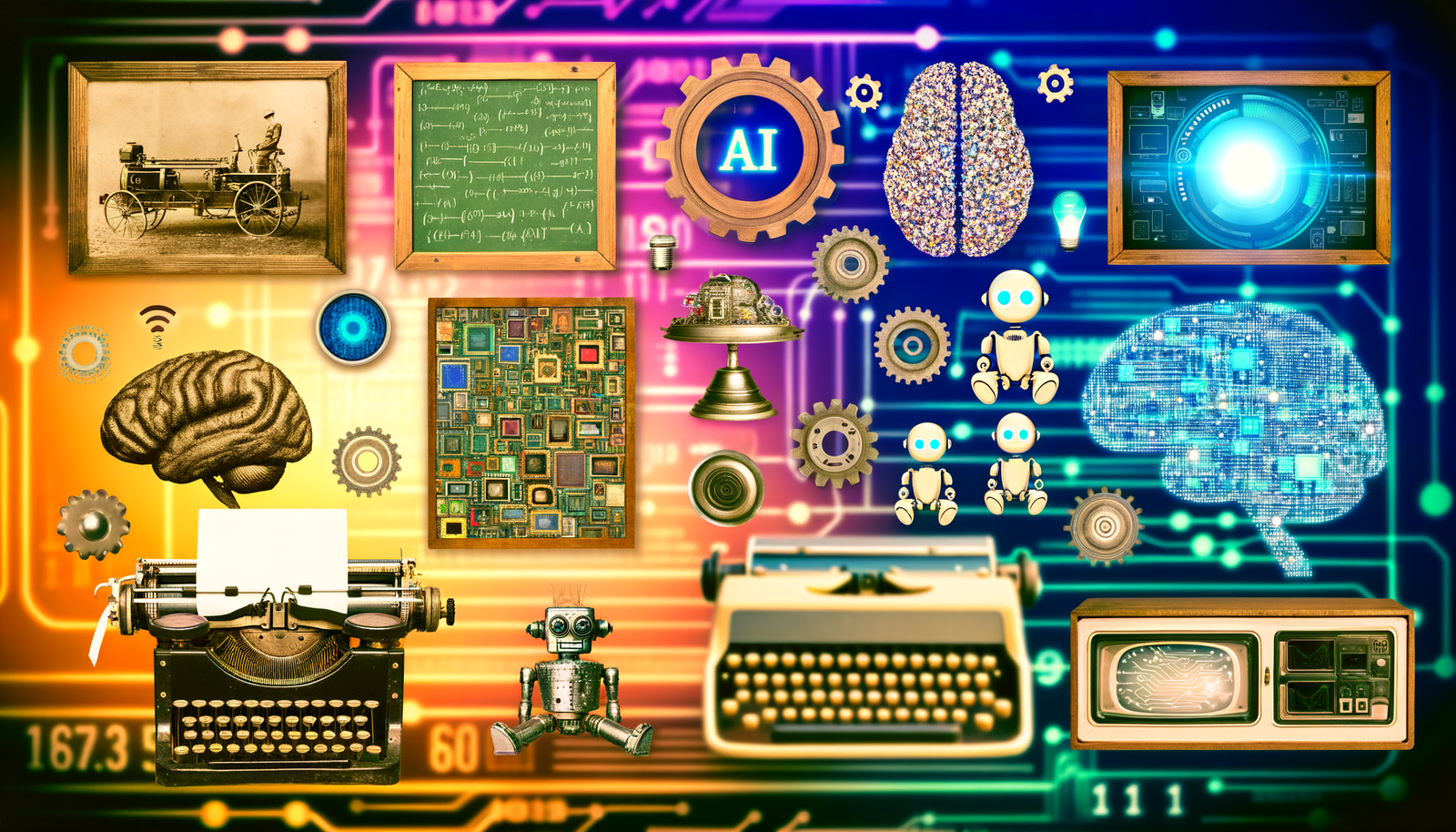
Artificial intelligence (AI) has undergone a remarkable transformation since the 1940s, evolving from rudimentary calculators to today’s sophisticated systems like ChatGPT. This journey, filled with breakthroughs and challenges, reveals how our understanding and applications of AI have expanded over the decades. As we delve into this wild journey of AI’s development, Le Monde takes a closer look at each decade, tracing the advancements that have shaped the technology we know today. Join us as we explore the milestones and pivotal moments that highlight the dynamic evolution of artificial intelligence.
The Humble Beginnings: 1940s to 1950s
AI’s story begins in the post-World War II era—a time when calculators were considered ground-breaking innovations. At the heart of this era was the idea that machines could mimic human thought processes. The pioneering works of Alan Turing laid the theoretical groundwork for AI with his famous Turing Test. This test aimed to determine a machine’s ability to exhibit intelligent behavior indistinguishable from that of a human. In the 1950s, the Dartmouth Conference, often described as the birthplace of AI as a field, gathered some of the brightest minds, including Marvin Minsky and John McCarthy, to formally define AI and envision its possibilities.
Plunging into the 1960s: Onto Problem Solving
The 1960s brought forth a wave of enthusiasm and experimentation. Researchers began to develop programs that could solve complex mathematical problems, navigate mazes, and even play games. One notable creation was the Logic Theorist, crafted by Newell and Simon, which could prove mathematical theorems—ah, the glory days of encouraging machines to think like humans!
- Shakey, the First Mobile Robot: Introduced in 1966, Shakey integrated various AI components, including perception and problem-solving. It navigated its environment and made decisions, paving the way for modern robotics.
- LISP Revolution: The development of the LISP programming language further propelled AI research. It allowed for rapid prototyping of AI applications, influencing generations of programmers.
The 1970s: A Period of Disillusionment
Come the 1970s, the excitement fizzled out. Researchers faced unexpected challenges in machine learning, leading to what we term the “AI winter.” The lack of funding and tangible results led many to question whether AI would ever achieve its lofty goals. Still, some significant advancements occurred during this decade. The introduction of expert systems allowed machines to simulate the decision-making ability of human experts in specific fields, such as medical diagnosis and geology.
Shifting Gears: The 1980s and the Rise of Expert Systems
The AI winter thawed in the 1980s as businesses began to gather around expert systems. These were designed to assist decision-making in sectors like healthcare, finance, and manufacturing. Companies like Xerox and IBM led the charge to commercialize AI, resulting in millions of dollars of revenue. Yet while expert systems brought some recognition to AI, they had limitations. They required immense amounts of hand-coded rules and knowledge, making them less flexible than researchers hoped.
Headway in the 1990s: A New Dawn with Machine Learning
In the 1990s, AI began to flourish anew, this time driven by the advent of machine learning. Unlike earlier programming methods that relied on explicit rule-based systems, machine learning algorithms were designed to learn and improve from experience. This new paradigm enabled significant progress in areas like natural language processing and pattern recognition. IBM’s Deep Blue chess computer famously defeated the reigning world chess champion, Garry Kasparov, in 1997, showcasing AI’s potential to conquer complex challenges.
The 2000s: Data Deluge and Breakthroughs
The explosion of the internet and advanced computing power stirred the pot further in the 2000s. With access to vast datasets, machine learning algorithms could bloom. Techniques like neural networks, previously considered outdated, made a solid comeback under the modern guise of deep learning. This era also witnessed significant breakthroughs in image recognition and voice recognition technologies. Just think about the ability of phones to understand your commands—AI was no longer a hidden curiosity but a part of everyday life!
- Introduction of Intelligent Assistants: Siri, launched in 2011, opened doors to a world where we could interact seamlessly with devices, setting the stage for AI to become a household name.
- Advancements in Robotics: The 2000s saw a rise in robots equipped with AI, allowing them to perform complex tasks like surgical operations and automated manufacturing.
Leap into the 2010s: The Era of Deep Learning
The 2010s were nothing short of spectacular for AI. The advent of deep learning techniques empowered machines to process information similar to the human brain’s neuron connectivity. Breakthroughs in image and speech recognition stoked excitement in artificial intelligence research and development. Companies began pouring resources into AI labs, with tech giants like Google, Facebook, and Amazon actively competing to develop advanced solutions. The world watched as AI started reshaping industries, from healthcare to finance, and even transforming our everyday communications.
- ImageNet: Launched in 2010, ImageNet’s dataset fueled the development of powerful convolutional neural networks (CNNs), leading to unprecedented advances in image recognition.
- Self-Driving Cars: Pioneered by companies like Tesla and Waymo, self-driving technology leveraged deep learning to improve navigation systems, paving the way for future transportation.
The Surge of ChatGPT and Beyond: 2020s and Now
Fast forward to today, and AI has reached exhilarating heights. ChatGPT, OpenAI’s conversational agent, exemplifies how far we’ve come. Through impressive language modeling, ChatGPT can generate text, hold conversations, and assistant users in various tasks—from drafting emails to helping with brainstorming. This extraordinary evolution signifies a crucial milestone in AI’s journey: a move towards creating machines that can engage with humans in natural, meaningful ways.
While ChatGPT showcases the impressive capacity of AI, it also presents challenges. As the technology gains ground, questions arise about ethics, biases, and the implications of AI on labor markets. The allure of AI encourages us to grapple with these vital issues as we navigate an increasingly automated world.
What Lies Ahead: A Future Shaped by AI
Peering into the future, we can only speculate what AI will unleash in the next few decades. From quantum computing potentially revolutionizing AI’s computational capacities to the ethical governance frameworks needed for responsible AI use, the upcoming journey is bound to be thrilling. As society embraces artificial intelligence, it’s imperative for developers, policymakers, and users to engage in thoughtful dialogue about its potential and pitfalls. Moreover, the emotional and societal implications of these powerful tools should always warrant attention as we forge deeper connections with machines.
In conclusion, AI’s wild journey has seen incredible milestones—from the humble beginnings of simple calculators to the conversational wonders of ChatGPT. It’s essential to recognize the ongoing nature of this evolution, ensuring that we not only embrace innovation but also understand and confront the accompanying challenges. So, buckle up folks! The ride through the ever-expanding universe of AI is just getting started!
For more insights and stories about AI, be sure to check out Neyrotex.com.