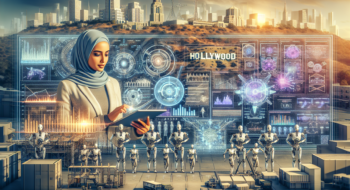
As we stand on the brink of a technological revolution powered by artificial intelligence, the need for better benchmarks becomes increasingly critical. These metrics can unleash humanity’s ultimate challenge: the AI Exam, pushing boundaries and redefining possibilities within the realm of AI. By establishing robust standards, we can ensure that AI technologies not only achieve their remarkable potential but also deliver significant social benefits. Ultimately, the proper benchmarks can guide AI development toward addressing complex societal issues, fostering innovation, and enhancing quality of life for all.
Unleashing Humanity’s Ultimate Challenge: The AI Exam!
In the era of Artificial Intelligence (AI), the world is buzzing with excitement and trepidation as we usher in possibilities that once belonged squarely in the realm of science fiction. In the backdrop of this exhilarating landscape, there’s a question dangling like a carrot over our heads: how do we evaluate these advanced technologies? And that’s precisely where the concept of the AI Exam comes into play. You may be scratching your head, wondering, what’s an AI Exam? Let’s journey through the depths of this golden idea and explore how it can become the ultimate challenge for humanity while reshaping AI’s trajectory.
The Genesis of the AI Exam
The call for an AI Exam isn’t birthed from whimsy; it stems from a growing realization that we, as human societies, need new mechanisms to assess AI impacts. Traditional metrics are falling short, overwhelmed by the tides of rapid technological change. The challenges posed by AI are multifaceted, including ethical implications, safety concerns, and societal effects, prompting experts to advocate for a robust evaluative framework.
The AI Exam seeks to bridge the widening gap between technological advancements and societal wellbeing. This transformative evaluation would delve into an array of dimensions—from accuracy and efficiency to ethical considerations and societal impact—ensuring that AI systems do not simply function but resonate positively with humanity’s core values.
Why Now? The Imperative for Humanity
The evolution of AI is not just ushering in better algorithms or more responsive systems; it’s shaping our collective future. With every passing day, AI infiltrates our lives through applications from healthcare to education, transforming the environments we inhabit. Yet, with great power comes even greater responsibility, urging us to consider how AI can shape societal norms and values. Here are a few key reasons why the AI Exam is an essential frontier:
- Technological Pervasiveness: AI is no longer our future; it’s our present. With advancements sprouting in robotics, natural language processing, and more, we must ensure these systems align with our societal goals.
- Ethical Quandaries: From bias in algorithms to privacy concerns, ethical considerations are paramount. The AI Exam can serve as a litmus test to measure the moral compass of AI technologies.
- Global Collaboration: AI is a universal phenomenon necessitating an international response. Establishing a common evaluation benchmark can foster collaboration and civilized debate across borders.
- Empowering Innovation: Direct evaluations can guide developers to better understand their systems and galvanize innovation, driving advancements to fulfill emerging needs.
Frameworks for an Effective AI Exam
So, how does one go about creating an AI Exam that delivers nuanced and actionable insights? It’s not merely a case of setting arbitrary tests; rather, it involves a series of carefully-planned methodologies aimed at capturing the essence of AI’s capabilities and potential drawbacks. The following are essential components to consider:
- Multi-Dimensional Assessments: Evaluating AI solely on performance metrics like speed or efficiency overlooks a plethora of other dimensions. The AI Exam should encompass socio-economic impacts, ethical soundness, and developmental sustainability.
- Interdisciplinary Collaboration: Input from technologists, ethicists, sociologists, and policymakers is crucial to formulating a well-rounded examination. This collaborative effort can ultimately ensure a broader perspective.
- Use of Real-World Scenarios: Just as law students practice in moot courts, we should immerse AI systems in real-world situations reflective of complexity. By doing so, we can observe how they restore balance or potentially disrupt societal norms.
- Public Engagement: To break down risky aspects of AI, it’s essential to involve the community through forums, surveys, or crowdsourced platforms. This transparent approach builds trust and stakeholder engagement.
Benefits of an AI Exam: An Expansive Horizon
What can be distilled from all this strategic discussion around the AI Exam? When established rigorously, an AI Exam presents myriad advantages that echo beyond mere assessment.
- Fostering Trust: Transparency in the evaluation process can cultivate public confidence in AI technologies.
- Reducing Risk: Addressing weaknesses ensures that potential threats can be mitigated before systems interact with vulnerable communities.
- Encouraging Ethical Standards: Performance metrics that incorporate ethics can shape responsible practices and motivate manufacturers to uphold societal values.
- Driving Informed Policies: Policy-making becomes informed by data-driven insights, leading to better regulations that ensure public welfare.
The Role of Human Judgment in the AI Exam
While metrics and evaluation frameworks are indispensable, let us not forget the profound influence of human judgment in the AI Exam. A significant element of AI evaluation requires listening to human experiences—the fears, concerns, and aspirations that individuals possess in relation to AI technologies.
As much as we strive for objectivity, human cognition and emotional intelligence cannot be relegated to the background. It’s crucial to incorporate these aspects, as they can yield insights that raw data could never capture. The AI Exam should reflect a symbiotic relationship between human insight and machine learning, bountifully enhancing our quest for a balanced future.
Conclusion: The Road Ahead
As we thread the needle of our AI-laden future, the AI Exam stands as a testament to our commitment to navigate complexities with courage and wisdom. It embodies both an opportunity and a challenge that rejuvenates our focus on the human element while simultaneously driving technological breakthroughs. The more we establish rigorous benchmarks like the AI Exam, the better positioned we will be to foster development that prioritizes humanity’s collective virtues.
In summary, the AI Exam isn’t merely about evaluating technology; it’s about unleashing a movement that transforms our relationship with artificial intelligence. Each of us has a role to play in shaping this ethos, and it’s time we take the plunge into this ultimate challenge to secure a prosperous future for humanity. The possibilities are endless, and together, we can build an AI landscape that flourishes and resonates with the best of what we stand for.
To learn more about developing consciousness beyond algorithms and data, visit Neyrotex.com.