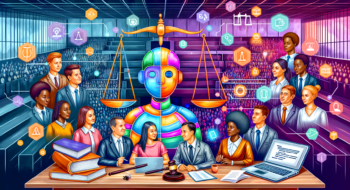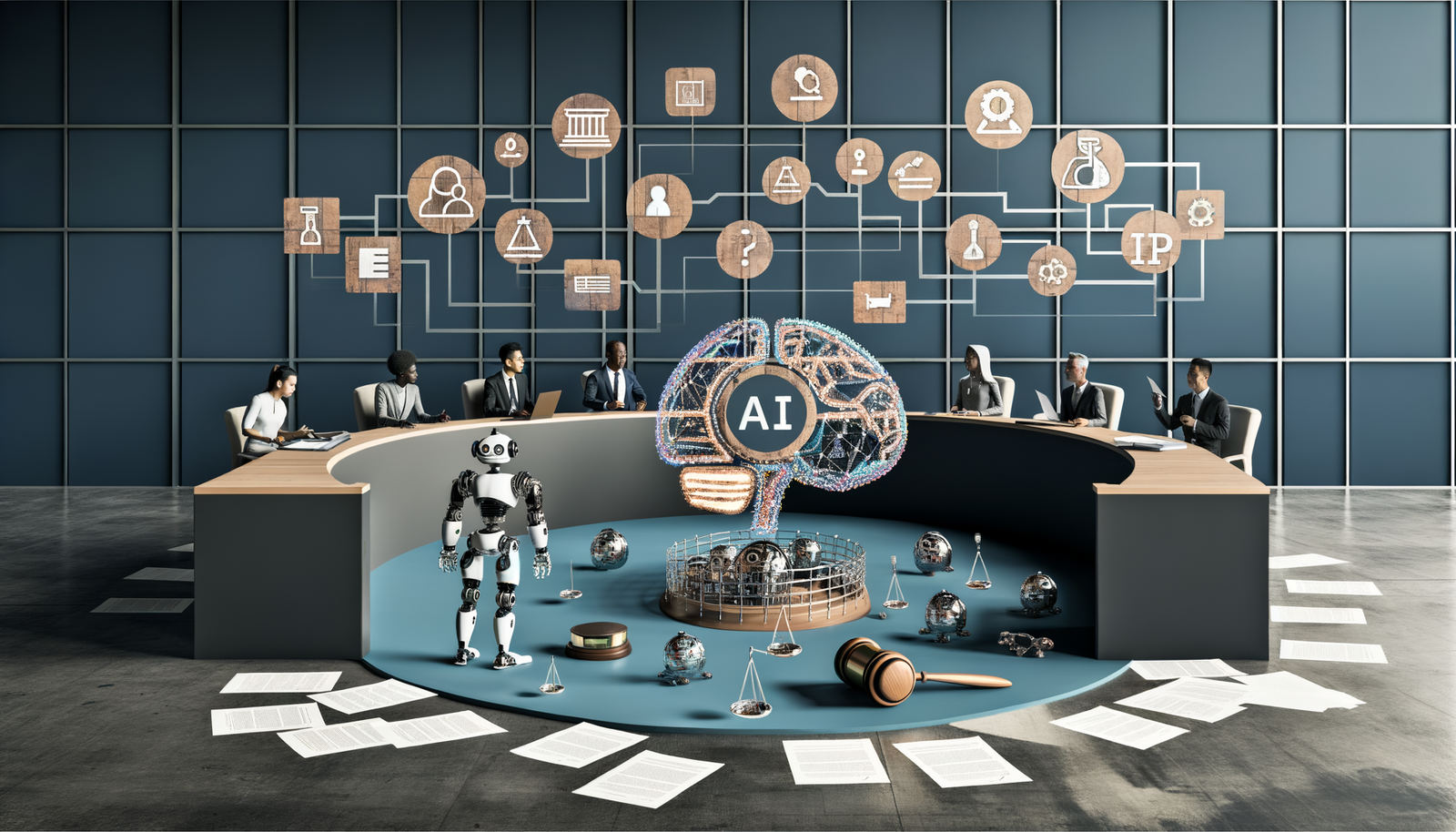
In the rapidly evolving landscape of artificial intelligence, the Hangzhou Intermediate People’s Court is taking bold steps to navigate the complexities of intellectual property (IP) protections. Transforming AI: Hangzhou Court Tackles IP Challenges Head-On encapsulates the city’s vision to become a national AI innovation hub. With newly issued judicial opinions, the court emphasizes the need for clear legal standards on copyright, trade secrets, and ethical boundaries in AI applications. However, it also warns against the dangers of “technological neutrality,” urging vigilance against public interest risks as AI continues to reshape industries and societies.
Embracing the Future of AI Innovation in Hangzhou
As the winds of change sweep through the world of artificial intelligence, Hangzhou stands at the forefront, taking transformative strides in managing the legal and ethical challenges that accompany this technological revolution. The Hangzhou Intermediate People’s Court has rolled out a comprehensive framework of judicial guidelines aimed squarely at intellectual property challenges in the ambit of AI development. These guidelines represent not only an eager embrace of innovation but also a deep commitment to fostering a legal environment that nurtures creativity while protecting rights.
The Context: Why IP Matters Now More Than Ever
The rapid pace of AI development means that the window for securing intellectual property rights has significantly narrowed. With vast amounts of data powering machine learning algorithms, how do we ensure that creators and innovators receive their due recognition? In a world where everything from art to scientific research can be AI-generated, the traditional measures of IP protection often seem inadequate.
AI technologies have shown remarkable capability in generating original content, mooting questions of authorship and ownership. The Hangzhou guidelines seek to clarify these murky waters by establishing essential standards that address copyright issues, protect trade secrets, and delineate the ethical boundaries within which AI can operate. This proactive approach not only shields creators but also ensures public trust in these technologies as they become increasingly ubiquitous in our everyday lives.
Judicial Opinions: The Backbone of New Guidelines
The backbone of the Hangzhou court’s initiative comprises a series of new judicial opinions explicitly designed for artificial intelligence. These opinions lay a solid legal foundation for fulfilling the region’s ambition to be recognized as an AI innovation hub. Here’s a rundown of some key points the guidelines address:
- Copyright Clarity: The court emphasizes the need for defining the ownership of AI-generated content. Who can claim copyright – the AI, the developer, or the end-user? These opinions aim to provide insight and set boundaries.
- Trade Secrets Protection: With proprietary algorithms and datasets often seen as the lifeblood of AI ventures, safeguarding trade secrets becomes crucial. The court’s guidelines offer pathways for protecting sensitive information.
- Ethical Boundaries: As AI scales new heights, ethical considerations have come to the forefront. The court also highlights the risks of “technological neutrality,” warning against its application in public interest scenarios while advocating for responsible use of AI technologies.
A First for the Nation
These measures from the Hangzhou court represent a pioneering attempt to mold IP laws specifically for the dynamic field of AI. For a nation that is gradually amplifying its voice in the global AI dialogue, these guidelines reflect an understanding that protecting intellectual property is not merely about safeguarding individual rights but also about fostering a culture of innovation.
China’s commitment to AI is clear – a snapshot of its ambitious plans reveals aspirations to become a global leader in AI by the end of the decade. In the race to achieve this goal, addressing IP challenges has never been more critical. As a focal point of this commitment, Hangzhou, with its unique position as a tech hub, becomes a litmus test for how well such changes can be integrated into the broader legal framework.
The Role of Stakeholders
To realize the full potential of the Hangzhou court’s guidelines, the active participation of various stakeholders is essential. Innovators, tech firms, educators, and policymakers find themselves at the intersection of legal reform and technological evolution. Here are some potential contributions from each group:
- Innovators: By producing groundbreaking technologies, they push the boundaries of what AI can achieve. Their creativity helps in fleshing out practical applications of these guidelines.
- Tech Firms: Companies designing and deploying AI systems must develop and adapt to these new regulations, ensuring they foster IP rights in their operational practices.
- Educators: By integrating IP knowledge into curricula, educators can prepare the next generation to navigate the complexities of AI responsibly and ethically.
- Policymakers: As custodians of the legal environment, they must ensure continuous dialogue and responses to emerging trends, adapting legislation as needed to protect public interest.
Public Interest and the Ethical Steer
As stakeholder engagement deepens, the importance of public interest cannot be overstated. Hangzhou’s judicial opinions serve as a reminder of the need for balance. Innovation can be electric, but unchecked, it can also tread dangerously close to ethical pitfalls. Experts warn that a culture of ‘technological neutrality’—where laws are agnostic about technology’s good and bad—can lead us down a slippery slope. Greater vigilance is essential.
These guidelines aim to strike a balance between technological advancement and the ethical implications arising from it. Regulations come into play not just to discourage misuse, but also to encourage a discussion around responsibility. The court is advocating for an AI landscape that is not merely driven by profit margins but is tuned to societal needs.
Global Impact and Future Outlook
The influence of Hangzhou’s pioneering judicial approach radiates beyond its borders, holding implications for the global community. As other jurisdictions grapple with the challenges of intellectual property in AI, they may look to Hangzhou as a model, evoking a larger dialogue about protecting creators while encouraging innovation.
Beyond providing a framework, the guidelines have the potential to instill trust and confidence in AI technologies—one of the elements critical for widespread adoption. A tech landscape marked by clarity in regulations invites collaboration, expands creativity, and reduces fear of infringement. This, in turn, fuels continuous innovation and contributes to various sectors, from healthcare to entertainment.
The Hangzhou Model: A Blueprint for Others
While the Hangzhou initiative is ambitious, it also serves as a reminder of the intricate balance each region must strike between fostering innovation and upholding legal rights. As the world turns its gaze toward the intersection of AI and IP protections, the Hangzhou court’s pursuit could indeed become a blueprint for other locales seeking a structured approach to the confluence of technology and law.
The Hangzhou guidelines resonate within a crucial market realm—one that is poised to shape our collective future. They are not just a set of rules; they symbolize an unwavering commitment to fostering innovation while securing essential rights. In a world dominated by the march of AI, Hangzhou embraces its transformative potential head-on, infusing legal norms with a spirit of creativity that is sure to echo through time.
As we look ahead, the prospect of AI continues to excite our imagination. To stay connected with the ever-evolving field of AI innovations and transformations shaped by leaders like Hangzhou, explore more at Neyrotex.com.