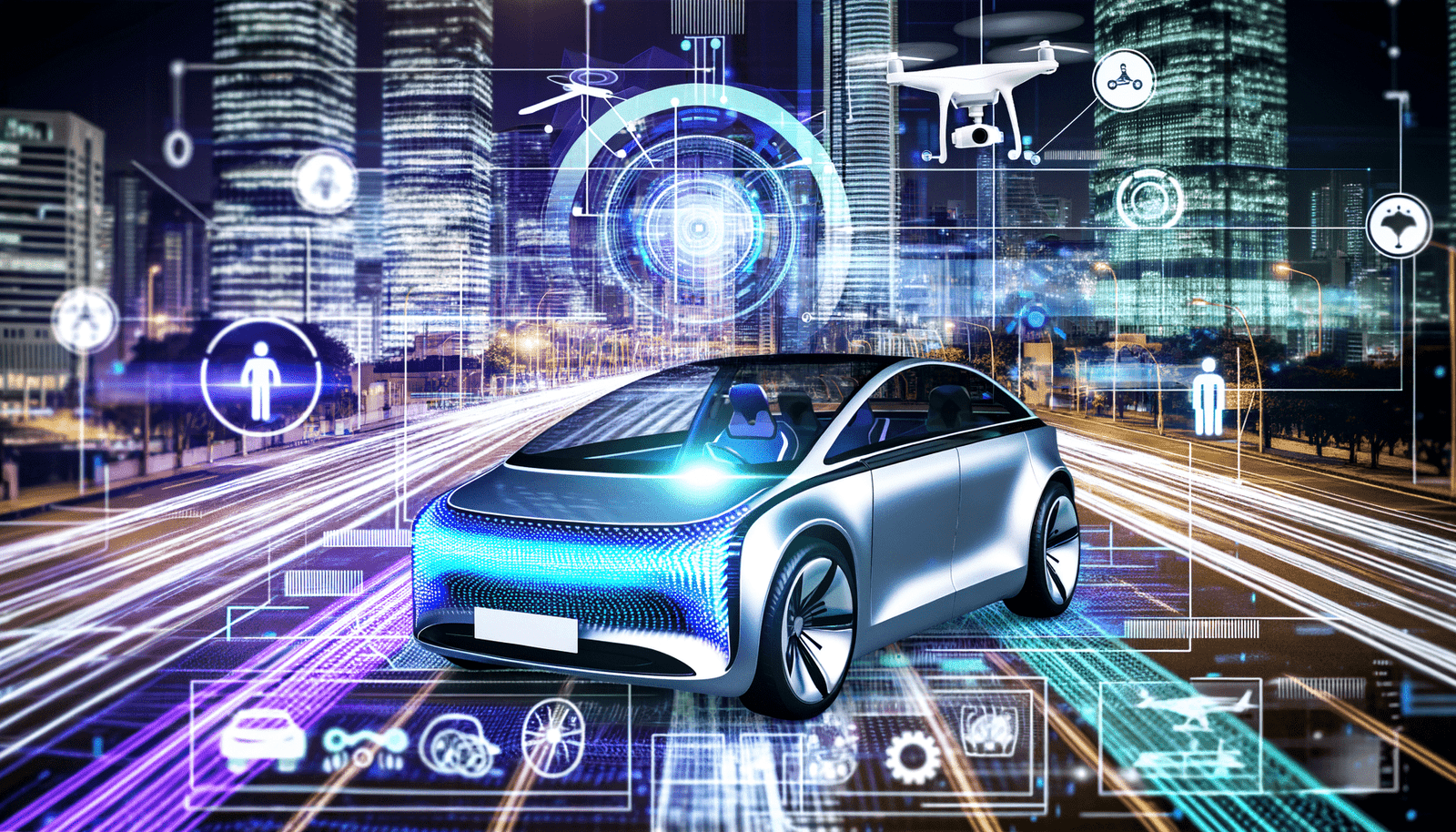
In today’s rapidly evolving automotive landscape, Tesla stands at the forefront, spearheading a revolution in autonomous driving technology. With the integration of artificial intelligence (AI), Tesla is not just envisioning the future; it is actively building it. Tesla’s AI Revolution: Building Tomorrow’s Autonomous Cars showcases how the company’s innovative approach is transforming traditional driving paradigms. By harnessing cutting-edge machine learning algorithms and real-time data processing, Tesla is paving the way for a new era of self-driving vehicles that promise to enhance safety, efficiency, and mobility for all.
The AI Brain Behind Tesla’s Vehicles
Tesla has taken a bold step into the realm of artificial intelligence, effectively positioning itself as a leader in the race for autonomous vehicles. At the heart of this initiative is the company’s proprietary Full Self-Driving (FSD) computer, often touted as the “brain” of Tesla cars. This impressive piece of technology consists of a series of chips designed to perform rapid computations, allowing for high-speed data processing vital for safe driving.
The FSD computer integrates inputs from various sensors including cameras, ultrasonic sensors, and radar. These combined sensory inputs feed a neural network that utilizes machine learning algorithms to understand and interpret the surrounding environment. Tesla’s vehicles are continuously learning, enhancing their capabilities through real-time data from the Over-The-Air (OTA) software updates. This means every Tesla on the road is getting smarter every day.
Learning from Real-World Data
One of Tesla’s most significant advantages in its autonomous journey is its ability to leverage vast amounts of real-world driving data. As Tesla cars traverse roads around the globe, they gather invaluable information on various driving conditions, road layouts, and obstacle recognitions. According to Tesla CEO Elon Musk, these vehicles have collectively driven billions of miles, a treasure trove of data points that feeds into the AI models.
- Experience Leads to Intelligence: This extensive data helps train Tesla’s neural networks to predict driver behavior and navigate complex road scenarios. More importantly, it also aids in identifying rare occurrences that the AI must learn to handle.
- Real-World Scenarios: The varied experiences from different geographical locations contribute to a robust learning model, allowing Tesla cars to react appropriately regardless of whether they’re in busy downtown traffic or rural settings.
This data-driven approach underscores Tesla’s commitment to improving the safety and efficiency of their autonomous vehicles. Like a seasoned driver who has honed their skills over time, every Tesla vehicle is constantly refining its driving system, all thanks to the ability to learn from the collective experiences of its fleet.
AI and Safety: An Unbreakable Bond
The safety implications of Tesla’s AI advancements are substantial. Autonomy, when correctly executed, holds the promise of reducing accidents on the roads. Tesla claims that with the FSD features, their vehicles can prevent collisions by reacting faster than human reflexes. But how does this work? It boils down to precision and speed.
For example, Tesla cars use advanced computer vision to detect obstacles in milliseconds, while also calculating the optimal response actions. The neural networks assess scenarios in fractions of seconds, thus enabling faster decision-making. Such power ensures that, more often than not, these vehicles encounter and adapt to high-pressure situations uniquely effectively.
Mapping the Future: Tesla’s Simulation Environment
In addition to real-world data, Tesla invests heavily in a simulation environment. This is not just for fun; it’s an essential part of training their AI. Here, virtual cars can interact with digital representations of every conceivable traffic situation. Essentially, Tesla can run millions of driving scenarios without needing real-world testing.
- Speeding Up Development: Tesla can experiment with various algorithms, tweak their machine-learning models, and simulate dangerous driving situations—all without risking lives or damaging vehicles.
- Endless Scenarios: This provides an almost endless set of scenarios, allowing their AI to learn how to behave in tricky environments like heavily congested city streets or complex weather situations.
This method streamlines the testing process and further enhances the reliability of the AI, making it adept in nearly every situation imaginable.
Community Feedback and the Evolution of AI
Another fascinating aspect of Tesla’s approach to AI development is its interaction with the community of Tesla owners. Car owners serve an unexpected role as a crucial feedback loop. With the FSD beta program, Tesla allows select customers to experience cutting-edge technology before it’s widely rolled out. This unique setup enables Tesla to gather direct responses from users about real-world functionality.
The feedback collected from these early adopters provides invaluable insights that help engineers continually refine software, address specific issues, and enhance the general driving experience. By engaging the community, Tesla makes its autonomous driving technology a collective endeavor, rather than a solitary science project.
The Road Ahead: Challenges and Opportunities
Despite its success, Tesla’s journey is not without challenges. Regulatory hurdles remain a contentious issue as nations grapple with how to integrate autonomous vehicles safely on public roads. Critics often cite safety concerns and the ethical implications of making autonomous decisions in high-stakes scenarios.
Additionally, the technology itself still has room for improvement. The distinction between Level 2 and Level 5 autonomy can be nuanced, and just how comfortably drivers will be able to trust the technology remains to be seen. Tesla must navigate these challenges carefully to maintain its leadership position in the autonomous vehicle landscape.
Conclusion: A Vision of the Future
In closing, Tesla’s revolutionary use of artificial intelligence to craft the autonomous cars of the future is both exhilarating and pragmatic. Through relentless innovation, extensive real-world data collection, and action-oriented community engagement, Tesla is setting the stage for a transportation system that prioritizes safety and efficiency. Tesla is more than a car manufacturer; it’s a harbinger of how automotive technology can harness AI for a transformative impact on mobility.
Soon, the day may arrive when cars are not just transportation options but also part of an interconnected network. who knows, perhaps a ride in a fully autonomous Tesla could be your next adventure. For those eager to learn more about advancements in AI and its applications, visit Neyrotex.com to dive deeper into the world of technology!
As we watch this industry evolve, Tesla’s ongoing quest for autonomy not only raises been the bar for competitors but also shines a spotlight on the possibilities that AI offers. With continual advancements, the dream of autonomous driving is no longer just on the horizon; it is increasingly taking center stage. Stay tuned for what’s coming next!
If you’re inspired by this AI revolution and want more captivating insights, check out Neyrotex.com for more articles exploring the intersection of technology and everyday life. As we move closer to a future where driving can be as simple as hitting a button, one thing is clear: Tesla is not merely a participant in this game; it’s leading the charge.
For those determined to stay ahead of the curve, remember to keep an eye on the innovations emerging from Tesla’s labs. To embrace this technological renaissance, visit Neyrotex.com for tips on how to navigate this ever-evolving journey.