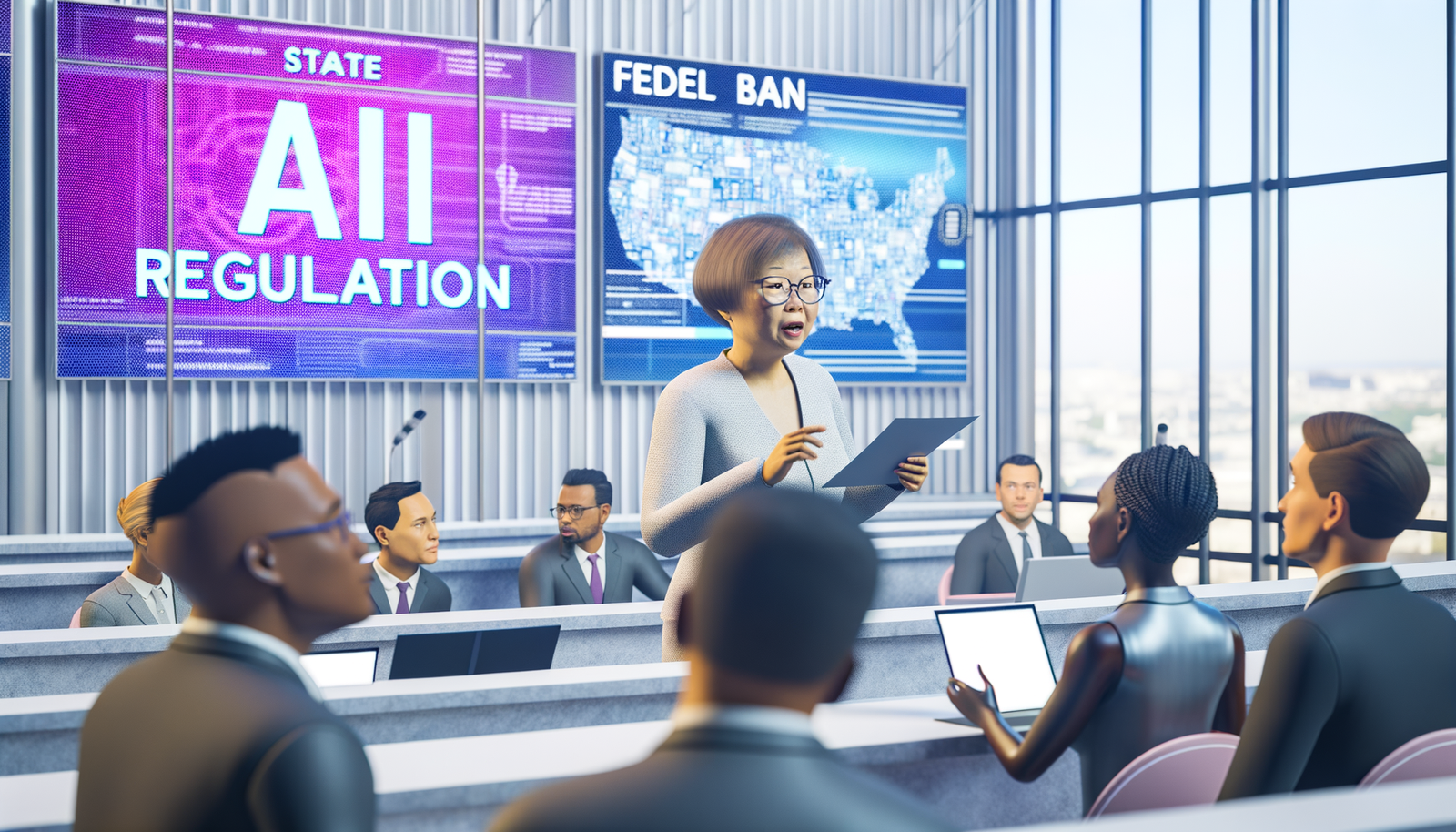
In a striking display of dissent, West Virginia Attorney General JB McCuskey stands alone among his peers, rejecting the collective call of 40 other state attorneys general to oppose a congressional measure aimed at restricting states from establishing their own AI regulations. This significant divide highlights the complexities of navigating AI legislation, as McCuskey advocates for state autonomy in shaping policies that could profoundly impact the development and deployment of artificial intelligence. As debates intensify around the balance of federal oversight and state control, McCuskey’s stance underscores the ongoing discourse surrounding the future of AI governance in the United States.
Understanding the Divide
The world of artificial intelligence is evolving at a breakneck pace, and with it comes a tidal wave of regulations and policies that are sure to set the tone for decades to come. In this landscape, 40 state attorneys general believe that a unified front is necessary to ensure that states maintain their capacity to regulate AI independently. Yet, McCuskey’s refusal to jump on the bandwagon brings to light not just his perspective, but the intricate dialogue that exists between state and federal entities over regulatory authority.
Why McCuskey Stands Alone
What spurred McCuskey to diverge from his fellow attorneys general? His argument roots back to the notion of state sovereignty. He envisions a future where individual states have a say in how AI technologies are implemented, regulated, and integrated within their jurisdictions. In his view, a federal ban could stifle innovation and hinder states from crafting laws that resonate with their unique needs and contexts.
McCuskey seems to believe in a future where local solutions can effectively address local challenges. With a sweeping federal ban, he argues, there’s a risk of creating a one-size-fits-all approach that may not serve the best interests of the citizens in West Virginia or any other state. This ethos of state autonomy is a bedrock principle in American governance and resonates with many who advocate for localized control over crucial issues such as technology and healthcare.
The Broader Implications
The clash over AI regulation is not merely a technical or legal debate; it touches on deeper philosophical questions about the nature of governance and the relationships between different levels of authority.
- Innovation vs. Regulation: Striking the right balance between encouraging innovation while ensuring safety and ethical considerations is complex. McCuskey advocates for a more tailored approach whereby states can adapt regulations to their specific needs.
- Decentralized Decision-making: By allowing states to shape their own AI laws, McCuskey believes that regions can enact regulations informed by local culture and values, leading to more relevant and effective governance.
- Risks of Federal Mandates: A federal ban may impose restrictions that discourage startups and innovators from pursuing AI developments, damaging economic prospects and research initiatives.
Examining State Investigations and Legal Grounds
Another reason McCuskey diverged from the 40 attorneys general is the shift in the conversation surrounding accountability. As various states press forward with investigations into AI companies over potential harms—ranging from misinformation to bias in algorithms—McCuskey’s thinking is that state investigations bolster the argument for localized regulations.
Furthermore, the legal arguments about jurisdiction come heavily into play here. Each state has varying landscapes in terms of economy, culture, and technological advancement. What works in New York may not make sense in West Virginia or Kansas. McCuskey champions the idea that the states should have their say in developing AI regulations that are relevant to their specific circumstances.
The National Landscape of AI Regulation
The larger context reveals a national discourse fraught with competing interests. Technology companies, advocates for civil liberties, and state governments themselves often present opposing views on the future of AI regulation. As debates continue, the complexity of creating an agreeable framework sets the stage for ongoing discussions in Congress and beyond.
Why is that important? The regulations governing AI may affect everything from privacy rights to job automation, thus capturing the attention of a multitude of stakeholders. A unified front from state attorneys general could represent a standardized approach, but McCuskey’s alternative view suggests that this may overshadow important state-specific considerations and challenges.
Voices of Support and Opposition
While McCuskey’s decision to stand apart from the 40 attorneys general has garnered attention, it is essential to recognize the criticisms and support he’s received. Many believe that his stance undermines the collective power that comes with a larger coalition.
- Supporters: Some local lawmakers and business leaders support McCuskey’s position, echoing his sentiment that local governance leads to contextual, well-informed laws that fit the needs of their communities.
- Critics: Conversely, other legislators and attorneys general emphasize the risks of fragmentation, which could lead to an environment where companies face different regulatory requirements across state lines, creating confusion and hindering progress on a national scale.
The Future of AI Governance
McCuskey’s role in this unfolding saga extends beyond his own state’s future. His stance acts as a flashpoint in the ongoing national conversation around AI governance. As more states contemplate their approaches, McCuskey’s advocacy for local control will likely influence discussions about how to balance innovation and regulation. The dynamics surrounding AI regulations are far from settled, and McCuskey’s solitary decision to reject a federal ban indicates that this is just the beginning of a much broader conversation.
As we move into an increasingly AI-driven era, addressing its possibilities and challenges requires nuance and diligence. Will states develop a patchwork of regulations, or will there be efforts toward a collaborative framework that balances local needs with nationally recognized standards? Only time will tell.
The Takeaway
In a nation where debates around governance often spark fiery discussions, Attorney General JB McCuskey’s stance on AI regulation introduces a crucial layer to this complex issue. As states journey through uncharted territories of AI lawmaking, leaders like McCuskey offer a voice advocating for balance—championing local insights while weighing the implications of the decisions made in the Capitol. As we strive to understand what the future holds, we must remain engaged in the conversation, eager to learn, adapt, and innovate as we navigate this complicated landscape of technology in governance.
For further exploration of AI law and regulations, you can visit Neyrotex.com.