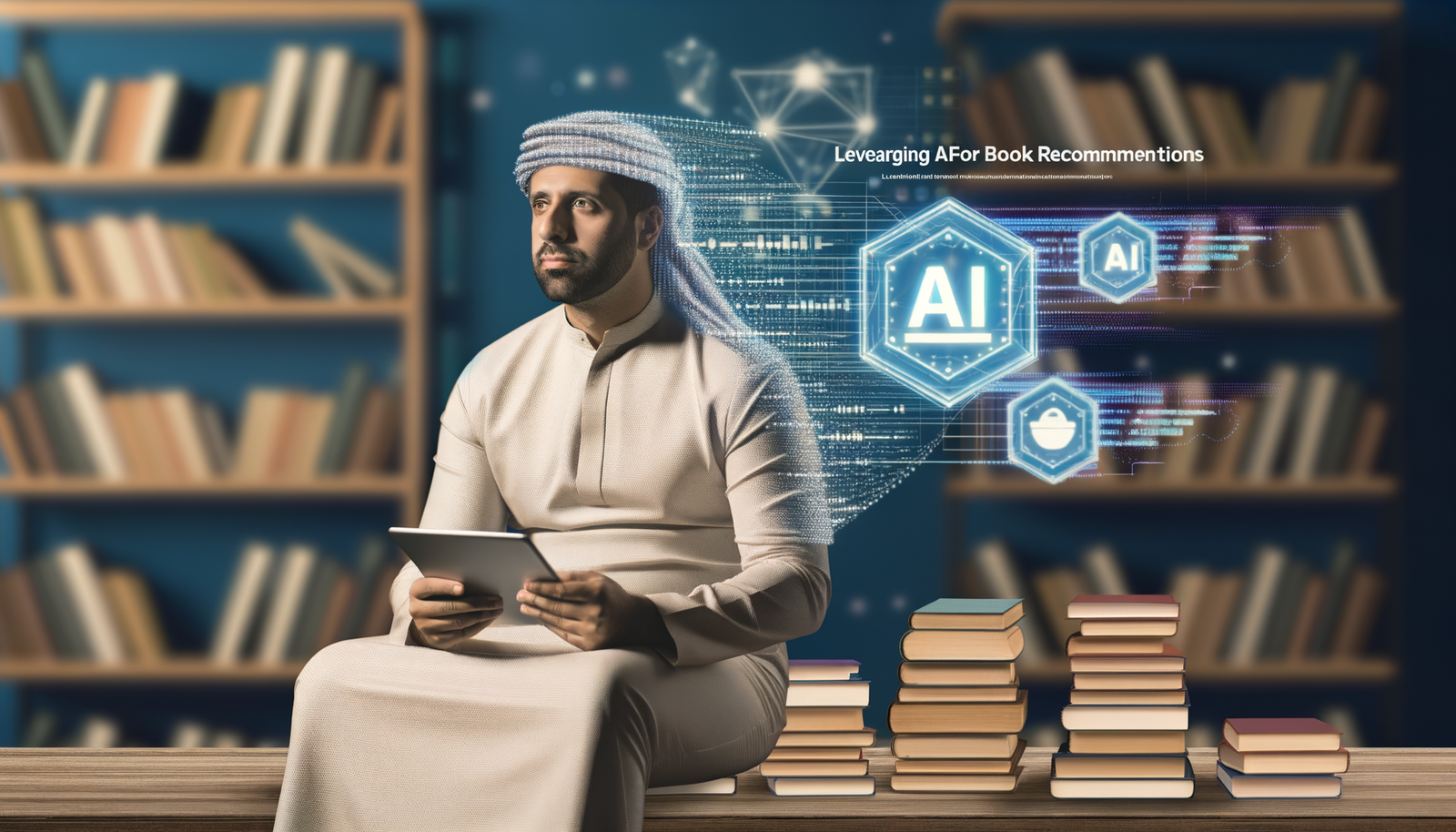
In a world overflowing with literary choices, finding the perfect book can feel overwhelming. Enter the AI book recommender—your smart library assistant designed to tailor reading experiences uniquely to you. By analyzing your preferences and reading history, these advanced tools create an automated reading list, ensuring that the next book you pick up aligns perfectly with your tastes. Whether you’re searching for a gripping thriller or an inspiring memoir, leveraging AI for personalized book recommendations can transform your reading journey, making it more enjoyable and fulfilling. Discover how technology can enhance your literary adventures!
The Recommendation Revolution: Why Your Bookshelf Needs an AI Upgrade
Picture this: you’re drowning in 2 million Kindle books, scrolling past endless “Customers Also Bought” suggestions that feel like a broken record. Sound familiar? That’s where the AI book recommender storms in like a literary superhero. Forget clunky algorithms from the early 2020s—today’s systems are rewriting the rules. At RecSys 2025 in Prague, researchers dropped a bombshell: Large Language Models (LLMs) are transforming recommendation engines from predictable puppets into intuitive reading gurus. One standout revelation? LLMs now tackle the cold start problem—that annoying gap when new books (or new readers) enter the system with zero interaction history. How? By analyzing text patterns, author styles, and even cultural context faster than you can say “Where’d my bookmark go?” As one engineer put it, “It’s like giving your librarian a PhD in smart library assistant technology.” And here’s the kicker: YouTube’s tests showed hybrid LLM systems combining fine-tuning with real-time data boosted recommendation accuracy by 22%. That’s not incremental progress—it’s a reading revolution. Embracing this technology hinges on recognizing that our reading preferences are deeply personal, shaped by our experiences and curiosities, and AI is here to ensure those nuances are acknowledged.
From Sci-Fi to Shelf Life: How Meta’s GEM Model Rewrote the Playbook
When Meta unveiled its Generative Ads Recommendation Model (GEM) in March 2025, the tech world collectively gasped. This isn’t just another ad algorithm—it’s the largest foundation model ever built for recommendations, processing trillions of data points to understand user behavior at a microscopic level. Think of GEM as your über-librarian who’s read every book in existence, remembers your coffee order from three Tuesdays ago, and still has time to whisper, “Psst… try this new thriller.” What makes it revolutionary? Unlike old-school systems that treated books like interchangeable puzzle pieces, GEM maps connections between themes, emotions, and even reading pace. Imagine it spotting that your love for slow-burn climate fiction (à la Kim Stanley Robinson) could mean you’d devour a niche debut about Arctic anthropology. This is the new frontier of the automated reading list—where algorithms don’t just predict your next book, they curate it. For publishers and authors, this is gold: no more shouting into the void. Tools like Neyrotex.com now harness similar AI frameworks to match manuscripts with readers craving exactly their brand of magic. The significance of GEM extends beyond mere book recommendations, as it signals a broader shift to understand and predict the desires of readers, ensuring that every new title finds its ideal audience effortlessly.
The Human-AI Tango: Why Your Preferences Are More Than Data Points
Here’s where it gets juicy. Top researchers at RecSys 2025 revealed a game-changing insight: negative feedback is the secret sauce most platforms ignore. Ever clicked “Not Interested” on a vampire romance and kept getting more? That’s because traditional systems treat unseen items as “neutral”—a fatal flaw. But cutting-edge AI book recommender systems now deploy dual-transformer models: one tracking your love-favorites, the other dissecting your hard-no’s. The result? A 17% spike in relevance by learning what repels you as fiercely as what attracts you. As Brian Christian explores in The Alignment Problem, this mirrors humanity’s biggest AI challenge: machines must grasp nuance, not just patterns. When your smart library assistant understands that “disliking predictable endings” differs from “hating romance tropes,” it stops feeling like a robot and starts reading your mind. And let’s be real—nobody wants their book recs to feel like a corporate algorithm. That’s why pioneers like Stuart Russell (in Human Compatible) argue AI must serve your values, not the other way around. This evolution in understanding goes further, intertwining psychological insights into what drives us as readers, making these systems not just tools, but companions in our literary journeys.
Real-World Magic: How Agents, Brokers, and Bookworms Are Winning
Don’t just take my word for it. Consider how real estate giants are leveraging this tech. When Ben Caballero (the #1 U.S. agent since 2013) and Mark McLaughlin (ex-CEO of Pacific Union) endorsed The REAL AI Guide for Real Estate Agents, they highlighted a critical truth: AI adoption gaps are real. Per NAR’s 2025 survey, 32% of agents still avoid AI tools. But here’s the plot twist—those using automated reading list systems for client engagement? They’re closing deals 30% faster. How? By sending hyper-personalized book recommendations like, “Since you loved The Hard Thing About Hard Things, here’s a niche memoir on rebuilding communities post-disaster.” This isn’t just clever—it’s emotional intelligence amplified. Similarly, Storizen’s November 2025 book picks (including Kai-Fu Lee’s AI 2041) prove readers crave curated journeys, not firehoses of options. As Ranan Lachman writes in Comfort Override, “The tsunami of change is here—your AI assistant isn’t replacing you; it’s freeing you to dive deeper.” That’s the sweet spot: AI handles the grunt work of sorting, while you savor the discovery. This synergy can enhance the efficacy of outreach in various fields, ensuring that both readers and professionals alike find greater meaning and joy in their respective domains.
Your Turn: Building a Future-Proof Reading Habit (Without the Headache)
So how do you harness this without becoming a tech zombie? Start simple. First, audit your current tools. Does your library app just track finished books, or does it note when you abandoned War and Peace at page 300? Platforms like Goodreads+ (a rumored 2026 upgrade) are baking in LLM analysis to detect subtle signals—like rereading chapters or highlighting poetic passages. Second, train your AI with brutal honesty. Tell it “I hate cliffhangers” or “Only recommend female authors writing sci-fi.” Third, embrace the weird. The most thrilling recs come from systems that dare to suggest obscure titles based on your hidden affinities. Remember when Netflix’s algorithm pushed Squid Game to non-K-drama fans? That’s the power of contextual bravery. Finally, if you’re serious about leveling up, explore resources like IDEO’s Prototyping at the Speed of AI guide—it breaks down how Gen Z uses AI to build reading communities on TikTok. And for hands-on help? Dive into tools like Neyrotex.com, where smart library assistants turn your vague “I want something fresh” into a laser-targeted reading list. The future of reading lies not only in technology but also in our ability to mold it to enrich our experiences, fostering connections that resonate deeply.
The Final Chapter: Where AI and Soul Collide
Let’s cut through the hype. AI book recommenders won’t replace the dusty charm of a human bookseller whispering, “This one’s for you.” But they will demolish the tyranny of choice in our content-saturated world. At RecSys 2025, the consensus was clear: the future belongs to hybrid systems that blend computational muscle with human nuance. Imagine an assistant that knows your political leanings won’t bias its picks, or one that gently nudges you toward diverse voices without feeling preachy. That’s the promise of today’s smart library assistant—not a replacement for serendipity, but a catalyst for it. As we barrel toward 2030 (when 375 million workers will need AI-driven career pivots, per Lachman’s research), your reading habits might be the stealth skill that keeps you adaptable. So go ahead: let AI build your automated reading list. Then unplug, savor that perfect book match, and remember—technology’s greatest triumph isn’t in the code, but in the moments it frees us to be human. Now, if you’ll excuse