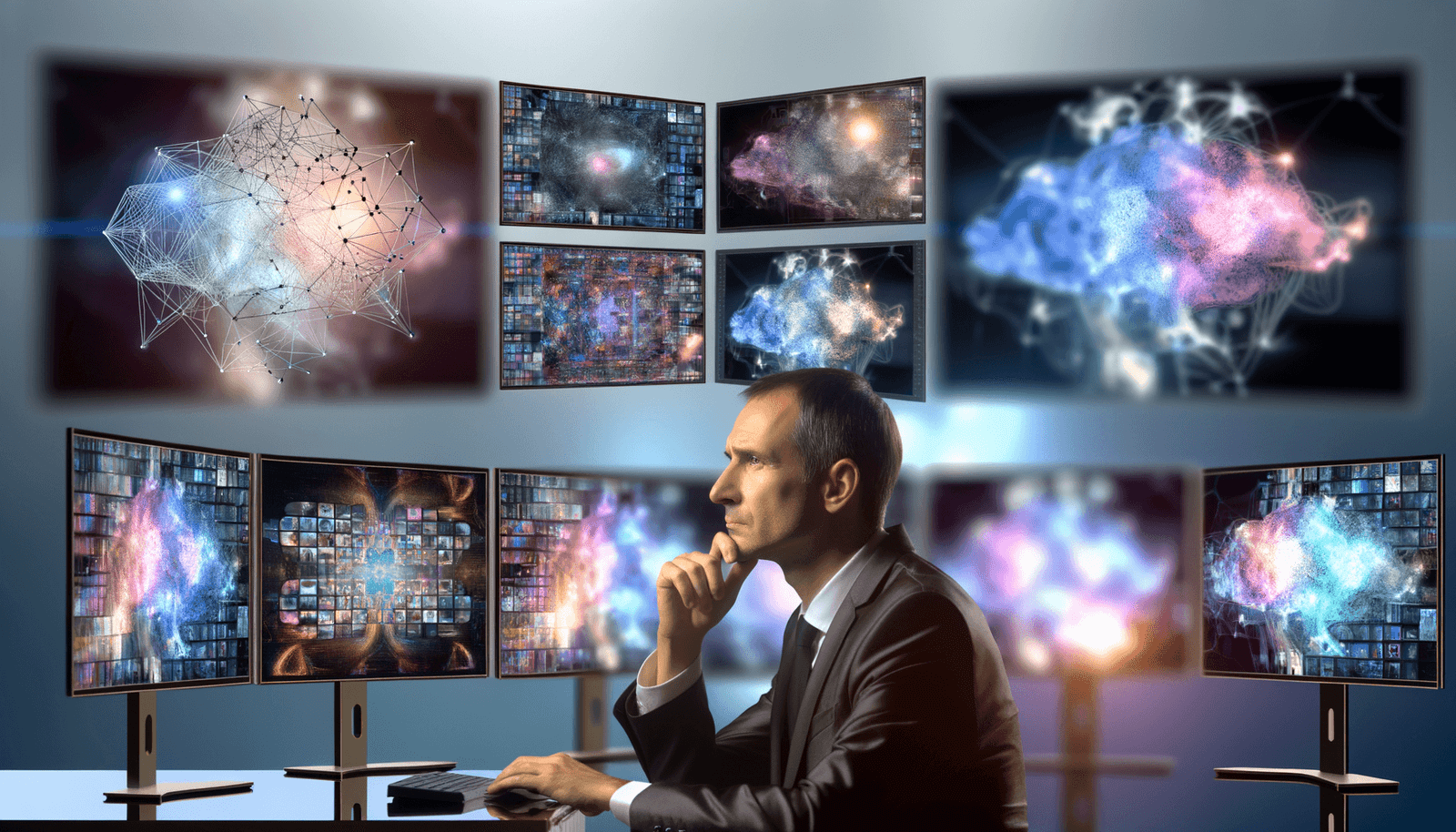
How to Create Stunning Videos Using Neural Networks
In today’s digital landscape, creating stunning videos has never been easier, thanks to the power of neural networks. These advanced algorithms can revolutionize video animation, allowing creators to produce professional-quality animations with minimal effort. Whether you’re aiming for high-end video production or simply want to enhance your storytelling, neural networks offer innovative tools to elevate your projects. In this guide, we will explore how to leverage these cutting-edge technologies to bring your creative visions to life, making the video creation process seamless and efficient. Get ready to dive into the world of neural networks and transform your video production!
Understanding Neural Networks in Video Animation
Neural networks are a subset of machine learning that mimic the human brain’s structure and function. They are particularly effective in tasks that require pattern recognition, learning, and adaptation. In the context of video animation, neural networks can automate several key processes, making the creation of high-quality animations more efficient and less labor-intensive. Their ability to analyze vast datasets and identify intricate patterns allows artists to focus on creativity rather than the technical intricacies of animation.
Key Processes Automated by Neural Networks
1. Colorization and Line Art Conversion
Neural networks can automatically convert sketch sequences into colored animations. For instance, the AniDoc model uses video diffusion models to colorize line art sketches in videos, maintaining high fidelity to the reference character designs and ensuring temporal consistency across frames. This model employs a two-stage training strategy that first learns colorization and then interpolation abilities, allowing for smooth and consistent animations without extensive human intervention. The automatic colorization not only accelerates the creative workflow but also opens up new creative possibilities for animators.
2. In-Betweening and Interpolation
In-betweening, the process of creating intermediate frames between keyframes, is another area where neural networks excel. Models like AniDoc and others use video interpolation techniques to generate in-between frames, ensuring a temporally consistent animation. These models can integrate precise interpolation methods to achieve enhanced control over sketch manipulation and significantly improve the quality of fluid motion in animations. This feature allows animators to create smoother transitions and realistic movements, which are crucial for conveying emotions and storytelling effectively.
3. Character Animation and Pose Control
For more complex animations, such as 3D human video synthesis, neural networks like CFSynthesis offer advanced capabilities. CFSynthesis uses a texture-SMPL-based representation to ensure consistent character appearances across different viewpoints and backgrounds. This framework allows for controllable and free-view 3D human video generation, enabling users to synthesize complex motions and insert new scene backgrounds seamlessly. Additionally, the sophisticated pose control offered by these networks allows creators to easily manipulate character expressions and movements, enhancing the overall narrative.
Architectures and Techniques Used
Video Diffusion Models
Video diffusion models, such as those used in AniDoc, are foundational in creating high-quality animations. These models follow a denoising process, where a 3D U-Net is designed for video generation. The reference image latent is integrated into the colorization process through multiple self-attention layers, ensuring that the reference image information is preserved throughout the animation. The ability to preserve important visual details allows for a more consistent final output that aligns closely with the artist’s vision.
ControlNet and Correspondence Matching
ControlNet and correspondence matching are crucial for maintaining the integrity of the reference character design. By explicitly extracting corresponded keypoints and constructing point maps, these models ensure robustness to variations in posture, scale, and action between the reference character and each line art frame. This capability is essential for dynamic animations, where characters interact with different environments, as it allows for real-time adjustments and flexibility in animation creation.
Foreground-Background Separation
In more advanced scenarios, such as 3D human video synthesis, foreground-background separation is essential. CFSynthesis introduces a novel foreground-background separation learning strategy, which allows users to control both characters and scenarios effectively. This strategy enables the seamless integration of user-defined backgrounds into the animation. Effective background management is critical for creating immersive environments that enhance storytelling and viewer engagement.
Practical Steps to Create Stunning Videos
Step 1: Prepare Your Data
To start, you need a robust dataset that includes reference character designs and corresponding sketch sequences. For example, the Sakuga-42M dataset can be used, which comprises a large number of anime clips with diverse styles and transformations. Ensuring a high-quality and diverse dataset is crucial, as it directly impacts the performance and output quality of your neural network-based animation process.
Step 2: Train Your Model
Train your model using a two-stage strategy. First, train the model to learn colorization abilities conditioned on per-frame sketches. Then, fine-tune the model to learn interpolation abilities by removing intermediate sketches. This process can be done using optimizers like AdamW and involves multiple steps of fine-tuning to achieve optimal results. Monitoring the training process and adjusting hyperparameters as needed is essential to improve performance and reduce the risk of overfitting, which can compromise animation quality.
Step 3: Use Advanced Tools and Frameworks
Utilize advanced frameworks like AniDoc or CFSynthesis to automate key processes. These frameworks offer pre-built architectures and techniques that can be tailored to your specific needs. For instance, CFSynthesis provides tools for controllable and free-view 3D human video generation, which can be adapted for various animation projects. Leveraging established frameworks not only streamlines your workflow but also provides access to the latest advancements in neural network technology.
Step 4: Integrate User Controls
Ensure that your model allows for user controls to customize the animation. This includes controls for pose, motion, and scene configurations. Models like CFSynthesis offer flexible user controls, enabling the synthesis of complex motions and the insertion of new scene backgrounds. The interactive nature of user controls encourages experimentation and creativity, allowing animators to achieve their desired results more intuitively.
Real-World Applications and Benefits
High-End Video Production
Neural networks can significantly enhance high-end video production by automating labor-intensive tasks such as colorization, in-betweening, and character animation. This not only saves time but also ensures consistency and high quality in the final product. As industries like film and gaming continue to evolve, integrating neural networks into manufacturing workflows will become increasingly crucial for maintaining competitive advantage and artistic excellence.
Storytelling and Content Creation
For storytellers and content creators, neural networks offer the ability to bring complex characters and scenarios to life with ease. Whether it’s creating lifelike characters in VR environments or generating human videos with customizable attributes, these tools can elevate the storytelling experience. As audiences demand more engaging narratives, the role of advanced technologies in creative industries is likely to expand and redefine the possibilities of animated storytelling.
Cost and Time Efficiency
By automating several key processes, neural networks can reduce the cost and time associated with video animation. For example, models like AniDoc can automate the entire process from sketch to colored animation, saving hours of manual work. These efficiencies not only result in cost savings but also allow studios to allocate resources to more creative endeavors, enhancing overall productivity and innovation within animation teams.
Conclusion
Creating stunning videos using neural networks is no longer a daunting task. With the right tools, techniques, and frameworks, you can produce professional-quality animations that meet your high-end video production needs. Whether you’re a seasoned animator or just starting out, the power of neural networks is ready to transform your creative visions into reality. Embracing these technologies enables artists to push the boundaries of their craft and explore new creative horizons.
For more advanced tools and resources, consider visiting Neyrotex.com to explore the latest in AI-driven video creation. This site offers a wealth of information and resources designed to help you leverage neural networks optimally in your video projects.
Don’t miss out on the latest updates and insights in AI and video production. Subscribe to our Telegram channel:
You Might Also Like

Create Compelling Scripts Using an AI Script Generator for Short Films
Transform Customer Journeys Using AI for Improving Website UX

Leveraging AI for Sustainable Energy Management Solutions

Get Deeper Insights with AI Video Analytics Tools for Content Creators

Using AI for Custom Knitting and Crochet Patterns