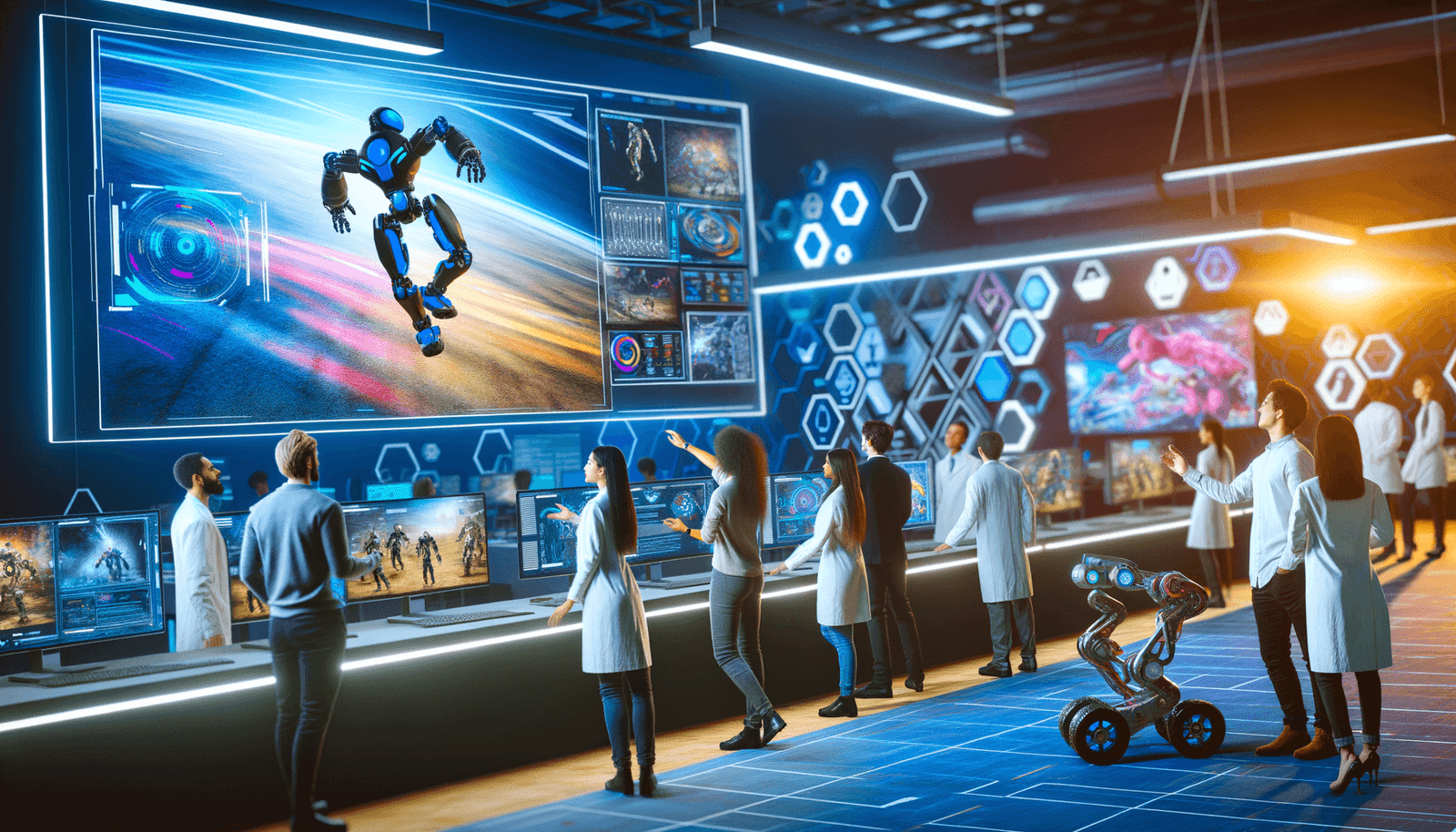
In a groundbreaking move, Google unveiled its new AI team dedicated to revolutionizing games and robotics. The talented DeepMind team will focus on developing advanced AI models capable of simulating the physical world, paving the way for significant strides in artificial general intelligence (AGI). This initiative not only aims to enhance gaming experiences but also to transform robotic interactions, making them more intuitive and efficient. As AI continues to evolve, the implications for both industries could lead to unprecedented advancements, merging technology with creative realms in ways we’ve yet to imagine. Stay tuned for the exciting developments!
Google Unleashes New AI Team for Revolutionizing Games & Robots
In a world where artificial intelligence is climbing to new heights, Google’s latest venture could very well be a game changer. The tech giant has assembled a dedicated team from its renowned DeepMind group, setting its sights on groundbreaking projects involving game and robotic technologies. This isn’t just about pushing the envelope; it’s about reinventing it entirely. Now, let’s dive into what this means for gamers, developers, and the future of robotics alike.
The Genesis of a New Frontier
The intuition behind this ambitious project stems from a simple observation: the realms of gaming and robotics are converging. Traditionally, games have simulated advanced physical realities in fantastical ways, while real-world robotics often wrestle with clunky mechanics and complex interactions. Google aims to blur these lines, creating an ecosystem where games do not merely entertain but also prepare for real-world application.
What makes this initiative particularly noteworthy is the focus on artificial general intelligence (AGI). The goal isn’t just to teach machines to play games; it’s to help them comprehend the world more fluidly and interact with it more intuitively. Imagine robots that can adapt and learn from their surroundings in real-time, just like gamers adapt to new levels and challenges. This could lead us into a phase where technological systems can grasp nuanced human behaviors, making them more relatable and reachable.
Gaming: More Than Just Play
One of the primary arenas where Google’s new AI team will make waves is in gaming. With the evolution of virtual and augmented realities, the demand for interactive and responsive game environments has surged. Here’s what you might expect:
- Enhanced NPC Interactions: Non-playing characters (NPCs) could evolve from scripted routines to genuine interactive entities. Players might find themselves engaged in conversations that feel organic because the NPCs react based on learned behaviors.
- Dynamic World Modeling: The AI could be used to create ever-changing environments, shaped by player actions and decisions. Every choice made by players could influence the gaming landscape, enabling a unique experience in each session.
- Seamless Integration of AI in Storytelling: Imagine games where storylines adapt based on player engagement. Google’s AI could craft personalized narratives, making each player’s journey distinctly their own.
- Competitive Play Evolution: AI could analyze thousands of hours of gameplay to present players with the most challenging, yet achievable, scenarios, ratcheting up the adrenaline and excitement to new heights.
The Robotic Revolution
While the gaming aspect is captivating, the impact of Google’s new AI team may resonate even more profoundly in the field of robotics. Robotics has often lagged behind gaming in terms of real-world application—this could soon change. Here are some areas where significant transformations can occur:
- Robotic Learning: With DeepMind’s advanced modeling, robots might learn not just from pre-programmed instructions, but from observing and interacting in real-time, similar to how humans learn through play.
- Task Versatility: Robots could be developed to adapt to new tasks on-the-fly, navigating obstacles and adjusting their methods as they learn from their environment and experiences.
- Collaboration with Humans: Training robots to understand and predict human behavior will make them more effective collaborators. Picture a robot companion that can anticipate your needs based on subtle cues.
- Accessibility Enhancements: AI-driven robots could aid in various settings—from healthcare to hospitality—where interactions with humans require a delicate touch. This could revolutionize how we think about assistance in both professional and personal environments.
The Mechanics of Simulation
But how does this all work? At the core of Google’s new team lies the development of advanced AI models, specifically focusing on world modeling. World modeling refers to the AI’s ability to create a simulated representation of a given environment based on sensory input. This is akin to how animals (including humans) build knowledge about their surroundings through experience.
To paint a clearer picture, consider the closed-loop systems utilized in both gaming and robotics. In gaming, the environment is controlled by certain rules, enabling developers to predict player behaviors and reactions. Likewise, in robotics, understanding world dynamics will allow robots to anticipate human actions and respond accordingly.
The Transformative Potential
Google has always been at the forefront of technological innovation, and this new focus on blending gaming with robotics has vast implications. The tantalizing prospect of systems so advanced that they can seamlessly integrate into our daily lives leaves one intrigued. Here are some points to ponder:
- Ethical AI: As AI grows more responsive, ethical considerations arise. How can we trust AI to handle dynamic interactions responsibly? Engaging in dialogues about setting boundaries will be essential.
- Human-Computer Collaboration: What happens when AI is no longer seen as a tool but as a partner in creativity? This evolution could lead to exciting opportunities across fields, from entertainment to serious sectors like healthcare
- Future Game Design: Game developers could benefit from tools that understand player behavior on an instinctual level. They could craft experiences designed to challenge not just skills but also emotional responses.
The Road Ahead
While the launch of Google’s AI team is only the beginning, it represents a burgeoning chapter in the fusion of technology, creativity, and robotics. As the landscape of gaming and robotics evolves from traditional paradigms to innovative frameworks, the future doesn’t just seem promising; it brims with possibility.
We find ourselves at a tipping point – a moment in time where your gaming experience could directly influence the way robots interact with you in real life, and the social dynamics of the digital realm could echo in our physical world. The next steps will be about exploration, testing boundaries, and discovering just how far we can stretch the capabilities of both machines and minds.
As expected from a tech giant like Google, the world will be closely monitoring how this venture unfolds. No doubt it will be awe-inspiring to witness the collaboration between creativity and technical innovation as both industries prepare for an exciting ride ahead. Buckle up because the ride may be full of twists and turns!
If you want to stay updated on developments in AI, gaming, and robotics, you might want to check out Neyrotex.com. They give insights into the advancements within the industry that are sure to shape our future.