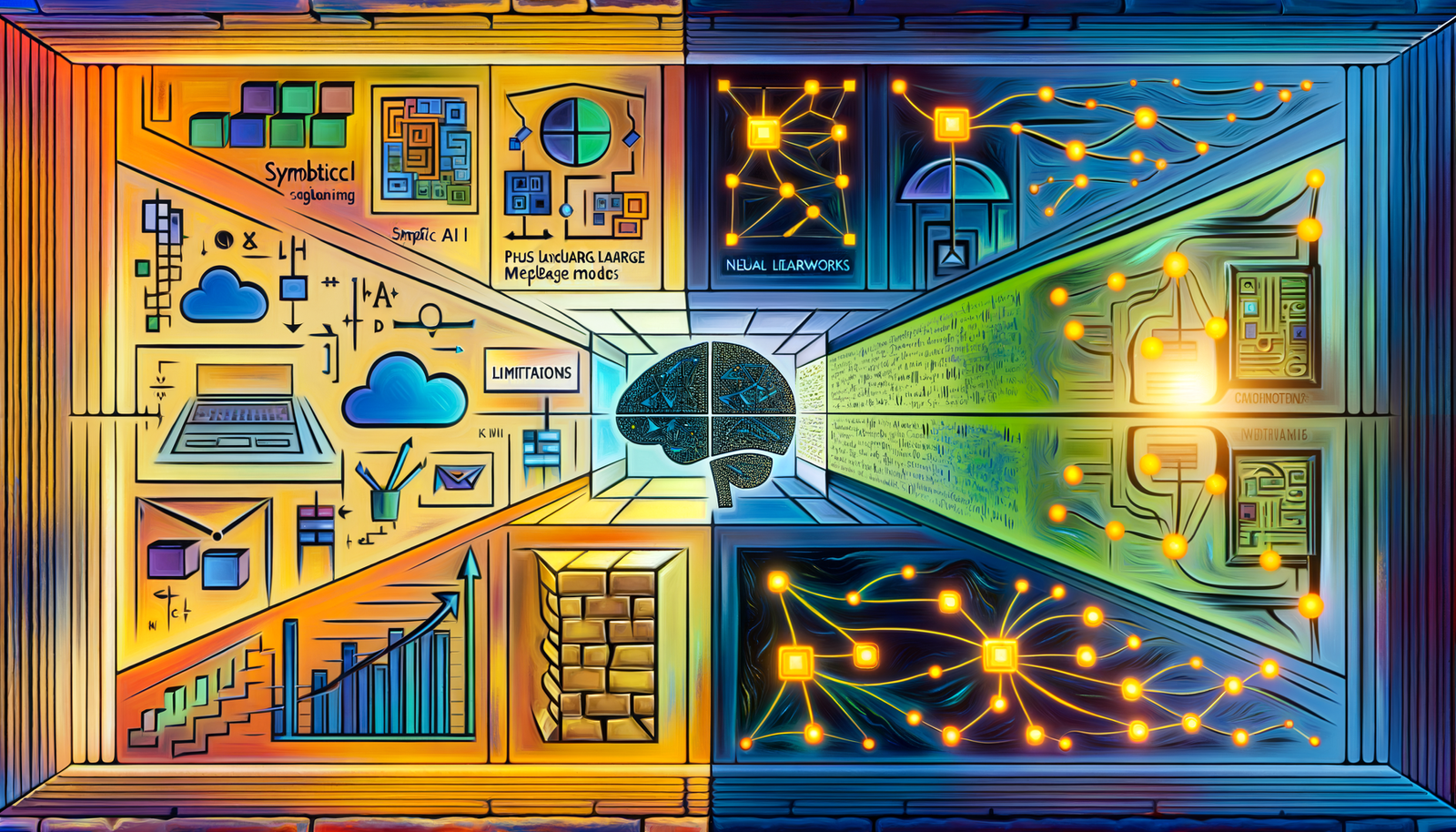
The AI industry is on the brink of a transformative change, one that has yet to gain widespread attention. While large language models (LLMs) have long been the centerpiece of AI advancement, a new approach is gradually taking shape: the neurosymbolic revolution. As we delve deeper into this emergent paradigm, it’s crucial to understand why LLMs are stalled and how neurosymbolic methods combine the strengths of neural networks and symbolic reasoning. This fusion not only enhances reasoning capabilities but also paves the way for more reliable and interpretable AI applications.
Discover the Neurosymbolic Revolution: Why LLMs Are Stalled!
Anyone who has dabbled in the fascinating world of artificial intelligence surely knows about the towering giants of the field: large language models (LLMs). These sophisticated architectures have generated a whirlwind of excitement, enabling unprecedented advancements in natural language processing, text generation, and even automated conversations. However, as we march deeper into the 21st century, the shining prowess of LLMs is beginning to dim—like the glow of a once-bright firefly. So, what’s causing this stall, you ask? Fasten your seatbelt as we embark on an enlightening journey through the nuancing landscape of the neurosymbolic revolution.
What Are We Talking About?
Before we get too far, it’s essential to unravel what exactly this neurosymbolic revolution entails. At its core, neurosymbolic AI blends the strengths of neural networks with symbolic reasoning. Neural networks, powered by vast amounts of data, excel at recognizing patterns and performing unsupervised learning, while symbolic AI demonstrates remarkable capabilities for structured reasoning, logic, and understanding complex relationships.
As exciting as LLMs are, they are predominantly statistical engines that function through massive data crunching. They can generate text that is often coherent and contextually relevant, but they struggle with reasoning tasks that demand a deeper understanding. Think of it this way: LLMs are like polished actors delivering a beautifully scripted performance. Still, when faced with a new role requiring impromptu creativity or logical deduction, they may falter. Thus, a neurosymbolic approach steps in to bridge this chasm, leveraging both sides for a more robust AI system.
Why Are LLMs Stalled?
Now that we’ve defined the neurosymbolic framework, let’s address the reasons why LLMs are stumbling. The most critical one might be context. Most LLMs rely on vast datasets that shape their responses, but as soon as the context shifts or new information comes into play, they may generate outputs that lack coherence or relevance.
- Data Limitations: LLMs are trained on extensive datasets, but these datasets sometimes can’t capture niche or specialized knowledge. For instance, if a model hasn’t encountered a specific concept, it can’t produce accurate responses related to it.
- Inaccurate Reasoning: LLMs utilize statistical patterns, which can lead to flawed logic in their output. The back-and-forth between data context can create contradictions, resulting in less than optimal results.
- Interpretability Issues: Users often perceive LLMs as “black boxes.” Without insight into how these models arrive at a particular output, stakeholders may distrust the decision-making process.
These challenges have led to significant criticism within the AI community, urging researchers to explore new paradigms. Enter neurosymbolic systems! By leveraging reasoning capabilities alongside data-powered learning, these frameworks can mitigate the issues outlined above.
The Neurosymbolic Approach
A pivotal feature of the neurosymbolic revolution lies in its ability to enhance reasoning capabilities. Neurosymbolic AI enables systems to generalize and connect diverse concepts like a seasoned intellectual rather than a mere textual generator. By allowing for knowledge representation and logical reasoning, models equipped with this hybrid approach can produce more reliable and interpretable results.
Unpacking the Fusion
- Combining Data and Logic: Neurosymbolic AI relies on deep learning to analyze massive datasets while simultaneously employing symbolic reasoning to enhance output accuracy. Through this combination, the AI can perform more effectively in reasoning tasks that LLMs traditionally struggle with.
- Robust Understanding: With an emphasis on structured knowledge, neurosymbolic systems can identify relationships in data and make connections across disparate domains, resulting in a more comprehensive understanding of complex matters.
- Transparency and Trust: By providing insight into how conclusions are reached, neurosymbolic methods contribute to more interpretable AI. Users gain a clearer sense of how models arrive at decisions, fostering trust and acceptance.
Real-World Applications for Neuro-Symbolic AI
The neurosymbolic revolution isn’t just a theoretical construct; its implications extend to numerous practical applications across various sectors. Let’s dive into some of these applications that are set to reshape industries and impact society:
- Healthcare: In medical diagnostics, the integration of symbolic reasoning can help AI systems process complex medical records, recognize patterns in patient data, and make more informed recommendations for diagnoses. This evolution could significantly enhance patient outcomes.
- Legal Systems: Neurosymbolic AI can be harnessed to analyze legal documents, extracting pertinent information while understanding nuanced legal language. This capability could revolutionize the speed and accuracy of legal research and analysis.
- Natural Language Understanding: Imagine chatbots that not only understand context but also provide logically sound and contextually appropriate responses. Neurosymbolic AI can render this possible, diminishing misunderstandings and enhancing user satisfaction.
Innovations and Collaborations in the Future
As we move forward into the future of AI, the potential for innovation within the neurosymbolic framework is substantial. Researchers are exploring methods that enhance not just the reasoning and interpretability of AI, but also the creative aspects of the technology. With endeavors that defy conventional limitations, we can anticipate collaborations across various fields that drive meaningful change.
Startups and established companies alike focus on intertwining symbolic mechanisms with neural architectures. Experts are investing in research aimed at enhancing interpretability while simultaneously driving efficiency. This sprouting ecosystem of innovations means the AI landscape is more dynamic than ever, allowing for diverse approaches to solving problems that have frustrated us for years.
Conclusion: Embracing the Neurosymbolic Revolution
The AI industry is indeed poised for a significant shift, one that leverages existing capabilities while addressing the limitations that have slowed large language models. By embracing the neurosymbolic revolution, we can cultivate highly intelligent systems that excel in reasoning, transparency, and effectiveness. As LLMs hit a wall, embracing hybrid approaches may be the key to unlocking a new chapter in AI—one that weds the strengths of neural networks with the rigor of symbolic reasoning.
The advent of the neurosymbolic framework beckons an era of greater trust and understanding in AI applications. It’s a journey we’re all invited to partake in, destination unknown but undoubtedly exciting. Explore the intersection of the traditional and the innovative at Neyrotex.com as we navigate the exhilarating terrain of the neurosymbolic revolution!