“`html
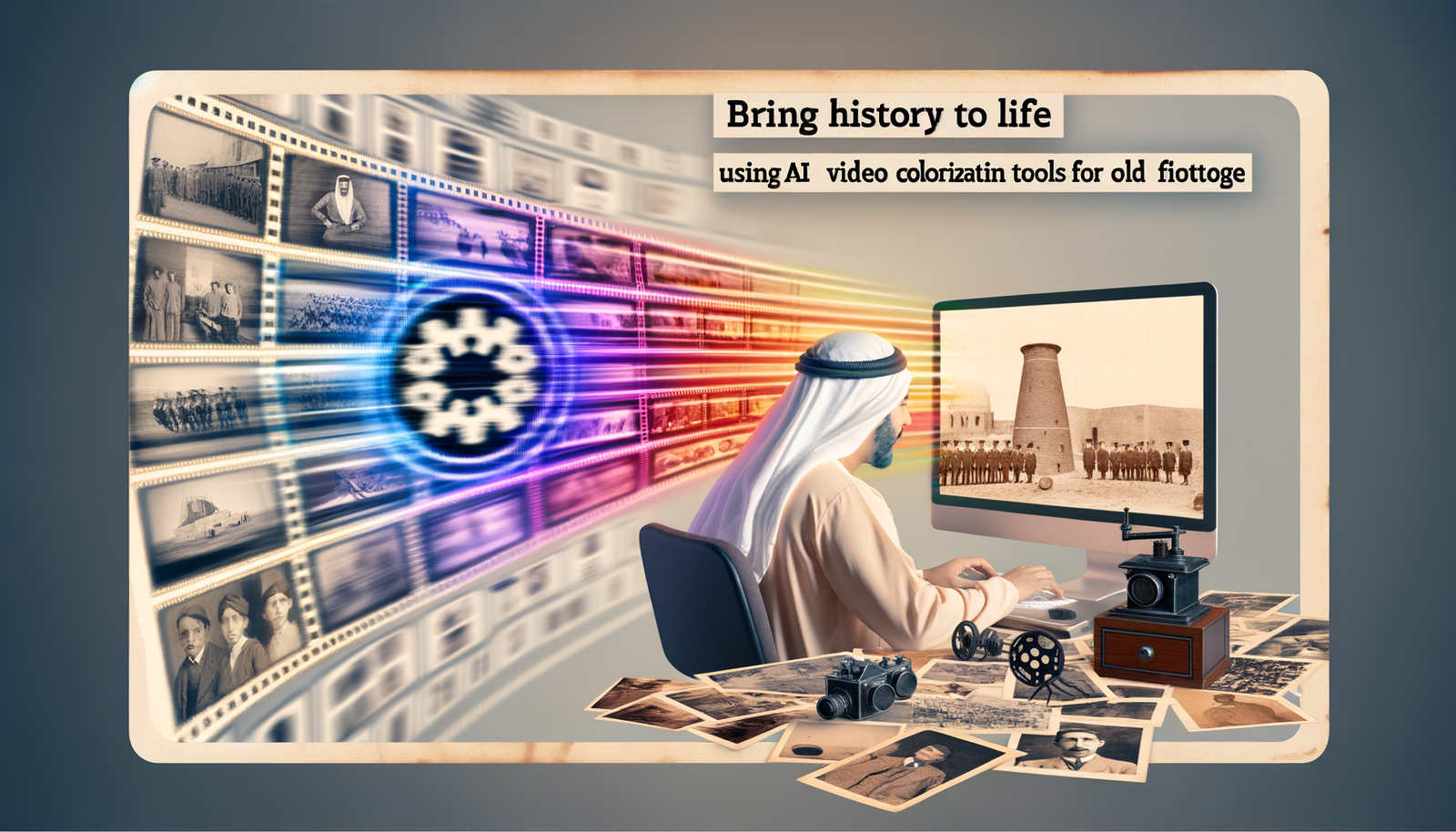
Bring History to Life Using AI Video Colorization Tools for Old Footage
In today’s digital age, the power of AI video colorization tools for old footage has transformed how we experience history. These innovative technologies utilize deep learning algorithms to breathe new life into black-and-white clips, adding vibrant hues that captivate modern audiences. By harnessing AI video colorization tools for old footage, creators can not only revive historical moments but also enhance storytelling and preserve cultural heritage. With minimal manual intervention, these tools engage viewers and modernize archival materials, creating immersive content that bridges the gap between past and present.
How AI Video Colorization Tools Transform Old Footage
AI video colorization tools for old footage work by analyzing frames through neural networks trained on millions of images. These models predict color distribution based on context, texture, and lighting, restoring hues that were lost or never captured. Unlike manual colorization, which requires meticulous frame-by-frame work, AI automates the process while maintaining historical accuracy. For example, tools like Neural.love and AVCLabs Video Enhancer AI use advanced algorithms to detect objects, environments, and skin tones, applying colors that align with real-world expectations.
Key Advantages Over Traditional Methods
- Speed and Scalability: Process hours of footage in minutes
- Consistency: Uniform color application across scenes
- Cost-Effectiveness: Affordable compared to professional services
- Detail Preservation: Maintains original resolution and texture
Top AI Video Colorization Tools for Old Footage
1. Neural.love: The All-in-One Video Restoration Suite
Neural.love stands out as a comprehensive solution for restoring old footage. Beyond colorization, it offers video enhancement, noise reduction, and resolution upscaling. Its intuitive interface makes it accessible to non-experts while delivering professional-grade results. The tool’s ability to handle multiple tasks in one workflow—colorizing, sharpening, and deinterlacing—makes it ideal for complex restoration projects.
2. AVCLabs Video Enhancer AI: Precision-Driven Colorization
AVCLabs focuses on accurate color prediction through advanced algorithms that analyze each frame’s context. Its strength lies in realistic skin tones and environmental hues, crucial for historical authenticity. The software’s user-friendly interface allows customization, letting users adjust saturation and contrast to match original aesthetics.
3. Adobe Premiere Pro: Professional-Grade Workflow Integration
For creators already using Adobe’s ecosystem, Premiere Pro offers AI-powered colorization through plugins and third-party tools. While less automated than standalone solutions, it provides granular control for filmmakers wanting to fine-tune colors frame by frame. This makes it ideal for archival projects requiring meticulous attention to detail.
4. UniFab Deinterlace AI: Beyond Colorization
UniFab addresses a common issue in old footage: interlacing artifacts. Its AI deinterlacing tool converts interlaced video to progressive scan, eliminating flickering and jagged edges. This pre-restoration step ensures cleaner footage before colorization, making it a valuable preprocessing tool for historians and archivists.
5. Repairit AI Video Enhancer: Sharpening and Colorizing in Tandem
Repairit combines sharpening and colorization to revive degraded footage. Its noise reduction capabilities tackle grain and blurriness, often present in aged recordings. The tool’s ability to enhance edges and textures makes it particularly effective for documentaries and family archives.
Revolutionizing Historical Preservation
AI video colorization tools for old footage have become essential for historians, filmmakers, and genealogists. By transforming monochrome recordings into vibrant visuals, these tools:
- Enhance Educational Content: Making historical events more relatable for students
- Modernize Archival Media: Preserving cultural heritage in accessible formats
- Enable Creative Reinterpretation: Allowing artists to reimagine classic films
- Facilitate Family History Projects: Bringing ancestral memories to life
Case Study: Restoring Family Archives
Imagine rediscovering a 1950s home movie. The grainy black-and-white footage shows a child’s birthday party, but details are obscured. Using Neural.love, you colorize the video, sharpen faces, and remove noise. The result is a vivid, emotionally resonant clip that connects generations—a transformation impossible without AI.
Challenges and Ethical Considerations
While AI video colorization tools for old footage offer immense benefits, they also present challenges:
1. Historical Accuracy vs. Creative License
Some historians argue that colorizing footage alters its original intent. Tools like AVCLabs mitigate this by allowing users to reference period-appropriate color palettes, ensuring colors align with historical context.
2. Technical Limitations
- Complex Scenes: Crowded or low-light footage may produce inconsistent colors
- Artifacts: Over-sharpening can introduce digital noise
- Processing Time: High-resolution projects require powerful hardware
3. Accessibility and Cost
While many tools offer free tiers, professional-grade results often require paid subscriptions. However, open-source alternatives and community-driven projects are emerging, democratizing access to these technologies. This shift makes it possible for more users to explore the benefits of colorization without significant financial burdens, leading to a more extensive and diverse use of restoration technologies.
Future Trends in AI Video Restoration
The field is rapidly evolving, with advancements in:
- Real-Time Processing: Live colorization during video playback
- Collaborative Tools: Cloud-based platforms for team projects
- Multi-Modal Integration: Combining audio enhancement with visual restoration
- Community-Driven Models: Open-source projects tailored to specific historical eras
Emerging Innovations
Tools like Google’s Gemini API and Kapwing are pushing boundaries with AI-generated video content. While not focused solely on colorization, these platforms demonstrate the potential for AI to redefine how we interact with historical media. Upcoming features may include algorithms that learn user preferences, making colorization even smoother and more intuitive.
Getting Started: A Step-by-Step Guide
Restoring old footage with AI is more accessible than ever. Here’s how to begin:
- Choose a Tool: Select based on your needs (e.g., Neural.love for all-in-one restoration)
- Upload Footage: Ensure files are in compatible formats (MP4, AVI)
- Apply Presets: Use default settings for quick results
- Customize: Adjust colors, sharpness, and noise reduction
- Export: Save in high-quality formats for preservation
Pro Tips for Optimal Results
- Preprocess Footage: Use UniFab to deinterlace before colorizing
- Reference Period Colors: Research historical palettes for accuracy
- Batch Process: Handle multiple clips simultaneously
- Backup Originals: Always preserve unedited copies
Conclusion: The Future of Historical Storytelling
AI video colorization tools for old footage are not just technical marvels—they’re bridges to the past. By revitalizing monochrome recordings, these technologies empower creators to craft immersive narratives that resonate with modern audiences. Whether you’re a historian, filmmaker, or family archivist, these tools offer unprecedented opportunities to preserve and reinterpret our collective heritage.
For those seeking specialized solutions, platforms like Neyrotex.com provide tailored resources for professional restoration projects. As AI continues to advance, the possibilities for historical preservation will expand, ensuring that future generations experience the past in vivid, lifelike detail.
Ready to unlock the full potential of your old footage? Subscribe to our Telegram channel for exclusive updates on AI video restoration tools, tutorials, and case studies. Let’s bring history to life—together.
“`