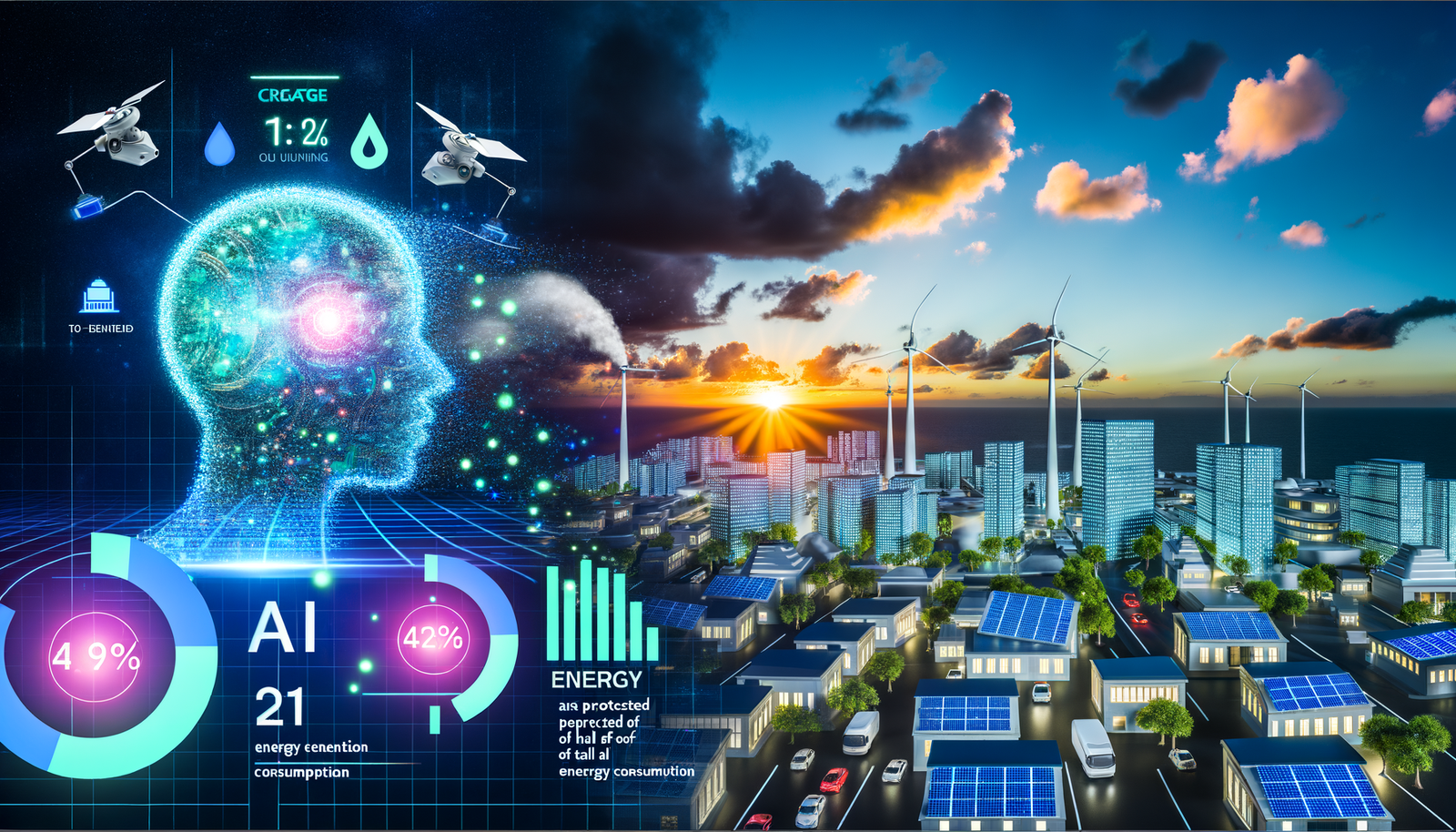
In today’s rapidly evolving technological landscape, Artificial Intelligence stands out as a transformative force, poised to become one of the world’s next big economic drivers. However, this progress comes at a significant cost. Recently, it was revealed that AI’s energy consumption could potentially match half of the U.S. power demand, prompting urgent discussions around sustainability. According to the International Monetary Fund, the energy bill associated with AI is alarming, highlighting the necessity for serious conversations on how we can harness this powerful tool while addressing its environmental impact. Balancing innovation and sustainability is critical as we move forward.
The Rise of AI and Its Hidden Cost
As we dive into the increasingly intertwined worlds of technology and energy, we find ourselves standing at a pivotal juncture. Artificial Intelligence (AI) is not just a fancy tool we use to power our gadgets and devices; it’s a burgeoning industry with profound implications for the energy sector. In the years ahead, AI’s energy consumption could swell to an astonishing level, potentially equating to half of the current energy consumption in the United States. Imagine this: the amount of electricity that keeps the lights on in New York City, San Francisco, and Chicago combined could be used just to fuel AI!
The Crux of AI’s Energy Fever
So, why is AI gulping down energy like there’s no tomorrow? The answer lies in its inherent complexity. AI systems, especially those driven by deep learning and machine learning, require monumental computing power. This is primarily due to:
- Data Hungry Algorithms: AI thrives on data. Vast amounts of information are used to train machine learning models, demanding extensive processing capabilities.
- High-Performance Computing: The actual process of training these models is compute-intensive. Advanced hardware like Graphics Processing Units (GPUs) is essential, which consumes significant electricity.
- Infrastructure Requirements: Cloud services and server farms that run AI models are permanent fixtures needing round-the-clock energy. Think about data centers relying on cooling systems to keep high-performance computers operational — here goes more energy!
When we break down the numbers, the insights become even more alarming than they might first appear. The International Monetary Fund recently shed light on AI’s daunting energy demands, correlating it with critical environmental impacts. As we analyze AI’s energy consumption in comparison to global energy usage, it becomes evident that something must be done.
Why Should We Care?
Well, let’s put it this way: Just like a superhero movie where the hero’s power must be kept in check to save the city, our technology needs a moral compass. Here are some reasons to ponder:
- Environmental Impact: With climate change at the forefront of global issues, any entity that exacerbates the energy crisis must be scrutinized. If AI’s energy consumption continues on its current trajectory, we may be compromising Earth’s future.
- Energy Resources: Relying on traditional energy sources can lead us down a hazardous path of depletion. The demand from AI could lead to increased use of fossil fuels, further intensifying the environmental crisis.
- Economic Consequences: High energy costs can impact the overall economy. If AI requires much more energy than anticipated, businesses may face increased expenses, affecting their bottom line and potentially leading to job losses.
The Search for Sustainable Solutions
With a daunting figure like half of U.S. power demand looming over the AI sector, the urgency for sustainability is palpable. Fortunately, tech innovators, scientists, and policymakers are taking heed, recognizing that AI investments must align with eco-friendly initiatives. Here’s what can help:
- Optimizing Algorithms: AI developers can refine algorithms to decrease energy consumption. More efficient code means lower power requirements.
- Renewable Energy Adoption: Harnessing wind, solar, and other renewable energies not only decreases reliance on fossil fuels but may also reduce costs in the long run.
- Innovative Cooling Solutions: By investing in advanced cooling technologies, data centers can lower their energy bills significantly. More efficient cooling outlets can reduce the need for excessive power consumption.
These are by no means magic solutions, but they do form a clearer and greener path for AI technology. Despite the challenges, the perfect blend of AI and sustainability beckons us with promise and hope. Neyrotex.com has also begun initiating discussions on how AI can work towards not just harnessing power, but doing so in an eco-friendly way.
Global Cooperation: A Must
To address the looming threat posed by AI’s surging energy appetite, global cooperation is essential. Governments, businesses, researchers, and consumers have a shared responsibility to combat the environmental impact of energy-intensive technologies. International dialogues and agreements must be established to set energy consumption benchmarks, enforce regulations, and foster innovation in clean energy solutions.
This is where policy plays a significant role — incentivizing greener practices, ensuring that tech giants invest in sustainable infrastructures, and nurturing a culture of environmental accountability. After all, progress should not come at the cost of our planet.
The Limitations of Current Infrastructure
Let’s factor in another essential aspect: our existing infrastructure. Our power grids and energy systems are not equipped to handle an immense influx of demand that AI may bring forth if widespread adoption occurs. The transformation requires not just adaptation but a significant overhaul, which means policymakers need to be anticipating long-term shifts in energy production, distribution, and consumption as AI adoption grows.
The Public Awareness Factor
Last but not least, the public’s awareness of AI’s energy consumption is crucial. The more we understand the energy-intensiveness of our gadgets and technologies, the better decisions we can make. Education about energy-efficient practices and technologies will distill a sense of responsibility and empowerment among users and creators alike.
As consumers become more aware, they may prioritize energy-efficient services and products, prompting companies to heed the demand. Through this consumer-driven change, we can steer the market toward sustainable solutions more effectively.
Striking the Balance
The future of AI and its consumption of energy is a puzzle that requires us to think deeply about the interconnectedness of innovation and sustainability. AI has the power to revolutionize industries, optimize resource allocation, and make processes more efficient. However, we must tread carefully and demand that innovation proceeds with consideration for our planet’s integrity.
Ultimately, this isn’t just about numbers or statistics; it’s about reimagining energy use for generations to come. By harnessing AI responsibly and judiciously, we hold the potential to unleash a new era of energy use where sustainability thrives while technology leads the charge. The conversation has begun, and the stakes have never been higher. Let’s ensure that AI shines brightly, but sustainably, lighting our path rather than dimming our future.