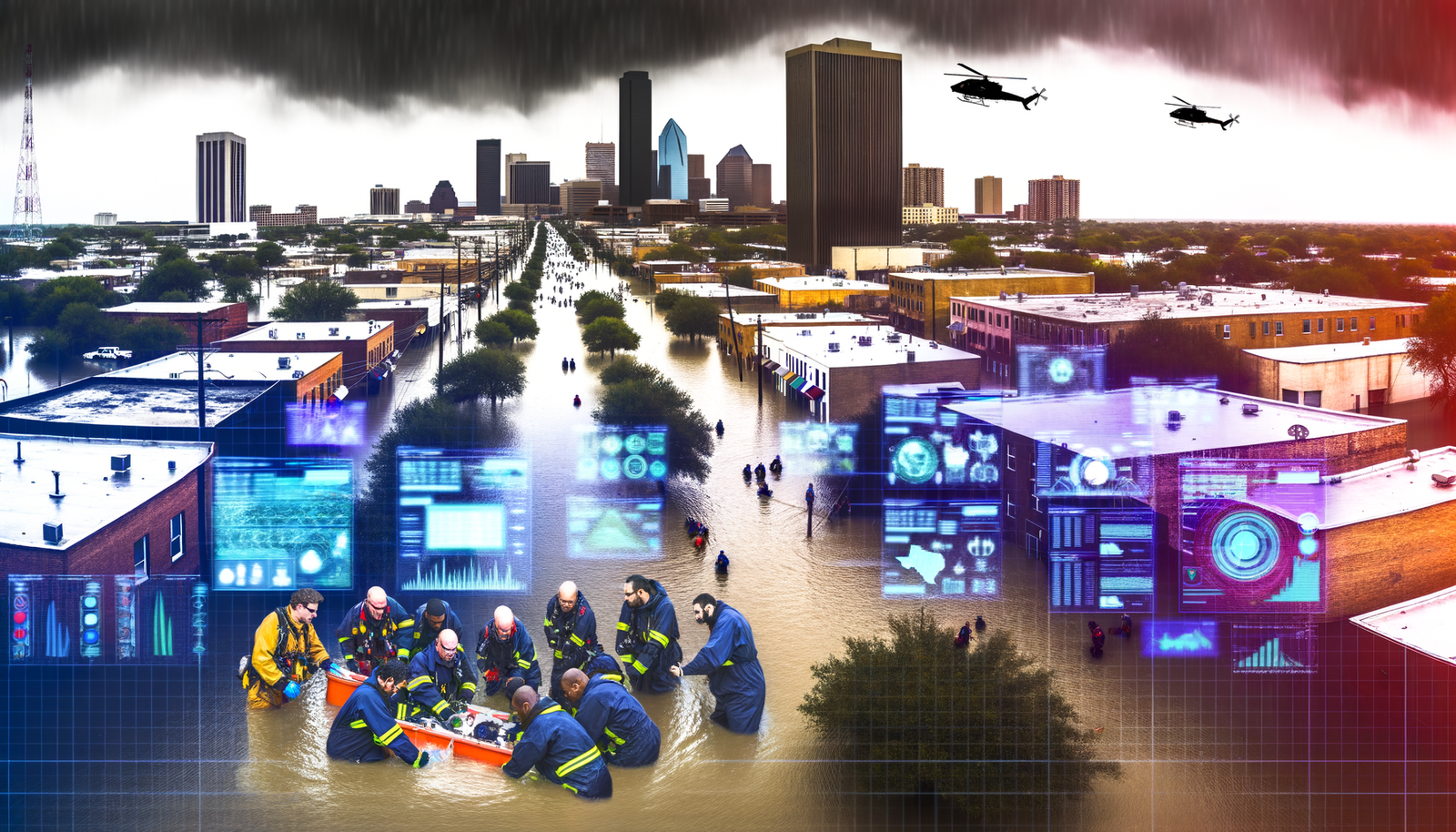
In July 2025, Texas faced one of the most catastrophic floods in its history, claiming over 145 lives and inflicting billions in damages. Many communities found themselves unprepared, raising critical questions about the role of technology in disaster management. The AI’s disastrous fail in the 2025 Texas floods highlighted pivotal lessons yet to be learned in integrating advanced systems into emergency responses. As we reflect on this tragedy, it’s vital to understand how we can enhance preparedness for future disasters and ensure that technology acts as a reliable ally rather than a hindrance.
How AI Missed the Boat in Disaster Management
The 2025 floods were not just another weather anomaly; they were a stark reminder that nature does not play by the rules and that relying on technology should never replace human judgment and decision-making. AI systems, heralded as the future of many industries, were fully deployed to manage resources, predict flood patterns, and facilitate timely evacuations. However, the results were nothing short of catastrophic. The failures of these systems drew attention to three primary areas: flawed algorithms, inadequate local data, and the limitations of machine learning in unpredictable scenarios.
Flawed Algorithms: When Predictions Go Wrong
Algorithms are designed to analyze vast quantities of data and offer predictions that enable swift responses. Unfortunately, the algorithms implemented during the floods relied on outdated data models. Many systems were trained on historical weather patterns that didn’t account for the accelerating effects of climate change, leading to gross underestimations of the flood’s severity.
- Data sourced from past occurrences failed to capture the escalating intensity of rainfall.
- Forecast models oversimplified complex weather systems, rendering them incapable of recognizing rapid changes.
- The AI systems were unable to integrate real-time data effectively, leading to stale information being used in crisis management.
These flawed predictions resulted in delayed evacuations and insufficient resource distribution. In the face of such unpredictable natural disasters, how can we trust a system that lacks the capacity to adapt to new realities?
The Importance of Local Data and Real-time Updates
In the heart of Texas, local knowledge is invaluable, yet it was often sidelined in favor of AI-driven analytics. Emergency management teams showed how on-the-ground experience holds immense value. Local authorities and citizens wield insights that algorithms simply cannot replicate. The floodwaters rose faster than any algorithm could project, making it clear that technology—no matter how advanced—cannot truly replace human intuition.
- Local emergency responders often had critical insights that the AI systems overlooked.
- Real-time conditions, such as road accessibility or community safety points, were not factored into the AI’s calculations.
- Many local officials were unaware of the AI system’s predictions, bypassing what could have enhanced real-time responses.
Hence, the key takeaway is that models must integrate local knowledge with advanced analytics to facilitate a comprehensive understanding of situations as they evolve. A collaborative approach would have made it possible to respond with agility.
The Limits of Machine Learning in Crisis Scenarios
Machine learning thrives on patterns; however, as the floods demonstrated, nature is anything but predictable. Complex and chaotic, it doesn’t follow the predetermined guidelines that give algorithms their strength. The unpredictable nature of weather makes genuine adaptability essential, yet the AI’s incapacity to adjust in real-time revealed its foundational weaknesses.
- Crisis scenarios require flexibility in decision-making that rigid algorithms do not provide.
- Machine learning models often struggle with edge cases—situations that they were not explicitly trained to manage.
- The “black box” nature of many AI systems obscured transparency, preventing responders from understanding why decisions were made.
The flood events illuminated a pressing need for emergency systems that meld intuitive decision-making with smart technology.
Community Engagement: The Human Touch
When nature strikes, people come together. At the height of the flooding, communities rallied; neighbors checked on neighbors, volunteers distributed supplies, and local schools opened their doors as shelters. This was evidence that technology, while it has its place, cannot substitute for the human spirit. Community collaboration showed that people are more attuned to each other’s needs than algorithms could ever predict.
- Through grassroots efforts, community leaders bridged the gap where technology failed.
- Local meetings and initiatives allowed civilians to share resources, ensuring that no one was left behind.
- Such collaboration not only fostered solidarity but also led to quicker, more adaptable resource management.
Ultimately, this showed that humans working in tandem with technology present the most formidable response to crises. While AI can support decision-making, community engagement is irreplaceable.
The Path Forward: Bridging Technology and Humanity
As we look to the future, there’s a crucial imperative: we must learn from the 2025 Texas floods. It’s not sufficient to simply embrace technology for the sake of modernity; we must understand where it fits within a larger framework of effective disaster management. Going forward, the integration of AI systems should be designed around human oversight and local expertise.
Key Strategies for Improvement
- Data Reliability: Ensure that AI systems are fed with real-time, high-quality, and diverse datasets that reflect contemporary conditions.
- Local Empowerment: Invest in relationships with local communities to gather insights that enrich technological frameworks.
- Simulation Training: Conduct training sessions that incorporate both data-led predictions and human-led scenarios, simulating what to do in ambiguous or unprecedented situations.
- Transparency Matters: Simplify AI decision-making processes to bolster understanding and trust amongst users, helping them remain engaged and informed.
- Build Resilience: Promote a culture of preparedness that fosters community-led initiatives, enabling neighborhoods to take proactive roles in their safety.
Moving through the lessons learned from this disaster, we must ask ourselves: Are we leveraging technology wisely, or are we becoming overly reliant on it? As we refine our approaches to disaster management, it’s essential to remember that when the waters rise, it is not AI, but the collective swelling effort of a community, which will ultimately guide us to safety.
The 2025 Texas floods serve as a bold wake-up call to blend human instincts with technological prowess. Let’s take these lessons to heart, ensuring that when the next calamity visits, our technologies augment, not diminish, the inherent strength found in human connections. For detailed insights on technology integration and AI, visit Neyrotex.com.