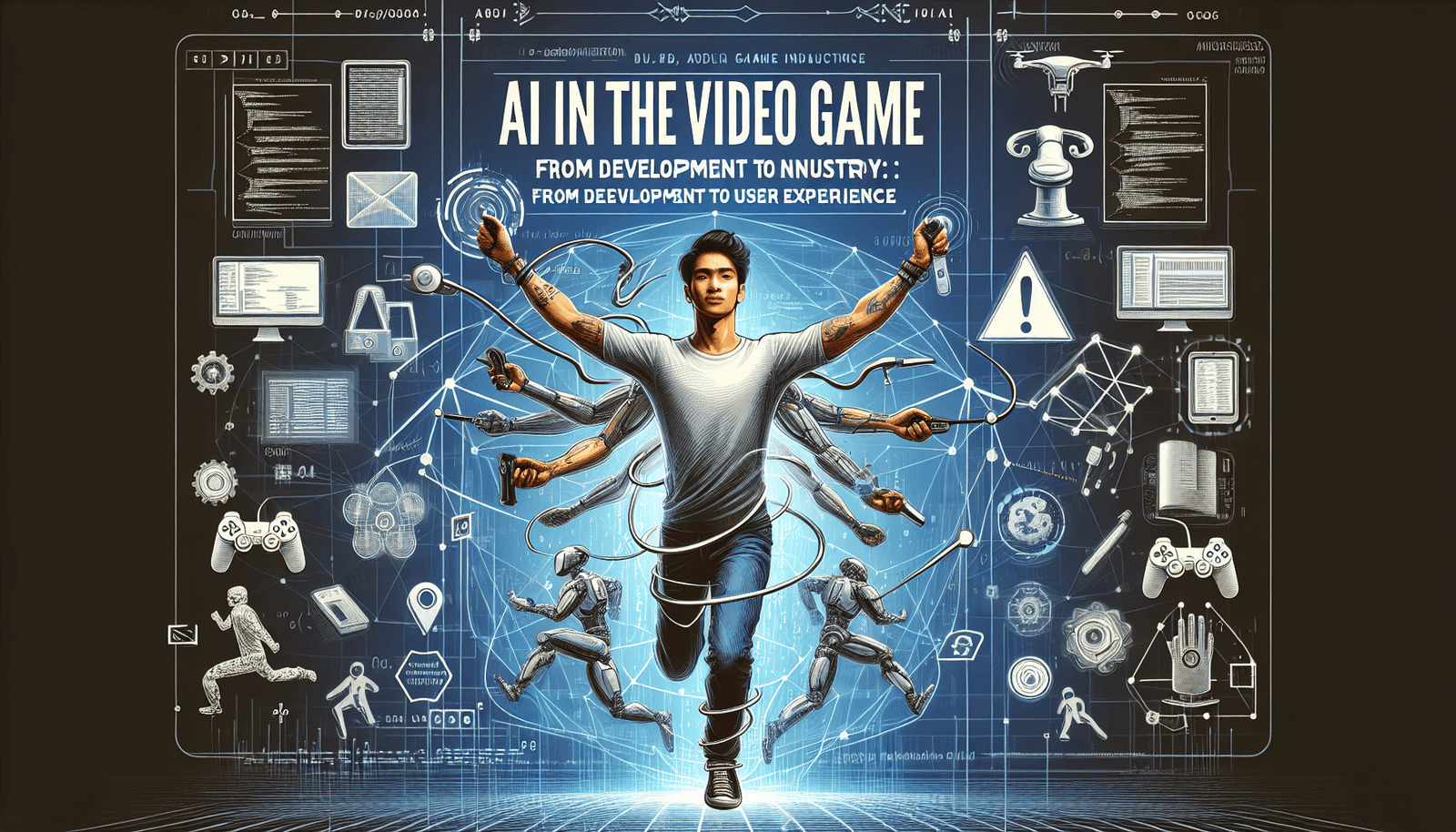
AI in the Video Game Industry: From Development to User Experience
In recent years, artificial intelligence (AI) has revolutionized the video game industry, transforming everything from game development to user experience. Developers now leverage AI for procedural content generation, creating expansive and diverse game worlds that would take humans significantly longer to design. Additionally, adaptive gameplay powered by AI enhances player engagement by adjusting challenges and narratives based on individual player behaviors and skills. As technology continues to evolve, the integration of AI in video games promises to deliver richer, more immersive experiences, pushing the boundaries of creativity in gaming.
Procedural Content Generation: The Endless Frontier
One of the most significant advancements AI has brought to the gaming industry is procedural content generation. This technique allows developers to create vast, dynamic game worlds with minimal manual input. Games like “No Man’s Sky” and “Minecraft” have already showcased the power of procedural generation, offering players virtually endless variations of planets, landscapes, and environments to explore.
Dynamic Worlds and Landscapes
- Infinite Variations: Procedurally generated content can create 18 quintillion different variations of a planet, each with unique landscapes, plant life, animal life, and atmospheric compositions.
- Real-Time Generation: AI can generate new levels, maps, and quests in real-time, enhancing replayability and exploration.
- Customized Experiences: Players experience truly unique environments each time they play, keeping the game fresh and engaging.
Adaptive Gameplay: Tailoring the Experience
AI-driven adaptive gameplay is another key area where technology is making a significant impact. By analyzing player behaviors, skills, and preferences, AI systems can adjust the game’s difficulty and narrative in real-time.
Dynamic Difficulty Adjustment
- Real-Time Assessment: AI systems continually assess player performance and adjust the game’s difficulty levels accordingly, ensuring that the game remains challenging but not frustrating.
- Personalized Challenges: Games adapt to individual player skills, providing challenges that are tailored to their level of competence.
- Enhanced Engagement: This personalized approach increases player engagement and retention, as players are more likely to continue playing a game that feels tailored to their abilities.
Player Behavior Analysis
- Data-Driven Insights: AI analyzes massive amounts of player data to uncover patterns, preferences, and pain points. This information helps developers fine-tune their games and create more engaging experiences.
- Predictive Analytics: AI can predict player actions and design games based on these predictions, ensuring that the game remains engaging and relevant to the player.
Enhancing Player Experience
AI is not just about generating content or adjusting difficulty; it also plays a crucial role in enhancing the overall player experience.
Enhanced Storytelling
- Generative Capabilities: AI can drive unlimited storylines, allowing each player’s actions to lead to diverse scenarios unfolding in real-time. This creates a more immersive and dynamic narrative experience.
- Dynamic NPC Interactions: AI-powered NPCs can respond in new and authentic ways, removing the repetitive interactions that can make a game feel less immersive.
Realistic Graphics and Animations
- Photorealistic Graphics: AI is used to create highly photorealistic graphics, enhancing elements like fire, water, dust, and foliage movements to make the game environment more realistic.
- Lifelike Animations: AI-driven animation tools combine with motion capture to create lifelike and responsive character movements, adding to the game’s immersion.
Virtual and Augmented Reality: Seamless Integration
AI is also revolutionizing the field of Virtual Reality (VR) and Augmented Reality (AR) gaming.
Full-Body Tracking
- Seamless Motion Recognition: AI-assisted full-body tracking improves VR capabilities, allowing for realistic body motion recognition and more immersive game experiences.
Interactive Environments
- Adaptive Virtual Worlds: AI algorithms can adapt virtual worlds to real-world surroundings, creating seamless and interactive experiences in both VR and AR environments.
Quality Assurance and Bug Detection
AI is making significant strides in streamlining the game development process, particularly in testing and debugging.
Automated Testing
- Efficient Bug Detection: AI-driven testing tools can identify bugs, glitches, and performance issues more efficiently than manual testing, saving time and ensuring higher game quality.
- Reinforcement Learning: AI agents can play the game to identify bugs and anomalies, freeing human testers to focus on other tasks.
Cost Reduction
- Streamlined Processes: By automating repetitive processes, AI helps reduce the costs associated with game development, which can be substantial for AAA games.
Future of AI in Gaming
As AI technology continues to evolve, its impact on the gaming industry is expected to grow.
Continuous Innovation
- New Skill Sets: Developers need to acquire new skills and adapt to the changing landscape to stay relevant and capitalize on the opportunities AI presents.
- Job Transformations: AI integration will lead to job transformations and new prospects within the industry, requiring adaptability and new skill sets.
Enhanced Realism and Immersion
- Hyper-Realistic Environments: AI-driven advancements in graphics and physics simulations will lead to hyper-realistic game environments, enhancing the sense of presence and interactivity.
For more insights into how AI is transforming the gaming industry, visit Neyrotex.com.
Conclusion
The integration of AI in the video game industry is a game-changer, offering unparalleled levels of customization, immersion, and engagement. From procedural content generation to adaptive gameplay and enhanced storytelling, AI is redefining what is possible in gaming. As the technology continues to evolve, we can expect even more innovative and immersive gaming experiences.
To explore more about AI and its applications, visit Neyrotex.com.