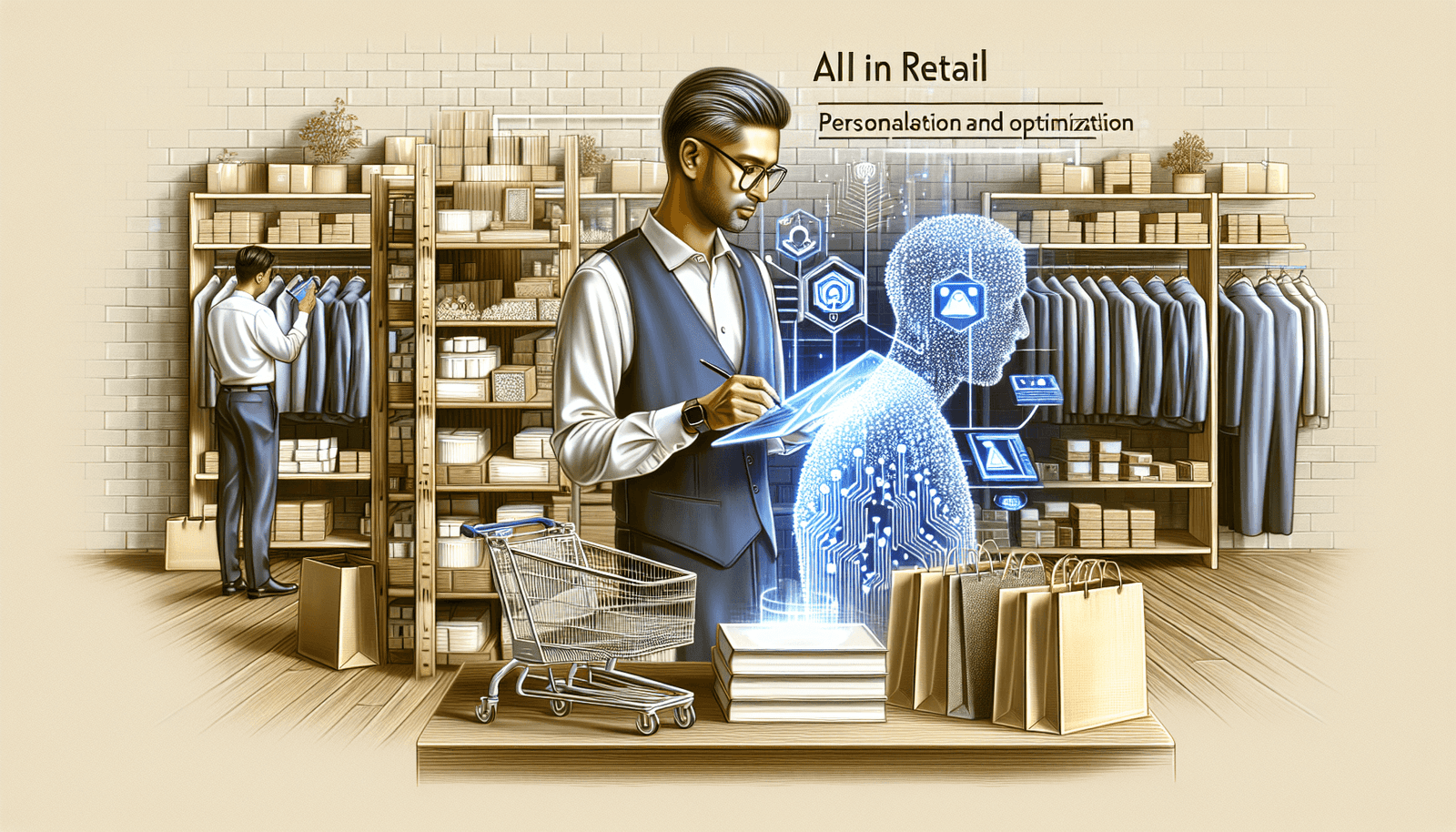
AI in Retail: Personalization and Optimization
In the dynamic and ever-evolving retail landscape, the integration of Artificial Intelligence (AI) has become a game-changer. AI in retail is not just a trend; it’s a necessity for businesses aiming to enhance customer experiences, optimize operations, and drive revenue growth. Here’s a deep dive into how AI is revolutionizing retail through personalized shopping, inventory management, and demand forecasting.
The Power of Personalization in Retail
Personalization is no longer a luxury but a necessity in today’s digital age. AI enables retailers to deliver tailored experiences that resonate with individual customers, significantly enhancing customer satisfaction and loyalty.
How AI Delivers Personalized Experiences
AI algorithms analyze vast amounts of customer data, including past purchases, browsing behavior, and interactions across various touchpoints. This data is used to create personalized product recommendations, targeted promotions, and customized content in real-time.
- Tailored Recommendations: AI can suggest products that align with a customer’s preferences and purchase history, making the shopping experience more relevant and engaging.
- Targeted Promotions: By understanding customer behavior, AI can deliver promotions that are likely to interest each individual customer, increasing the likelihood of conversion.
- Customized Content: AI-powered chatbots and virtual assistants provide 24/7 customer support, offering personalized assistance and enhancing the overall shopping experience.
Inventory Management and Optimization
Effective inventory management is crucial for any retail business. AI helps retailers optimize their inventory levels, reducing the risk of overstock and stockouts.
AI in Inventory Management
AI systems predict demand by analyzing various data points, including historical sales data, seasonal trends, and external factors such as weather and economic conditions. Here’s how AI optimizes inventory management:
- Demand Forecasting: AI algorithms forecast future product demand with high accuracy, allowing retailers to maintain optimal stock levels and avoid stockouts or overstock situations.
- Automated Reordering: AI can automate the reordering process based on predicted demand, ensuring that the right products are in stock at the right time.
- Supply Chain Optimization: AI helps in optimizing the supply chain by predicting potential bottlenecks and suggesting alternative suppliers or logistics routes.
Demand Forecasting: The Key to Preparedness
Demand forecasting is a critical aspect of retail operations, and AI has significantly improved its accuracy.
How AI Enhances Demand Forecasting
AI uses advanced analytics and machine learning algorithms to analyze a wide range of data, including:
- Historical Sales Data: Analyzing past sales patterns to identify trends and seasonal fluctuations.
- External Factors: Considering external factors such as weather, economic conditions, and social media trends to predict demand.
- Real-Time Data: Using real-time data from various sources, including social media, customer interactions, and market trends, to make accurate predictions.
Omnichannel Integration and Sustainability
AI is also driving the integration of online and offline channels, creating a seamless shopping experience for customers.
Omnichannel Integration
AI helps retailers integrate their online and offline channels, ensuring a consistent customer experience across all touchpoints. This includes:
- Unified Customer Profiles: Creating unified customer profiles that reflect interactions across all channels.
- Personalized In-Store Experiences: Using data from online interactions to personalize in-store experiences, such as customized product recommendations and in-store displays.
Sustainability through AI
AI is also contributing to more sustainable retail practices by optimizing supply chains, reducing waste, and minimizing energy consumption.
- Optimized Supply Chains: AI helps in optimizing supply chains by predicting demand accurately, reducing the need for excess inventory and minimizing transportation costs.
- Energy Efficiency: AI can optimize energy consumption in stores by analyzing usage patterns and suggesting energy-efficient practices.
Implementing AI Strategies in Retail
Implementing AI strategies in retail requires a structured approach. Here are some best practices:
Identify Goals and Objectives
Before implementing AI, retailers should identify their goals and objectives, such as improving customer experience, increasing customer loyalty, and driving revenue.
Leverage Advanced Analytics
Retailers should leverage advanced analytics and machine learning algorithms to gain deep insights into customer behavior and preferences.
Integrate AI Across Channels
AI should be integrated across all channels, including online platforms, mobile apps, and in-store systems, to provide a seamless and personalized shopping experience.
Case Studies and Statistics
The benefits of AI in retail are evident from various case studies and statistics:
- Enhanced Customer Experience: A survey by EY revealed that 87% of retailers acknowledged that AI has enhanced the customer experience.
- Operational Efficiency: Approximately 86% of retailers have implemented AI or automation in some form within their operations, reflecting the growing recognition of AI’s potential to drive efficiency and productivity.
- Revenue Growth: Nearly half of the surveyed retailers (49%) have already experienced cost savings, while 43% reported an increase in revenues, and 44% witnessed improved productivity.
Conclusion
AI in retail is transforming the way businesses interact with customers and manage their operations. By leveraging AI for personalized shopping, inventory management, and demand forecasting, retailers can create more engaging and efficient shopping experiences. As technology continues to advance, the future of retail looks more connected, efficient, and customer-centric than ever before.
For more insights into how AI is revolutionizing retail, visit neyrotex.com.
By embracing AI, retailers can not only enhance customer experiences but also drive significant operational efficiencies and revenue growth. The future of retail is undoubtedly AI-driven, and those who adapt early will reap the most benefits. For further exploration of AI’s impact on retail, visit neyrotex.com.