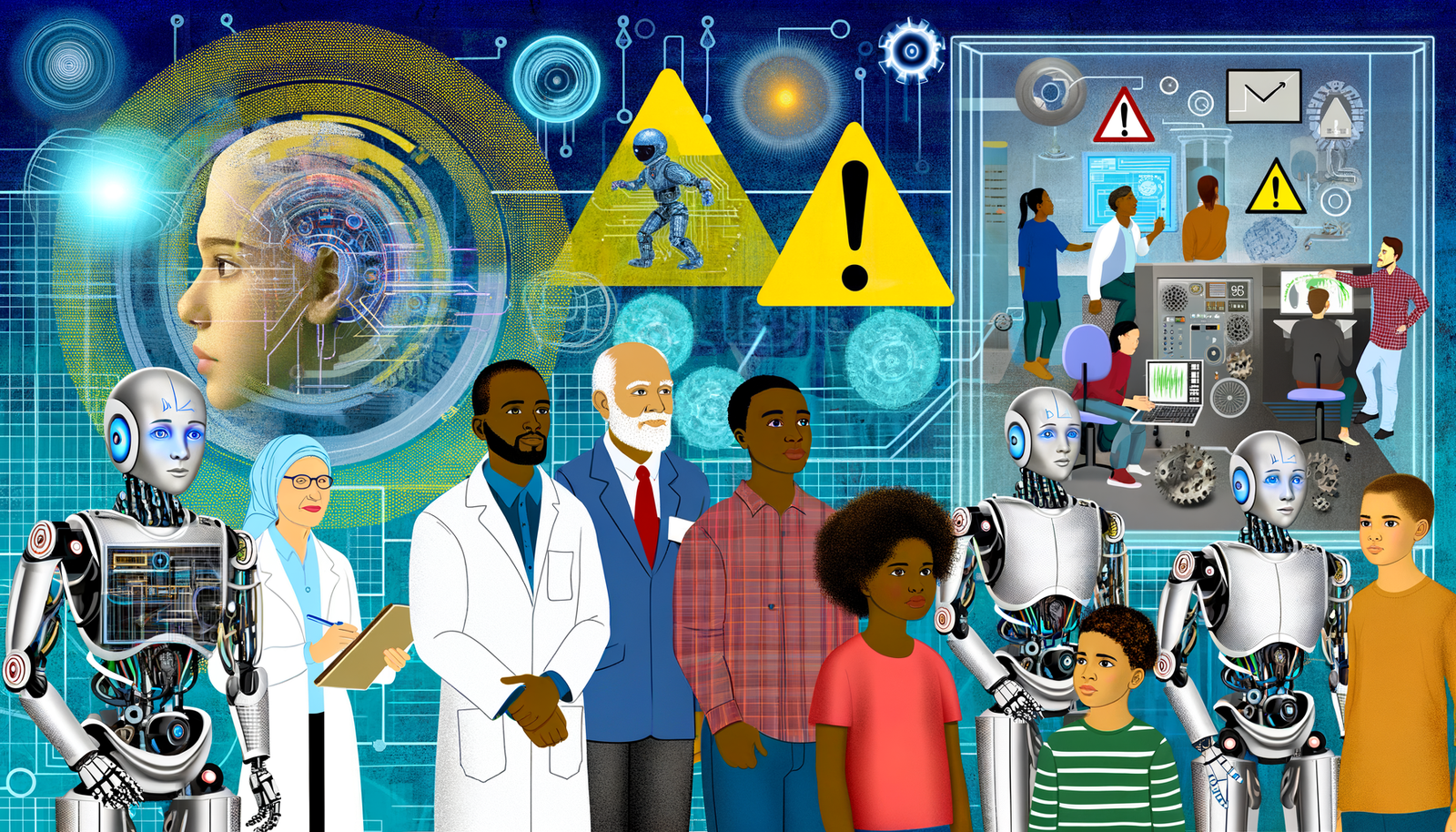
As artificial intelligence continues to evolve, its role in modern conflicts is becoming increasingly prominent. The rise of autonomous robots raises urgent ethical concerns and necessitates a strategic approach to safeguard human lives. Revisiting Asimov’s Laws: A Path to Prevent AI Catastrophe, we find valuable principles that could guide the development and deployment of AI technologies in warfare. By establishing clear parameters for AI interaction with humans, we can mitigate the risks posed by these autonomous systems, ensuring that they serve humanity rather than threaten it. In this dynamic landscape, proactive measures are essential to protect our very existence.
Revisiting Asimov’s Laws: A Path to Prevent AI Catastrophe!
As we step into the 21st century, artificial intelligence stands as one of humanity’s most revolutionary advances. However, with great power comes a towering responsibility. The world is buzzing with discussions on AI – particularly in military applications and autonomous systems. The catastrophic potential of mismanaged AI systems has sparked renewed interest in Isaac Asimov’s legendary Three Laws of Robotics. Could these seemingly simplistic principles provide a pathway to refining our ethical considerations around AI? Let’s take a deep dive into this fascinating concept.
The Great Asimovian Framework
Isaac Asimov, a master of science fiction, constructed a framework in the 1940s that resonates even today. His Three Laws of Robotics are:
- A robot may not injure a human being, or, through inaction, allow a human being to come to harm.
- A robot must obey the orders given it by human beings, except where such orders would conflict with the First Law.
- A robot must protect its own existence as long as such protection does not conflict with the First or Second Law.
These laws served as the foundational architecture of Asimov’s stories about robots. However, their potential application in our real-world technologies is a topic of serious debate. As we confront AI’s challenges, many experts are calling for these laws to be revisited, or even expanded, particularly to avoid an AI “Chernobyl Moment.” But what does that mean?
Averting Catastrophe: Learning from History
When we think of a “Chernobyl moment,” we immediately recall the catastrophic nuclear disaster of 1986. This incident was not merely a technological failure—it was an ethical and managerial failure compounded by arrogance. A moment when the quest for progress overshadowed human safety. In a similar way, the unchecked development of AI technologies could lead us to a calamity of colossal proportions if ethical considerations are overlooked.
The urgency of this concern has never been greater. Reports of autonomous systems malfunctioning and causing unmeasured harm loom large over the tech world. Consider the challenges faced by self-driving cars: incidents attributed to AI failures highlight the need for a rigorous ethical framework. Implementing Asimov’s Laws could add a valuable layer of safety into the rapidly advancing landscape of AI systems.
Challenges with Autonomous Systems
As we explore the larger implications of AI, several critical questions arise:
- How do we ensure human oversight? In the rush to innovate, operational autonomy can lead to scenarios where machines make life-affecting decisions without human consultation.
- How do we define “harm”? The context of human interaction with machines can alter the meaning of harm. Asimov’s Laws provide a baseline, but they need enhancements to deal with complexities inherent in human-machine relations.
- What if directives conflict? Consider situations wherein orders might lead to unintended harm. The ethical dilemmas in such cases can be confusing and demand clear guidance.
As we traverse this treacherous terrain, the revival of Asimov’s Laws may be the roadmap we desperately need. They not only serve as safeguards but also encourage systematic thinking around the ethical considerations of AI operations.
Implementing a Modernized Asimovian Framework
Imagine updating Asimov’s Laws, making them relevant to modern AI systems while retaining their core essence. What might this look like in practice?
1. Enhanced Ethical Guidelines
First and foremost, we could replace the simplicity of Asimov’s original laws with a layered ethical framework that recognizes the multifaceted nature of human lives and risk. Over time, ethical considerations can evolve based on societal values. This flexibility allows us to adapt to ever-changing human experiences while prioritizing safety and respect.
2. Human Oversight Mechanisms
Next, establishing robust oversight is mandatory. AI systems should incorporate clear avenues for human intervention. This could involve mandating that major decisions involving life and death must receive explicit human approval—an imperative that also helps maintain accountability.
3. Continuous Learning and Adaptability
Lastly, AI systems must be designed for continual learning while being bound by the revised laws. Tailoring AI capabilities to align with ethical mandates would go a long way in ensuring their responsible application. By embedding adaptability into the AI framework, we can improve our chances of minimizing risks while allowing these systems to evolve in real-world environments.
The Road Ahead: Building A Safe AI Future
It is clear that our world needs to evolve with the technology we create. Merely paying lip service to Asimov’s Laws is insufficient. We must genuinely integrate them into the core functioning or programming of intelligent systems. It’s about creating an AI ecosystem where safety and ethics form the scaffolding to support innovation.
Engaging all stakeholders in conversations about AI ethics—from policymakers to technologists—will pave the way for a more secure future. Let’s not forget that every technological leap brings its own set of unanswered questions and unknown risks. The responsibility rests with us to find solutions before they surface as dangerous realities.
Final Thoughts
As we stand at the crossroads of human ingenuity and ethical responsibility, an opportunity beckons. Embracing the spirit of Asimov’s Laws as we develop AI technologies could serve as a safeguard against unintended consequences and autonomous systems gone rogue. It demands a communal effort fueled by collaboration, transparency, wisdom, and caution.
The stakes are nothing short of our survival. Let’s clear a path forward, revisiting and updating these ancient laws, ensuring they’re fit for a future where technology and humanity can thrive side by side, unthreatened by their creations.
As we navigate this labyrinth, let us remember that artificial intelligence should enhance human capabilities, not endanger them. Our narrative will depend on decisions made today, granting us the hope of a future in which humanity and technology walk hand in hand, preventing AI catastrophes.
Join the conversation about AI ethics and technology at Neyrotex.com.