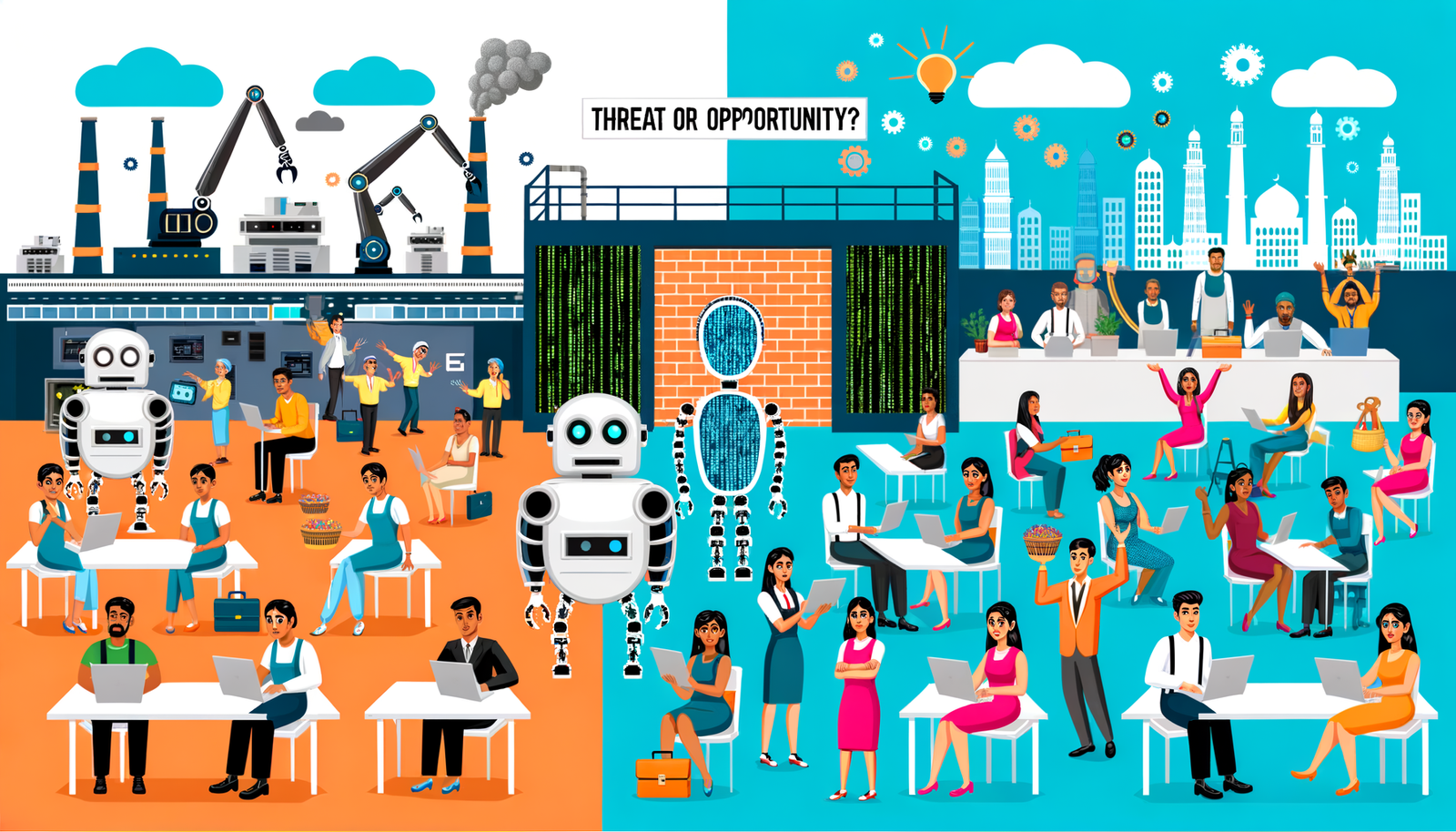
As we delve into the transformative world of artificial intelligence, a pressing question emerges: AI’s Impact—Job Killer or Million-Maker in India? Find Out! Contrary to the fears of mass unemployment, recent government data reveals that India’s AI-driven skills and employment landscape are thriving. With the nation’s AI workforce projected to double by 2027, it’s clear that AI is not just a threat, but a catalyst for job creation and economic growth. This remarkable shift reflects India’s commitment to harnessing AI for sustainable development, redefining the future of work in an increasingly digital economy.
The Pulse of India’s AI Landscape
India, a nation richly colored by its diverse cultures and languages, is on the brink of an AI revolution. With a youthful population and a burgeoning tech ecosystem, the country stands at a crossroad between tradition and innovation. The narrative often spun around artificial intelligence suggests a dark cloud looming over job security, but if we shift our gaze a bit, we uncover a more nuanced and optimistic scenario.
As already highlighted, the government’s assertion regarding a thriving AI landscape signals that this technology isn’t merely replacing jobs; it’s creating new opportunities that we could not have imagined just a decade ago. India’s Ministry of Electronics and Information Technology estimates that AI could contribute an astounding $957 billion to the Indian economy by 2035. But how does this translate into jobs?
Reimagining Employment Through AI
When we talk about AI’s impact, we must dissect the various sectors it touches. Some of the most significant benefits stem from the integration of AI across different industries. Here are some areas where AI is making waves in India:
- Healthcare: AI-driven solutions streamline patient records, assisting doctors in diagnosing diseases more accurately. Telemedicine has become integral for remote areas, creating jobs for tech-savvy healthcare workers.
- Banking and Finance: The incorporation of AI has transformed customer service and fraud detection. The need for AI specialists and data analysts is burgeoning in this sector.
- Manufacturing: Automation driven by AI not only ensures efficiency but also generates demand for skilled workers to manage and maintain these technologies.
- Education: Personalized learning experiences powered by AI are revolutionizing classrooms and necessitating trained educators who can integrate technology into their curriculum.
The interconnection between these sectors and AI doesn’t just increase efficiency; it also fosters job creation, leading to a myriad of emerging job titles and roles. From data scientists and AI trainers to roles in ethical AI governance, the landscape is changing rapidly.
The Dark Side: Unpacking Job Displacement
However, we can’t ignore the flip side of this narrative. Some roles may indeed vanish or change dramatically due to AI adoption. When machines are capable of performing specific tasks more efficiently, the question arises—what happens to the workers currently in those positions?
For example, a significant portion of occupations in the low-skill spectrum, such as basic customer service jobs, is under threat due to chatbots and automated response systems. Yet, rather than depicting this as a total loss, we must view it as a transition to higher-level roles requiring more specialized human skills.
Reskilling and Upskilling: The New Mantra
To address job displacement, the government, along with various organizations, is emphasizing reskilling and upskilling initiatives. Training programs designed to equip the workforce with AI-related skills are emerging across the nation. Furthermore, partnerships between tech companies and educational institutions are blossoming to ensure that our future generations remain relevant in a rapidly evolving job market.
Remember, creativity, emotional intelligence, and complex problem-solving are the hallmarks of the human experience that AI, for all its capabilities, still cannot replicate. Thus, the demand for these essential skills will continue to rise.
The Government’s Role in Shaping Future Employment
The Indian government is taking proactive steps to steer the country towards an AI-friendly future. The National Policy on Artificial Intelligence, endorsed in 2018, is fundamental in this journey. It aims to leverage AI for inclusive growth while outlining the ethical and responsible use of AI technologies.
Indeed, the government is not only advocating the adoption of AI but also addressing the societal implications it brings. The initiative emphasizes fostering an ecosystem that nurtures innovation. By supporting start-ups and encouraging research and development, the government strives to position India prominently on the global AI map.
Moreover, with dedicated funding and policies to promote AI development, job creation is poised to escalate, with an expected surge in entrepreneurship—creating millions of new job opportunities along the way.
AI’s Promise: Employment and Economic Growth
Beyond merely reshuffling job profiles, the potential for AI to foster economic growth in India is remarkable. The Asia Pacific AI market is expected to grow substantially in the coming years, and India is well-positioned to capture a significant share of this burgeoning economy.
Why all this fuss over AI’s potential in job creation? Well, let’s look at some eye-opening statistics. According to the NASSCOM report, India’s AI industry is projected to reach $7.8 billion by 2025. This growth trajectory not only indicates better opportunities for skilled professionals but also signals a substantial rippling effect on the economy as a whole.
Just as the Industrial Revolution stirred significant economic transformation, the AI revolution holds similar transformative potential. New industries, job categories, and business models are emerging simultaneously—increasing productivity and providing employment shifts that could redefine economic structures.
A Culture of Continuous Learning
The culture in India is shifting towards continuous learning to embrace this new employment paradigm. Individuals are increasingly investing in their education and skill development, whether through formal education or online courses.
Organizations and companies also need to rally behind this change, embracing lifelong learning as an integral part of their working culture. Creating a dynamic atmosphere that fosters ongoing education ensures that employees can navigate the evolving landscape of AI with confidence.
This kind of forward-thinking approach paves the way for inclusive economic resilience, helps buffer against job displacement effects, and promotes adaptability—a cornerstone on which the future of work will be built.
Conclusion: Embracing the AI Future
In summary, India’s experience with artificial intelligence illustrates a progressive narrative that balances opportunities and challenges. AI’s impact is not simply a tale of job loss, but rather a reminder of the incredible potential it holds to create millions of new jobs and transform existing roles within the ecosystem.
It becomes essential to not just adapt but also embrace this tidal wave of change. As industries evolve, both the workforce and government must proactively engage in equipping themselves to lead in this space.
Embracing AI’s potential is crucial not only for revitalizing the Indian economy but for shaping a future where human ingenuity and technological advancements coexist harmoniously. AI’s impact is indeed one of a million-maker, illuminating a path of possibilities, creativity, and innovation.
So, is AI killing jobs or creating millions in India? With all this evidence at hand, the answer seems to lean significantly towards the million-maker side. It’s time to prepare for a bright future replete with opportunities, driven by the unbeatable force of artificial intelligence.
For further insights into the evolving landscape of AI and its impact on the job market, visit Neyrotex.com.