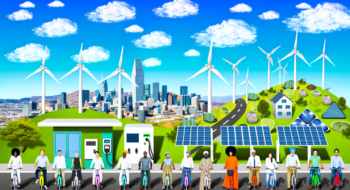
The rise of AI has sparked significant concern as society grapples with the implications of rapidly advancing technology. While innovations promise efficiency and progress, they also incite fears of job displacement and economic instability. The headline “AI Revolution Sparks Fears of Homelessness for the Middle Class” reflects a growing anxiety: as automation increasingly replaces human labor, many middle-class families face the daunting prospect of losing their livelihoods—and, in turn, their homes. This urgent conversation highlights the need for proactive measures to ensure a balanced future where technology serves humanity rather than undermines it.
AI Revolution Sparks Fears of Homelessness for the Middle Class
The winds of change are blowing through our economy, and they’re carrying with them a wave of apprehension that has taken a substantial hold on the American middle class. With the advent of sophisticated artificial intelligence (AI) technologies, coupled with the relentless march of automation, many blue-collar and even white-collar workers are looking nervously into the future. Could these innovations redefine the very fabric of employment, leaving countless individuals not just jobless but also homeless? In this article, we navigate this pivotal issue, exploring the potential consequences, societal shifts, and the urgent calls for solutions.
The Automation Age: A Double-Edged Sword
While the concept of AI isn’t new—its roots can be traced back to the 1950s—the seismic changes we’ve witnessed in the last decade have been nothing short of revolutionary. AI now permeates various facets of daily life, from self-driving cars to chatbots managing customer inquiries. Yet here lies the rub: as these algorithms become increasingly adept at completing tasks, the question arises—what happens to the workers who historically fulfilled these roles?
Consider the manufacturing industry, long the backbone of middle-class employment. Automation has already transformed factories into high-tech environments where machines perform tasks once carried out by human hands. Robots utilized in assembly lines not only reduce labor costs but also increase efficiency and precision. However, as productivity increases, the need for human workers diminishes, creating a growing alarm that the middle class may be left behind in this transformative era.
Fears of Job Displacement
The fear of job displacement isn’t unfounded. McKinsey Global Institute estimates that by 2030, up to 375 million workers worldwide may need to switch occupational categories due to automation. This staggering figure translates into roughly 14% of the global workforce. In the United States alone, disruptions caused by technology advancements could disproportionately affect those within the lower and middle class. As machine learning and AI gain traction in professions such as transportation, retail, and even health care, the question becomes not if workers will lose their jobs, but when.
- Trucking and Transport: One of the most prominent jobs at risk is truck driving, with the rise of self-driving vehicles. This occupation employs millions, and the shift could leave many in the lurch.
- Retail: Automation through self-checkouts and e-commerce continues to burgeon, threatening cashier jobs and diminishing the need for human interaction.
- Customer Service: AI-powered chatbots are replacing human agents in customer support, saving companies money while eliminating countless jobs.
Economic Stability at Stake
Beyond the potential for job loss, middle-class homeowners are increasingly anxious about the implication of these changes on economic stability. A job is often more than a paycheck; it’s the lifeblood that helps maintain mortgage payments, funding for education, health insurance, and other basic needs. With millions facing layoffs, an underlying fear looms large: a wave of homelessness could be imminent, as formerly stable families find themselves unable to make ends meet.
This fear extends beyond just individuals. Economists warn that widespread job displacement could lead to a decrease in consumer spending, impacting businesses of all sizes. Decreased consumption leads to fewer jobs, thereby creating a potentially vicious spiral of economic decline. In a nation where the middle class forms the backbone of economic activity, the implications of job losses extend far beyond the individual and directly threaten the economic landscape itself.
Lessons from the Past
Historically, societal transformations sparked by technological advances have led to significant job shifts. During the Industrial Revolution, many artisanal jobs vanished as factories gained prominence, sending shockwaves through communities. However, human resilience prevailed—people adapted and found new roles within a transformed economy. The key difference lies in the accelerated pace of today’s technological advancements, rendering traditional job retraining less effective, and raising the stakes for entire families.
Moreover, these adaptations were often supported by governmental interventions, which prompted the establishment of labor laws and worker protections. As we delve deeper into the implications of the AI revolution, parallels from the past guide us toward potential pathways forward.
Preparing for the Future
While the anxiety surrounding the potential for job displacement and homelessness is palpable, there remains a glimmer of hope. Solutions—though challenging and complex—abound. Here are a few approaches that could help mitigate the impending crisis:
- Reimagining Education: Enhanced educational programs focusing on adaptability, technical skills, and lifelong learning need to be prioritized. The rising demand for tech-savvy workers could be met with vocational training and upskilling initiatives.
- Universal Basic Income: The introduction of universal basic income (UBI) in discussions around economic policy represents a potential safety net for those displaced by AI. By providing a steady income, UBI could avert the plunge into poverty.
- Government Incentives: Providing support and incentives for businesses to retrain workers instead of laying them off as they adopt automation is crucial. Collaboration between private enterprises and public enterprises can create a more harmonious transition.
The Role of Society and Community
In this increasingly automated world, communities must unite to support their members, reminding themselves that individual well-being and the collective good coexist. Initiatives to retrain and repurpose the workforce should be complemented by community leaders and organizations devoted to providing stable housing, food security, and mental health support. The goal should focus not just on economic resilience, but on a growing awareness of human dignity and the value of every person in society.
Conclusion: A Call to Action
As we stand on the brink of an AI revolution, the fears of the middle class regarding homelessness and economic instability demand urgent attention. The complexity of this transformation cannot be understated, yet it is essential to surf the wave of change rather than be swept away by it. Society must proactively strategize to create an environment where technology serves humanity and individuals are empowered with the tools to succeed in a rapidly evolving world.
AI will undoubtedly revolutionize our lives, but its implementation should not come at the cost of leaving our most vulnerable citizens behind. As we embark on this journey into an AI-driven future, let us combine innovation with compassion—cultivating an economy where every individual is prepared to thrive, and indeed, where no one is left homeless.
For insights into technological innovations that empower humans, visit Neyrotex.com.