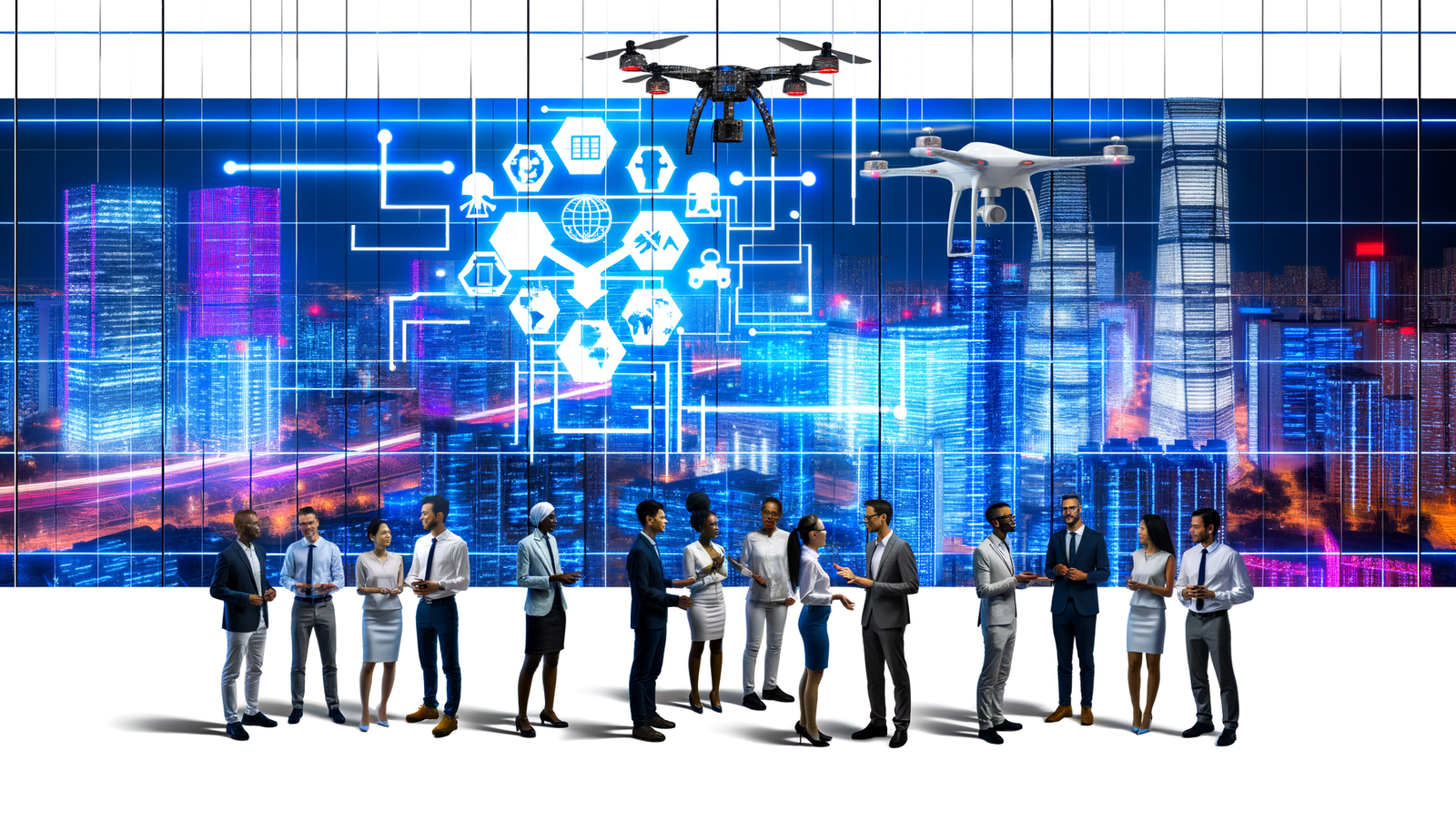
As the global landscape shifts, questions arise about the implications for American dominance, particularly in the tech arena. China’s strategic AI alliances aim to diminish U.S. tech dependence, forging partnerships that bolster its position on the world stage. This initiative not only enhances China’s technological prowess but also poses a significant challenge to the United States, whose leadership in innovation has long been a cornerstone of its global influence. As these alliances evolve, the dynamics of international relations could pivot dramatically, signaling a new era of competition that could redefine the future of technology and power.
China’s Strategic AI Alliances to Diminish U.S. Tech Dependence
In recent years, the competition for technological supremacy between the United States and China has reached a fever pitch, particularly in the realm of artificial intelligence (AI). The rising tensions are not merely a game of technological tug-of-war; they carry significant implications for the economy, security, and global power dynamics. In a bid to cut reliance on U.S. technology—particularly in AI—China is actively forming strategic alliances with various domestic companies. This move is aimed at creating a unified tech stack through domestic standardization, enhancing their competitive edge while posing a substantial challenge to the U.S. tech industry.
The Rise of AI Alliances in China
At the heart of China’s ambition is the formation of AI alliances among its leading tech firms, including Huawei, Alibaba, and Tencent. These corporations are not just banding together for camaraderie; they are on a mission to establish a comprehensive framework for AI development. Such collaboration facilitates sharing resources, knowledge, and technologies, allowing for a more robust and innovative tech landscape.
Central to these alliances is the notion of “self-reliance.” The U.S.-China trade war has accentuated the need for China to reduce its dependence on foreign tech, particularly in areas where the U.S. has an edge. With ongoing restrictions from the U.S. government on tech exports to China, companies like Huawei are racing to develop indigenous alternatives and proprietary technologies. The concerted effort in forming alliances is a step toward achieving this goal, particularly as AI becomes increasingly integral to everything from healthcare to automotive industries.
Standardization – A Key to Success
One significant aspect of creating a unified tech stack is standardization. Standardization promotes interoperability among various technologies and platforms, which can ultimately enhance efficiency and productivity. China aims to develop its own standardized protocols and frameworks governing AI systems, which could mean adopting best practices while contributing innovations unique to their context.
This effort has multiple layers. For instance, by establishing internal standards for data sharing and communication between AI systems, China’s tech companies can create an ecosystem that is less reliant on U.S. technologies. In a world where tech ecosystems are becoming increasingly interconnected, this standardization will allow China to carve a special niche in the global tech landscape.
The Role of National Policy
National policy plays a crucial role in facilitating these strategic alliances. The Chinese government has been supportive of initiatives aimed at bolstering domestic technology. They have poured resources into research and development, championing homegrown innovation to spark momentum in the AI sector.
Additionally, the Chinese government offers various incentives to encourage collaboration among tech firms. This includes funding, tax breaks, and a favorable regulatory environment that promotes rapid advancement in AI technology. The emphasis on technology in China’s Five-Year Plans indicates the importance of becoming a global leader in AI, further solidifying the rationale behind these alliances.
The Global Reaction
The formation of these alliances has not gone unnoticed on the global stage. Many Western nations view this strategic pivot with apprehension. As China bolsters its technological capabilities, particularly in AI, concerns about intellectual property theft, espionage, and data security mount. The fear is that this might not just lead to a competitive tech landscape but could also impact global security and democracy itself.
U.S. companies, caught in the crosshairs of this evolving landscape, are wondering how to respond. As legal restrictions tighten around tech supplies to China, American firms must innovate rapidly and push for new, creative partnerships worldwide to sustain their competitive advantage.
Investment in AI Research and Development
The race for AI supremacy is often set against the backdrop of massive financial investments. Estimates suggest that China’s investment in AI R&D is already on par with that of the U.S. To boost these alliances, companies are engaging in co-research initiatives, pooling financial resources to delve deeper into AI capabilities. This integrated approach not only strengthens individual company tech but also solidifies the overarching ecosystem.
Cultural and Ethical Considerations
Culture also plays a pivotal role in these alliances. In the U.S., a culture of individualism often breeds competition among tech firms, often hindering collaborative ventures. Conversely, China’s collectivist approach allows companies to work in unison toward achieving shared goals. This difference could offer an advantage, enabling faster innovation and development cycles.
However, ethical questions loom large in the discussion about AI. As China pursues a unified tech stack, there are concerns regarding the ethical implications of AI deployment. Issues like surveillance, privacy, and human rights present complex challenges. Chinese companies may have to tread carefully, ensuring that technological advancements don’t come at the expense of ethical considerations.
Implications for the United States
As China continues to build its alliances and reduce tech dependence on the U.S., the ramifications for America could be extensive. The U.S. may find itself in a dogfight to maintain its status in the global tech arena, which has been synonymous with its economic growth and political clout for decades. With China emerging as a formidable competitor, the future landscape may see a bifurcation in global technology, with distinct ecosystems emerging not only in AI but in several tech domains.
Furthermore, the potential for a trade war that extends into realms beyond tariffs and goods could become ever more apparent. The U.S. may be forced to rethink its dialogues with allies and consider bolstering its own tech strategies, emphasizing innovation and collaboration.
The Road Ahead
For Chinese technology firms, the path seems set—the embrace of strategic AI alliances can only grow stronger in the coming years. As investment continues to pour in, collaboration may become critical for not only enhancing technological capabilities but for achieving global leadership in AI.
For U.S. companies, the road ahead will be equally demanding, marked by the necessity for innovation, partnership, and perhaps an overhaul of existing processes. The need to engage with an evolving narrative—one that may soon involve balancing between competition and collaboration—could redefine American tech approaches in a world overtaken by digital transformation.
As these shifting tides signal a new reality in the tech world, the intersection of politics, policy, and technology will continue to evolve. In doing so, it will create an environment rich in opportunities for both competition and alliance formation—a landscape where only the most adaptable will thrive.
To get more insights and information on cutting-edge technologies and their implications, consider exploring Neyrotex.com.