As we navigate an era where artificial intelligence profoundly influences our daily lives, understanding how machines make decisions amid uncertainty is more crucial than ever. In the unfolding narrative of technology and humanity, we find ourselves unraveling AI’s epic battle with human uncertainty challenges. This exploration highlights the intersection of algorithms and real-world unpredictability, shedding light on the nuanced decisions made by AI systems. To delve deeper into this transformative subject, we turn to USC’s Willie Neiswanger, whose expertise offers invaluable insights into the mechanics behind AI decision-making and its implications for our future.
The Evolving Landscape of AI and Uncertainty
The popularity of AI systems is soaring, demonstrating their unprecedented capability to analyze vast amounts of data and derive inferences that shape our world. However, with great power comes great responsibility. Understanding AI’s relationship with uncertainty is not just a matter of technicality; it fundamentally reshapes how we deploy these systems in real-world scenarios. Therein lies the epic battle between the structured nature of algorithms and the unpredictable chaos of human life.
Defining Uncertainty in AI Context
Uncertainty in the realm of AI can manifest in various forms. According to Neiswanger, we can categorize uncertainty into three major categories:
- Model Uncertainty: This arises when the underlying model used by AI doesn’t perfectly capture the reality it’s intended to represent.
- Data Uncertainty: This type occurs when the data that feeds the algorithm is noisy or incomplete, leading to flawed interpretations and conclusions.
- Environmental Uncertainty: This kind of uncertainty stems from external factors that are unpredictable or volatile, affecting the decision-making processes of AI systems.
As Neiswanger suggests, these categories reveal the layers of complexity AI must navigate, ultimately highlighting the need for robust models that can adapt to unpredictable environments.
Algorithms in the Face of Chaos
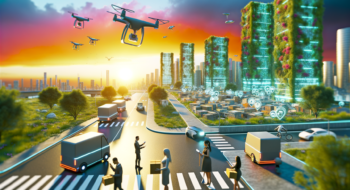
Traditionally, algorithms operate under the assumption of stable conditions, but life rarely adheres to those patterns. As situations shift and new variables emerge, AI systems encounter dilemmas that challenge their programmed logic. For instance, consider a self-driving car. It must constantly assess various factors—pedestrians, other vehicles, and changing traffic signals—and make split-second decisions. Each scenario carries its own uncertainty, requiring the car’s AI to pivot quickly and accurately.
In such circumstances, the instinctive capability of human drivers to intuitively gauge risk and react may not always match the textbook responses a machine is hardwired to execute. Here’s where the rubber meets the road—or rather, where the silicon meets the asphalt.
AI’s Response Mechanisms: Dealing with Uncertainty
So, how does AI handle the multifaceted uncertainty challenges? The answer lies in several innovative techniques employed by researchers and engineers:
- Probabilistic Models: By incorporating probability, AI can gauge confidence levels in its predictions and adjust its actions accordingly. Techniques such as Bayesian networks offer a way to update probabilities as new data comes in, allowing for dynamic and context-sensitive decision-making.
- Robustness Measures: These measures assess how an AI’s decisions perform under various scenarios, including those it hasn’t encountered before. The idea is to make the system “robust,” meaning it will function well even when faced with uncertainty.
- Ensemble Learning: This method boosts accuracy by combining predictions from multiple models. Just like a panel of experts provides a richer perspective, using multiple models minimizes the risk associated with any one approach.
Neiswanger emphasizes that these strategies reflect an ongoing quest to blend human intuition with the analytical prowess of machines, creating systems that are not only efficient but also resilient. The ultimate goal? A synergy that enhances decision-making processes while navigating the unpredictable waters of reality.
The Human Touch in AI
Complicating the technological narrative is the essential, albeit erratic, aspect of human emotion and intuition. In high-stakes environments—think healthcare, autonomous driving, and emergency response—AI systems must account for complicated human behaviors and unpredictability. Neiswanger passionately argues that simply replicating human decision-making isn’t the entire solution; rather, it requires understanding and integrating emotional intelligence into AI frameworks.
Imagine an AI system designed for mental health support, which needs to interpret nuanced emotional signals from users. It must recognize when someone is feeling distressed beyond the words they use and adapt its responses to demonstrate empathy, providing not just information but also comfort. This intersection of emotional intelligence and algorithmic efficiency presents a fascinating prospect for the future of AI.
Real-World Applications: Where Theory Meets Practice
The theoretical frameworks and models of AI are no longer confined to whiteboard discussions in tech seminars; they are rapidly transitioning into practical applications that show promise. Here are compelling examples:
- Healthcare Diagnostics: AI-assisted diagnosis tools analyze patient data and medical histories to suggest potential diagnoses. They grapple with uncertainty by utilizing probabilistic models that enhance their predictive accuracy, aiding doctors in making informed decisions.
- Supply Chain Management: Companies utilize AI to optimize logistics and inventory management. These systems must anticipate demand fluctuations and external disruptions, effectively maneuvering through the chaos to ensure seamless operations.
- Smart Transportation Systems: Traffic management applications employ AI to streamline urban mobility. By predicting congestion patterns and considering human behaviors, they take a proactive approach to satellite navigation.
These applications demonstrate how AI is gradually overcoming uncertainty challenges, paving new avenues for enhanced decision-making in everyday life.
The Ethical Dimensions of AI and Uncertainty
As we venture further into this AI-driven landscape, we must confront not only the technical challenges but also the ethical implications of uncertainty in machine decision-making. Who bears the responsibility when an AI’s decision leads to unforeseen consequences? If an autonomous vehicle misjudges a situation and injures pedestrians, how do we assign liability? These questions shake the foundations of legal and social structures as we enter an era where machines increasingly challenge what we define as “human.”
Moreover, with decisions increasingly taken out of human hands, how do we ensure that bias within algorithms does not compound unpredictability? Neiswanger warns that care must be taken to continually improve models to mitigate unfair outcomes and uphold equity in AI applications.
The Path Forward: Bridging the Gap Between AI and Human Uncertainty
As we look ahead, the intersection of AI and human uncertainty challenges becomes a thrilling frontier for innovation and exploration. The continuous development of better models that integrate human nuances signals a future where our digital counterparts not only enhance our capabilities but also adapt gracefully amidst chaos. By fostering collaboration between AI systems and their human counterparts, we can develop solutions that surpass our current limitations.
Ultimately, the true power of AI lies in its potential to enrich the human experience rather than replace it. To truly conquer the uncertainty challenges, we must commit to a path of ethical development, rich dialogue, and continuous learning, creating a future where the marriage between human intuition and algorithmic prowess is harmoniously celebrated.
From self-driving cars anticipating sudden stops to AI-assisted medical diagnoses that weigh the uncertainties of human condition, we stand at the cusp of a transformative age. The key to navigating this intricate dance lies in our ability to unravel AI’s epic battle with human uncertainty challenges while reminding ourselves that at the heart of technology must always be a human-centered approach.
To further explore the dynamic intersection of AI, human uncertainty, and future possibilities, visit Neyrotex.com.