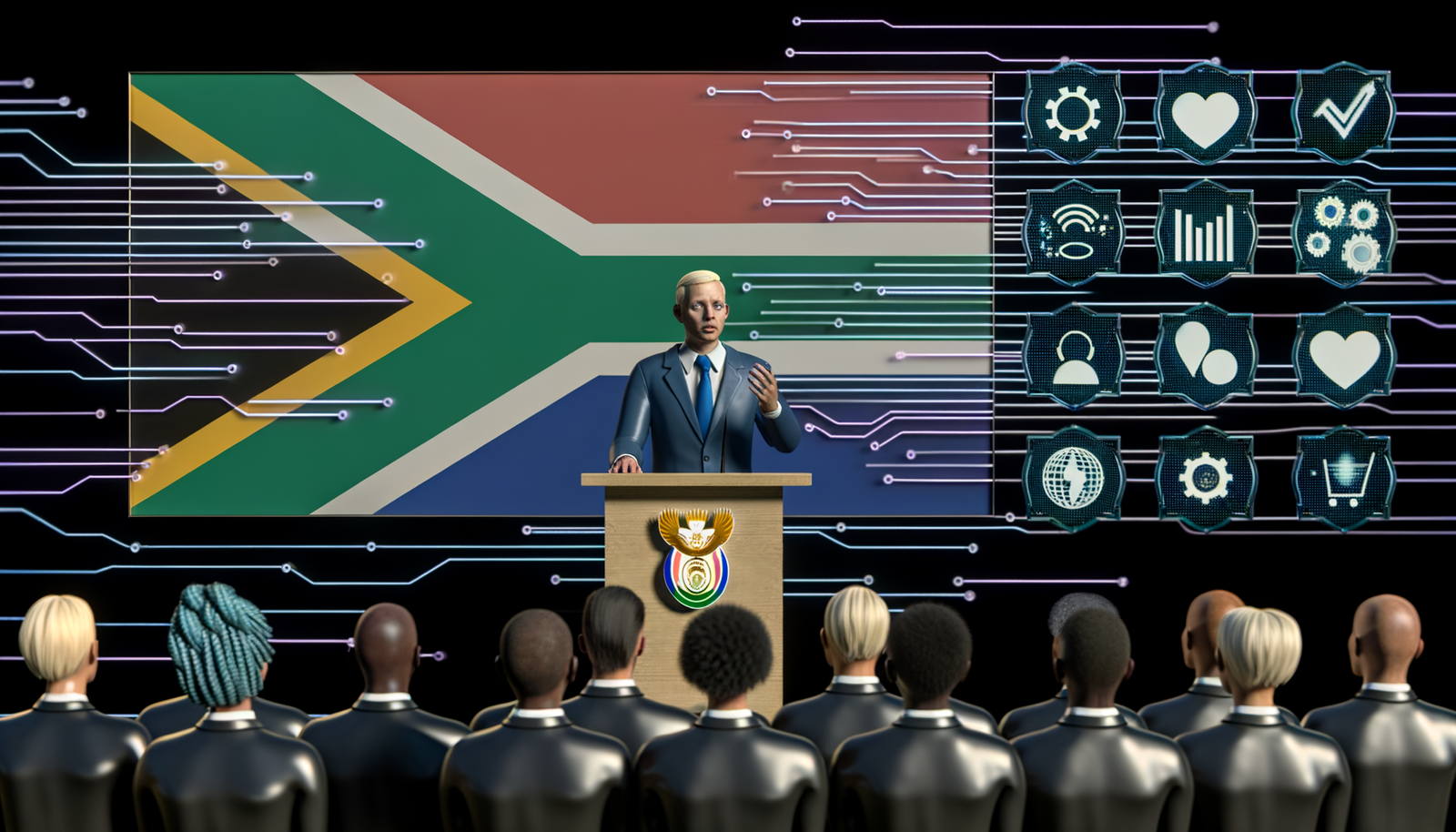
In today’s top stories, we shine a light on South African Minister of Higher Education, Science and Innovation, Blade Nzimande, who has issued a stark warning about the potential perils of artificial intelligence in governance. Nzimande’s concerns come amid growing discussions about the ethical implications and governance challenges posed by AI technologies. In a related note, uMngeni-Thukela Water has announced a water supply adjustment for municipalities in the King Cetshwayo District in KwaZulu-Natal to address water capacity issues. Stay tuned for an in-depth look at these pressing issues affecting our society.
Nzimande’s Stark Warning: AI’s Perils in South African Governance
As the buzz around Artificial Intelligence (AI) continues to crescendo across the globe, so do the concerns about its implementation—especially in governance. Blade Nzimande, the South African Minister of Higher Education, Science and Innovation, raised a red flag recently, cautioning against the unchecked adoption of AI in managing public affairs. You see, while AI holds incredible potential to transform industries and streamline operations, Nzimande highlighted the potential pitfalls that could arise when technology takes the reins in government.
The Double-Edged Sword of AI in Governance
Imagine walking down a sunlit path in a forest— it’s tranquil, soothing, and full of promise, yet there are hidden pitfalls along the way. This is somewhat akin to the journey with AI in governance, which towards a brighter future also holds considerable dangers. Nzimande laid bare his apprehensions during a conference, where he illuminated several critical areas of concern surrounding the governance of AI systems:
- Ethical Standards: AI’s very design is riddled with ethical challenges that can lead to biased outcomes if not guided by firm principles. AI systems learn from data, and if this data is flawed or biased, the consequences can perpetuate existing inequalities.
- Lack of Accountability: What happens when systems fail, or worse, make dire mistakes? Nzimande posits that adding layers of technology may often lead to a dilution of accountability, where it becomes hard to pinpoint who should bear the responsibility for AI errors.
- Transparency Issues: In a world where data is king, the opacity of AI systems creates an insurmountable barrier for genuine human oversight. Nzimande’s concern emphasizes the need for governmental AI bodies to operate transparently and in the public interest.
The Global Landscape of AI Governance
Nzimande’s admonishments are not isolated; they resonate with a chorus of global voices echoing the necessity of robust governance structures for AI. Countries are scrambling to carve out regulations that not only innovate but also protect their citizens from losing agency over important decisions. Nzimande specifically pointed out countries like the United States and members of the European Union, which have begun drafting frameworks to regulate AI technology comprehensively.
For instance, the EU’s AI Act aims to classify AI systems based on risk levels ranging from minimal to high. The legislation enforces standards for transparency, and risk-management practices to ensure that AI’s deployment enhances public welfare rather than hindering it. Such frameworks serve as compelling models, hinting at a path that South Africa could possibly follow.
Integrating AI Ethically in South Africa
As conversations around AI’s role in South African governance intensify, Nzimande calls for an integrated, ethical, and robust framework tailored to the country’s unique socio-political landscape. He argues that while technology can lead to greater efficiency within public departments, it is essential to prioritize the human element in governance. Ensuring that AI tools are employed to complement human judgement can go a long way in alleviating various societal ills, including poverty and inequality, instead of deepening them.
Here are some suggestions for ethical AI implementation that align with Nzimande’s vision:
- Establish Clear Ethical Guidelines: Create a framework that mandates ethical use of AI, rooted deeply in South African values and the Constitution.
- Encourage Stakeholder Inclusion: Foster an environment of dialogue between technologists, policymakers, and the community to ensure diverse perspectives are heard.
- Develop AI Literacy Programs: Educate citizens about AI, its potential, and threats, empowering them to engage with technological advancements critically.
- Promote Accountability: Set clear channels of accountability for AI decision-making processes, so citizens know whom to approach when discrepancies arise.
The Gateway to an Equitable Future
While Nzimande’s warning is steeped in caution, it’s crucial to consider the immense opportunities AI can unveil when done right. AI technology has the potential to revolutionize how governance operates, making processes faster, more efficient, and increasingly personalized to serve the citizenry better. Data can drive decisions that lift communities, help finance education and healthcare initiatives, and provide real-time data analytics that could preempt societal challenges.
As we delve deeper into the nuances of governance, recognition must also be given to the South African context. The country is brimming with potential technological talent; fostering an ecosystem that supports innovation while safeguarding public interests is crucial in reaping AI’s benefits.
Creating a Visionary Roadmap
Blade Nzimande is not just issuing a warning; he’s lighting a torch that illuminates the path toward an ethical technological future for South Africa. With proper governance, industry stakeholders, academia, and policymakers can come together to create a roadmap that embodies ethical AI deployment, ensuring that innovations break down barriers rather than create new ones.
Constructing a rigorous AI framework in South Africa is fundamental in preventing technological dystopia while fostering an innovative future. Collaboration across sectors, transparency, accountability, and solid educational initiatives will propel the country into a future where technology complements governance rather than complicating it.
Concluding Thoughts
In conclusion, the message from Minister Nzimande is clear: cautious optimism is necessary. While AI holds incredible promise, it also carries risks that must be carefully managed. Striking the delicate balance between innovation and ethics isn’t an easy task, but it is one that South Africa—like many others—must undertake to safeguard its democracy while harnessing the formidable power of technology. Through dialogue, ethical frameworks, and stakeholder involvement, a bright and equitable future can indeed lie ahead.
For more insights on navigating the complex world of AI and humanity, you can check out Neyrotex.com.