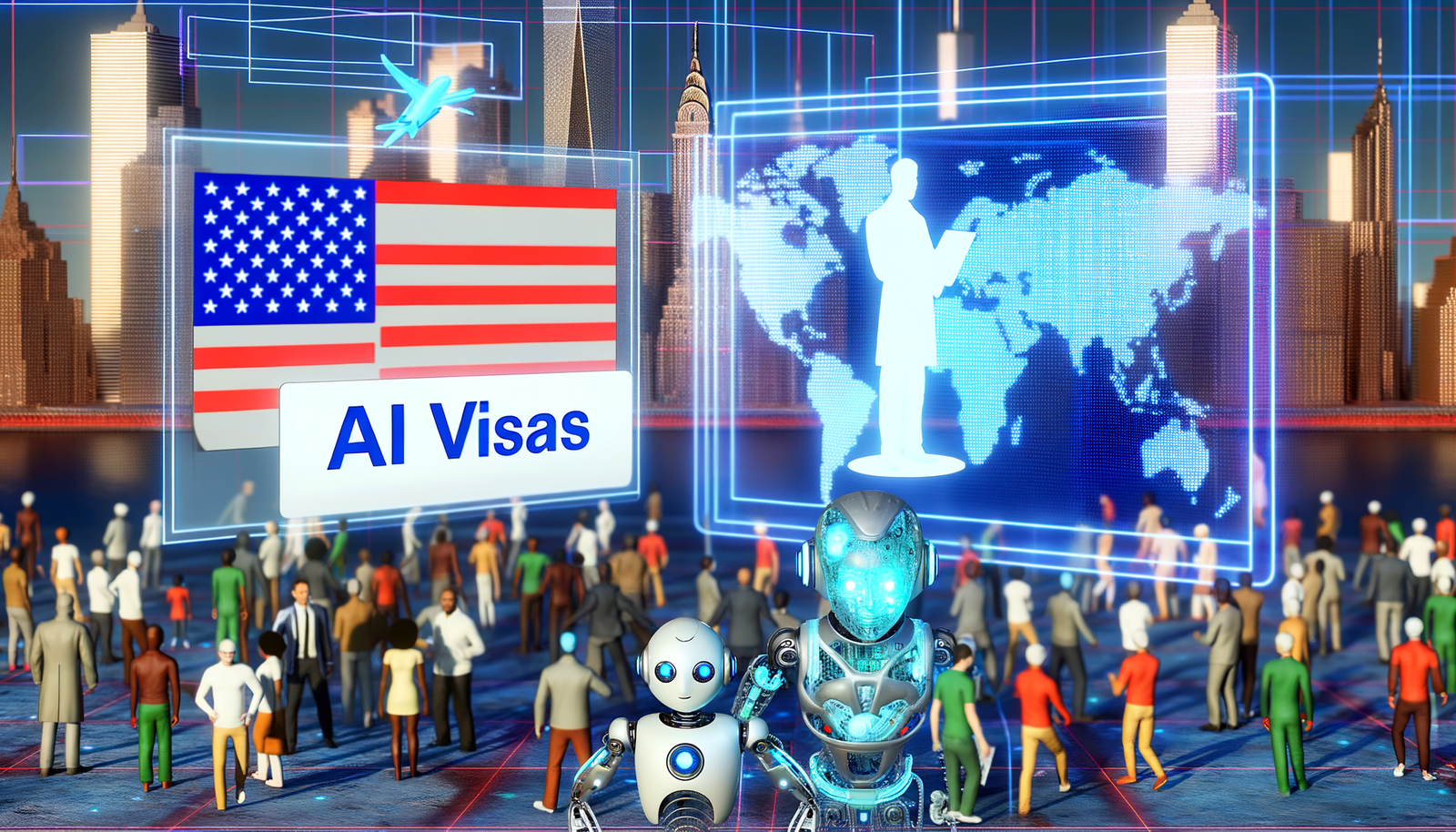
In a controversial move, the administration of US President Donald Trump has launched an AI-assisted initiative aimed at identifying and revoking the visas of foreign nationals and students who express support for Palestine. This program, dubbed “Trump’s AI Strategy: Revoking Pro-Palestine Student Visas,” raises significant ethical questions about freedom of expression and the implications of technology in immigration policy. By utilizing advanced artificial intelligence, the government seeks to target specific individuals based on their political beliefs, potentially setting a precedent for the intersection of tech and politics that could have far-reaching consequences for civil liberties.
Understanding Trump’s AI Strategy: Revoking Pro-Palestine Student Visas
The landscape of immigration policy has never been without controversy, but the current administration’s use of artificial intelligence to enforce specific political beliefs takes it to a whole new level. Let’s dive into how this strategy came into being, the driving motives behind it, and the potential ramifications for international students—especially those who show support for Palestine.
The Birth of The AI Initiative
The technological advancements of our time have prompted governments around the world to re-evaluate the ways they manage immigration. In a bid to tighten the reins on visa approvals, particularly for individuals who express dissenting political views, the Trump administration has developed a new AI program. This initiative, primarily motivated by national security concerns, is designed to scrutinize the online activities and political affiliations of foreign nationals.
While the idea of leveraging technology to protect borders may appear logical at first glance, the nuance is where things get complicated. The decision to specifically target pro-Palestinian sentiments raises an eyebrow among advocates of free speech. Are we witnessing a governmental overreach into personal belief systems, and could this set a troubling precedent for the future?
The Ethical Dilemma
This new approach inevitably opens up a Pandora’s box of ethical dilemmas. What constitutes a legitimate reason to revoke a visa? Should a person’s online expression of political support be grounds for such drastic measures? These questions strike at the heart of civil liberties in the United States—a nation priding itself on the freedom to express one’s beliefs.
Critics argue that utilizing artificial intelligence for political profiling not only undermines the very tenets of democracy, but also complicates the immigration process for countless individuals who may be in the country pursuing educational opportunities. Scholarships and student visas are often heavily sought after by international students, many of whom wish to share their culture and learn from an American education.
The Role of Technology in Immigration Policy
Artificial intelligence has the potential to revolutionize various areas of our lives, but where do we draw the line? With machine learning algorithms analyzing data, the risk of biased outcomes—based on training data and inherent biases—can lead to potentially unfair targeting of specific groups.
- Data Privacy Issues: The collection and analysis of personal data to identify political affiliations could violate privacy rights, as individuals may not be aware that their online activities are under surveillance.
- AI Bias: Algorithms are only as good as the data they analyze. If biased information is fed into the system, the outcomes could target groups disproportionately.
- Effect on Student Communities: Students supporting Palestine could face backlash not just from the government, but also within their educational institutions, fostering an environment of fear and mistrust.
Potential Impact on International Students
The ramifications of Trump’s AI strategy go beyond the individual targeted. For students who hold pro-Palestinian views, the fear of having their visas revoked creates an atmosphere of anxiety, deterring academic ambition and cultural exchange. These students may think twice before expressing their views or may limit their engagement in critical discussions about global issues.
Moreover, international students contribute significantly to the American economy. According to the Institute of International Education, non-immigrant students generated approximately $45 billion for the U.S. economy in 2019 alone. The potential fallout from visa revocations could lead to a decline in enrollment from certain regions, affecting universities that rely heavily on international tuition.
Legal Considerations and Challenges
The implementation of such a program invites legal scrutiny. Critics argue that the practice may violate the First Amendment, which protects the freedom of speech. Legal advocates may find grounds to challenge the constitutionality of employing AI in this manner, positing that it targets individuals based on their political beliefs.
Additionally, the issue of due process arises. If an individual’s visa is revoked based on their political statements, does that person receive the right to appeal the decision? The opacity of decision-making algorithms only adds layers to an already complex situation.
The Societal Response
Trump’s AI strategy has drawn responses from a variety of sectors within society—students, educators, civil rights activists, and more. An increase in activism has emerged, as advocacy groups rally around the protection of civil liberties and freedom of expression. Demonstrations at campuses and rallies across cities have ignited conversations about the balance between national security and personal freedoms.
In academic settings, student organizations have sprung into action, creating forums and discussions on the implications of these policies. These groups aim to bolster awareness and provide a united front against potential injustices faced by students who may find themselves targeted.
While Trump’s AI strategy intends to advance national interests, it undoubtedly raises significant debate around ethical governance and the role of technology in our daily lives. The urgency with which the international community and civil society respond to this initiative could be pivotal in shaping the conversation about immigration and free speech moving forward.
The Future of AI in Policy Making
As we move toward an increasingly digitized world, the role of AI in shaping policy is likely to expand. While there is no denying the potential benefits of AI in improving efficiency, transparency, and security, this particular application raises critical questions. The future will undoubtedly require a careful balancing act; we must leverage the power of AI while preserving fundamental rights.
Transparency in AI usage must become a priority in both governmental and corporate environments. Citizens deserve to know how algorithms are being utilized to make decisions about their lives, especially concerning governance that affects fundamental rights.
A Call for Responsible Innovation
Ultimately, the challenge lies in fostering an environment in which innovation—like artificial intelligence—can coexist with ethical governance. We need a dialogue surrounding fair practices in technology use, particularly in sensitive areas like immigration and political expression. The ramifications of neglecting these discussions could carve a future in which personal freedoms are compromised in the name of security.
As we navigate the complexities of the 21st century, we should channel our energies toward responsible innovation that respects the diversity of thought and expression. The implementation of any policy should take into account the ethical consideration not just of effectiveness, but of fairness and justice.
In conclusion, the question remains: can we ensure that Trump’s AI strategy—no matter how ambitious—refuses to cross the boundaries that define our fundamental rights as individuals? Only time will tell how this controversial initiative will unfold, but one thing is sure: the conversation about ethics in governance, technology, and individual rights is essential.
For more insights into technology and AI developments, visit Neyrotex.com.