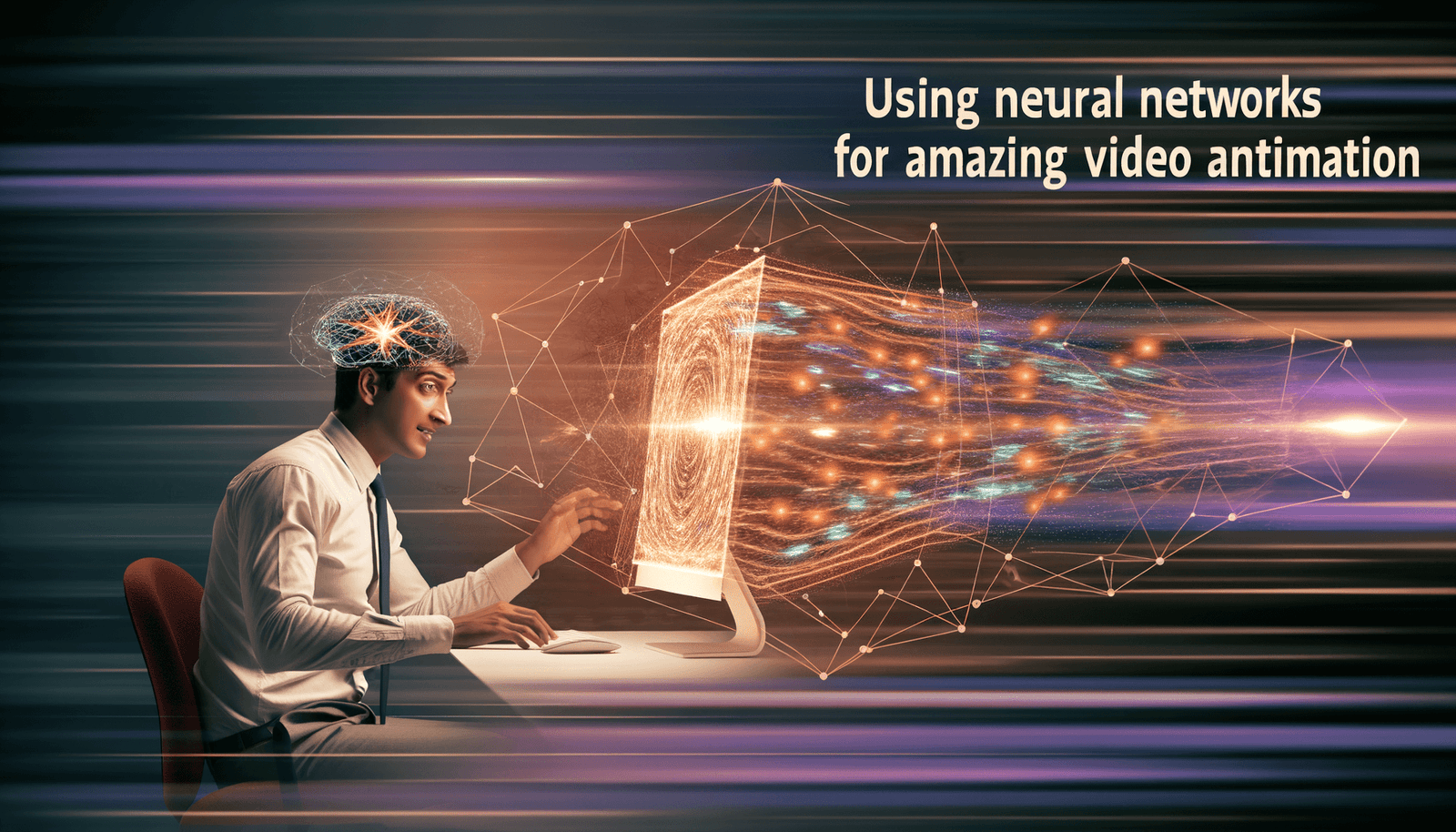
Welcome to the fascinating world of using neural networks for amazing video animation! In today’s digital landscape, advanced neural networks are revolutionizing the way we create video visuals, offering tools to generate stunning imagery that captivates audiences. By seamlessly integrating these sophisticated algorithms into your creative workflow, you can unlock endless possibilities for video content. Join us as we explore how harnessing the power of neural networks can enhance your animations, elevate storytelling, and ignite your creative vision like never before. Get ready to redefine what’s possible in video production!
The Power of Neural Networks in Video Animation
Neural networks, particularly those leveraging deep learning and generative models, have transformed the landscape of video animation. These technologies enable artists and creators to push the boundaries of creativity, leading to innovative techniques that redefine traditional animation processes, making them more efficient and engaging. Here are some key technologies and tools that are making waves in this field.
Doodle-to-AI Animation
This innovative technique uses neural networks and deep learning algorithms to turn simple doodles into full-fledged animations. Users can create basic drawings, such as stick figures, and the AI will add details like facial expressions, body movements, and backgrounds to make the animation more natural and engaging. This technology is a game-changer for creators who want to bring their sketches to life without needing extensive animation skills.
Text-to-Video Generation
Tools like Google’s Veo 2 and DeepVoxels are revolutionizing the way we generate video content from text. These systems use transformer models and generative adversarial networks (GANs) to analyze user prompts and create corresponding 3D models and animations. For instance, Veo 2 can generate near-photorealistic videos based on descriptive prompts, such as “a cinematic aerial view of a bustling city at dusk” or “a close-up of an artist sketching in a quiet studio.” This capability significantly streamlines the creative process, allowing creators to visualize concepts rapidly.
Advanced Technologies Behind AI Video Generation
Transformer Models and Neural Scene Rendering
Google Veo 2, for example, employs transformer models to deeply analyze and understand user prompts, incorporating elements like lighting, soundscapes, and transitions to create emotionally engaging visuals. The technology also uses neural scene rendering to generate lifelike, dynamic 3D scenes with precise control over lighting, textures, and motion. This results in videos that feel cohesive and meaningful, tailored to specific creative needs. By merging technology with artistry, creators can harness tools that enhance their storytelling capabilities and captivate their audience.
Customization with LoRAs
The CustomTTT method, which utilizes LoRAs (Low-Rank Adaptation of Large Language Models), allows for both motion and appearance customization in video generation. This approach involves analyzing the prompt influence in video diffusion models and training LoRAs for specific layers to customize appearance and motion. This technique ensures that the combined results are high-quality and artifact-free, making it possible to generate highly customized videos from text prompts and reference videos or images. By customizing these elements, creators can differentiate their content and make it even more engaging for specific audiences.
Applications and Benefits of AI-Generated Video Content
Democratizing Video Production
Tools like Veo 2 and other AI video generation platforms are democratizing video production by making it accessible to smaller businesses, independent creators, and hobbyists. These tools enable users to produce professional-quality videos without the need for extensive resources or technical expertise. For instance, a local bakery can create a vibrant promotional video in minutes, complete with dynamic visuals and engaging music, something that would have previously required a costly production team. This shift allows a wider range of voices to be heard in visual media.
Integration with Emerging Technologies
The integration of AI video generation with technologies like augmented reality (AR) and virtual reality (VR) is opening new doors for immersive content. Imagine an e-commerce platform where shoppers can view product demos in 3D or VR, with videos dynamically generated by AI. Similarly, AR-integrated educational content could allow students to interact with videos in real-time, making learning more engaging and interactive. This creates a more immersive experience that not only informs but also entertains the audience, therefore enhancing user experiences across various industries.
How Generative AI Works in Video Animation
Generative Models
Generative AI models, such as GANs and variational autoencoders (VAEs), are at the heart of AI video generation. These models train on large datasets to learn the components and structures of existing content. When given a prompt, they use this learned knowledge to generate new content that mimics the style and format defined by the user. For video animation, these models can produce realistic and engaging visuals based on text descriptions or other input prompts. As models improve, they open the door for more varying styles and creative possibilities for artists worldwide.
Video Frame Interpolation
Diffusion models are also being used to advance video frame interpolation, a task that involves synthesizing intermediate frames between given input frames. These models learn implicit motion representations and scene dynamics directly from large-scale video datasets, allowing them to produce multiple plausible intermediate frames even in cases involving substantial motion or ambiguous scenarios. This approach enhances temporal and spatial consistency, making the interpolated frames smoother and more coherent. With better interpolation, creators can produce high-quality videos that feel fluid and professional, regardless of the source materials used.
Practical Steps to Get Started with AI Video Generation
Writing Effective Prompts
To get the most out of tools like Veo 2, it’s crucial to write descriptive and specific prompts. For example, a prompt like “a cinematic aerial view of a bustling city at dusk with ambient music” can result in a polished promotional video. The more specific you are, the better the results will be. Providing clear instructions enables the AI to generate outputs more closely aligned with your creative vision.
Experimenting with Styles and Effects
Play around with different genres, camera angles, and effects to customize your video. You can specify details such as “an 18mm wide-angle lens” for expansive shots or “shallow depth of field” to create a blurred background for dramatic focus. This experimentation allows you to fine-tune the stylistic and creative details of your video, ensuring that the final product resonates with your audience and meets your artistic goals.
Future of AI Video Generation
Integration and Expansion
Future iterations of AI video generation tools are expected to integrate more seamlessly with other technologies. For instance, Google plans to expand Veo 2’s applications to include more control over stylistic and creative details, such as adjusting the emotional tone of a scene or specific lighting effects. The integration with AR and VR will continue to enhance immersive content, offering new possibilities for filmmakers, educators, and marketers. This synergy not only maximizes creative potential but also enriches experiences, allowing audiences to interact with content in groundbreaking ways.
Continuous Improvement
As generative AI continues to evolve, we can expect significant improvements in the quality and customization of AI-generated videos. With advancements in diffusion models, LoRAs, and other technologies, the barriers to entry for video production will continue to lower, empowering more creators to produce high-quality content without extensive resources. These advancements also promise to make video production more intuitive, enabling users to focus more on creativity rather than technical challenges.
Conclusion
The use of neural networks in video animation is a revolutionary step forward in creative content generation. With tools like Veo 2, DeepVoxels, and CustomTTT, creators can now produce stunning, professional-quality videos with ease. As these technologies continue to evolve, we can anticipate even more sophisticated and accessible tools that will further democratize video production and elevate the art of storytelling, enabling creators from all walks of life to bring their visions to life in unprecedented ways.
For those interested in exploring more about the latest advancements in AI and its applications, you can visit Neyrotex.com for more insights and resources.
Don’t miss out on the latest updates and insights on AI and technology. Subscribe to our Telegram channel: https://t.me/OraclePro_News.